Ditsy Floral
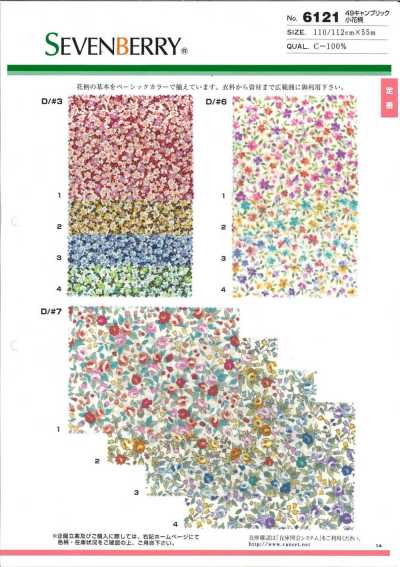
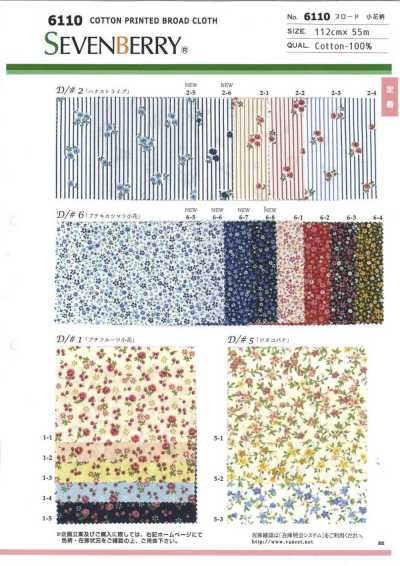
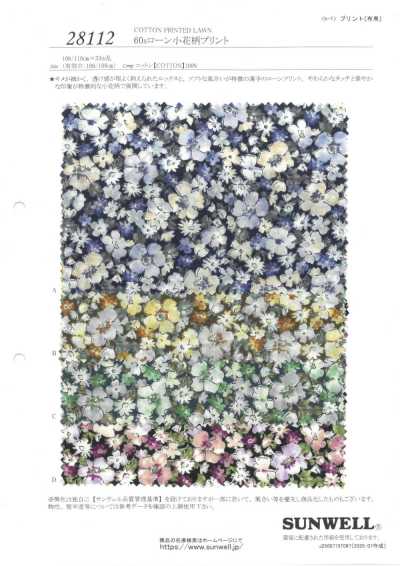
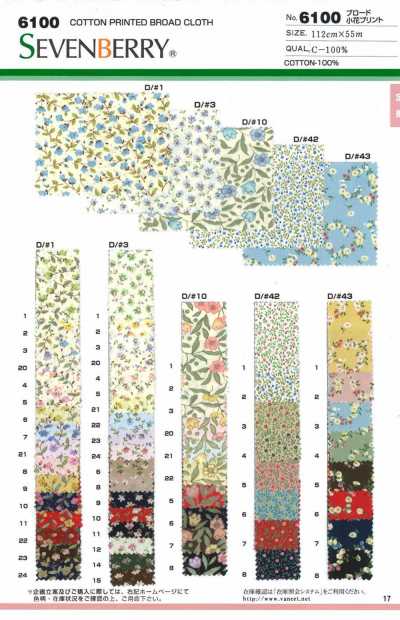
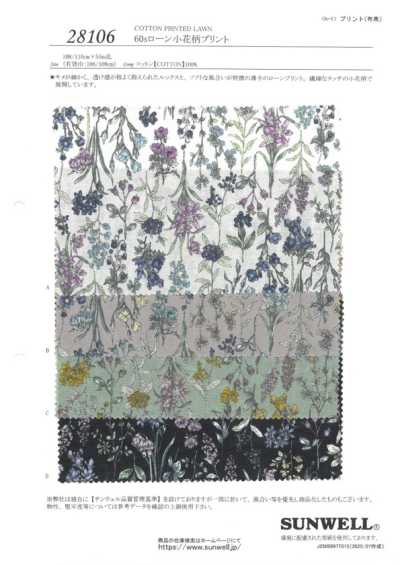
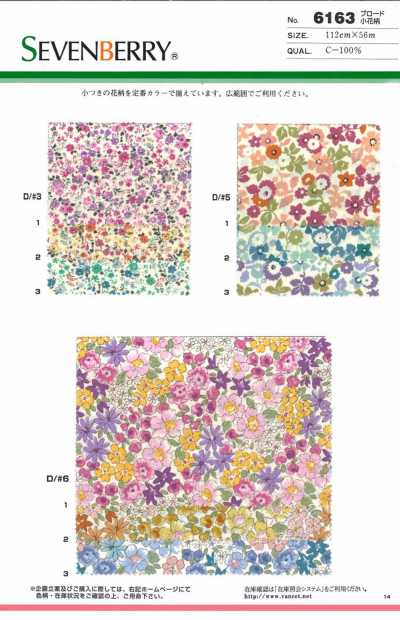
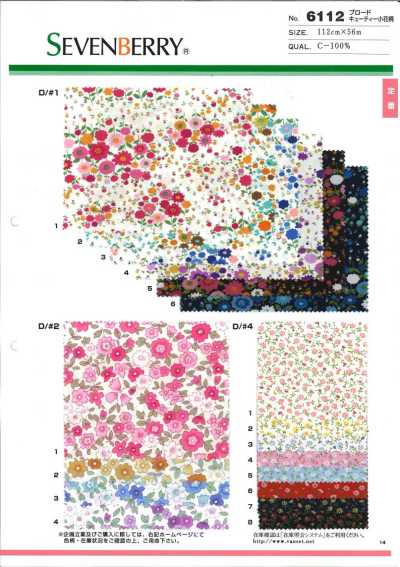
Ditsy floral is a pattern that repeats or scatters small flower motifs, and is a type of floral pattern that easily creates a delicate, charming impression.
Contents5 sections
Definition and Overview
Small floral print is a pattern in which small motifs such as flowers, blossoms, and petals are arranged across the entire surface. The impression changes greatly depending on flower size, motif density, and color scheme, allowing a wide range of expressions such as dainty, rustic, elegant, and vintage-inspired. In English, it is generally called ditsy floral.
Small floral print is the name of a pattern and does not limit the weave or knit structure, the material such as cotton or polyester, or the method of expression such as printing or embroidery. When selecting fabric, it is necessary to check not only the pattern but also the material, thickness, sheerness, stretch, and finish.
How the Pattern Is Made, Names, and Types
In many cases, small floral print is expressed by printing, but flowers may also be represented by Jacquard or embroidery. There are all-over patterns that repeat regularly, scattered patterns that are spaced apart, patterns with stems and leaves, and patterns combining multiple small flowers, with a wide variety of repeat sizes.
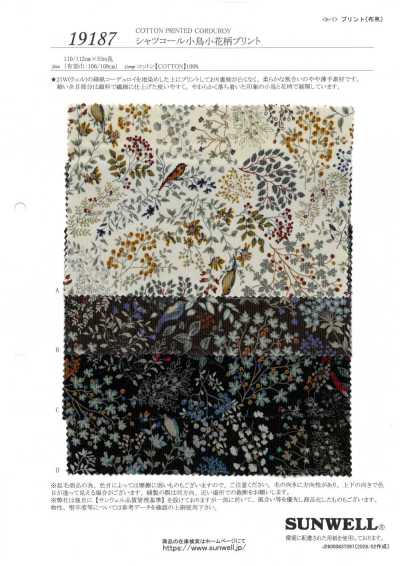
Floral print is a broad term that covers flowers of any size. Small floral print refers specifically to designs featuring small flowers. Botanical print often includes the entire plant, such as leaves, branches, and fruit, while komon refers broadly to fine repeating patterns and does not necessarily use flowers as the motif.
Main Uses and Seasonality
It is often used for items that make use of lightness and softness, such as blouses, shirts, dresses, and skirts. It is also used for children's clothing, nightwear, and parts of dresses and costumes. Small-scale patterns are less likely to appear overly strong even on garments with a large surface area, and they also work well as an accent in layered outfits.
On lightweight lawn, voile, chiffon, and dechine, it is easy to create a light impression suited to spring and summer, while brushed materials, dark bases, and subdued color schemes can also be developed for autumn and winter. The seasonal feel is determined less by the small floral print itself than by the texture of the material, the colors, and the depiction of the flowers.
- Delicate small flowers with pale colors tend to create a light and gentle impression.
- Dark grounds and high-contrast color schemes are good for creating a less sweet impression.
- The area ratio between the ground color and the flower color affects how the finished product looks.
Points to Note When Choosing Fabric and Cutting
When selecting fabric, check the balance between the motif size and the dimensions of the garment parts. Even with small flowers, if the spacing between flowers or the color contrast is strong, the appearance becomes lively. For thin fabrics, check the sheerness; for designs with gathers, check the density of the pattern; and for pleats, check how the pattern breaks up through swatches and prototypes.
Small floral prints with an up-and-down direction in the flowers or stems are handled as directional patterns. If the orientation of the pieces is not unified during cutting, the flowers may appear upside down on the left and right bodice pieces or sleeves. For designs that require the pattern placement to align, consider the repeat and the cutting layout, and allow extra fabric consumption beyond the usual amount.
Even in all-over patterns, the design may break at the center front, collar, pocket, or facings, or prominent flowers may appear in unnatural positions. It is important to decide in the specification sheet whether perfect pattern matching is required or whether overall appearance takes priority, and to check with markings before cutting.
Frequently Asked Questions
What is the difference between small floral print and floral print?
Floral print refers to any pattern with flowers as the motif, while small floral print is a pattern composed mainly of small flowers. However, there is no strict universal standard for flower size, and the scope may differ depending on how it is used in planning or sales. Check the motif size and density with the fabric sample.
Does small floral print fabric require pattern matching?
If the flowers have a direction, or if you want to show continuity in the pattern at the center front, collar, pocket, and so on, consider pattern matching. On the other hand, for all-over patterns that appear random, perfect matching may not be necessary. Set the fabric consumption according to the repeat, design, and required visual effect.
What fabrics are suitable for small floral print?
For blouses and dresses, fabrics that make use of lightness and drape, such as lawn, voile, chiffon, and dechine, are often chosen. However, small floral print is not limited to any material. Select according to the application, checking sheerness, durability, suitability for home laundering, and ease of sewing.