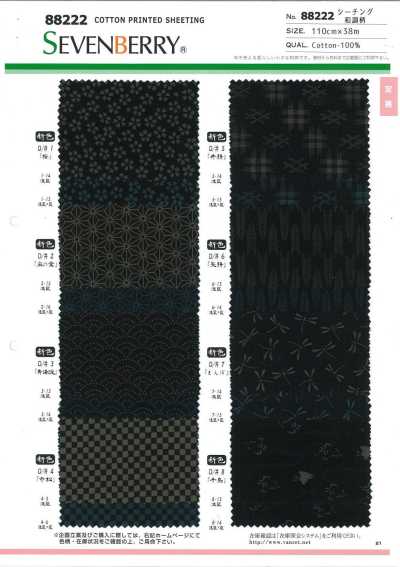
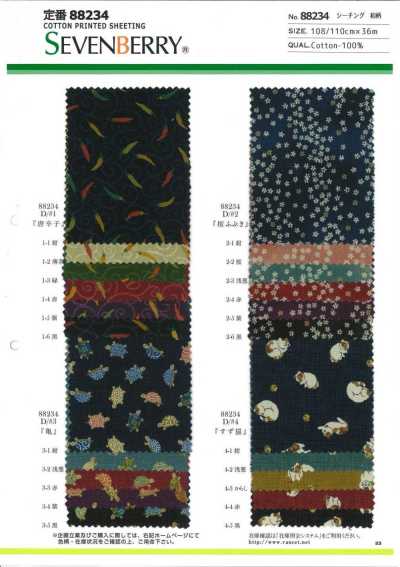
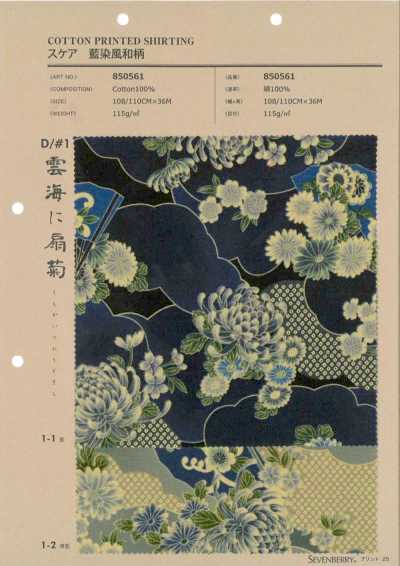
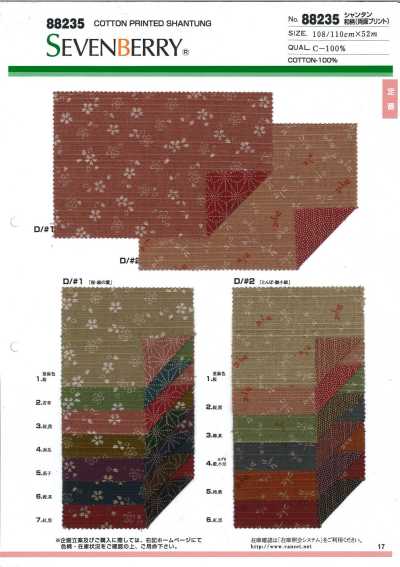
Japanese Pattern
Japanese pattern is a general term for designs based on motifs and patterns that have developed in Japan. It depicts nature, plants, utensils, geometric shapes, and other elements, and is a pattern expressed on textile through printing or weaving.
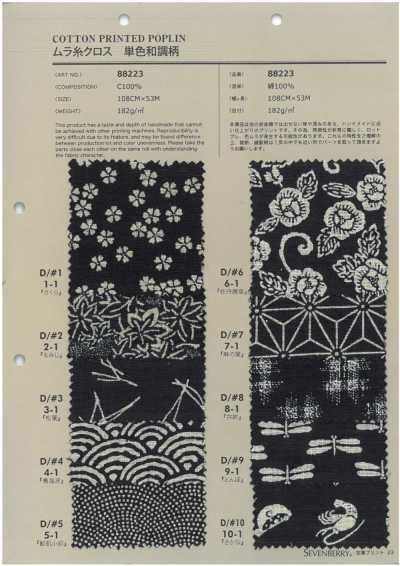
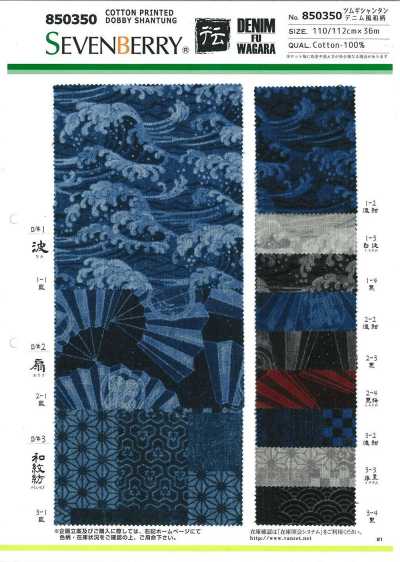
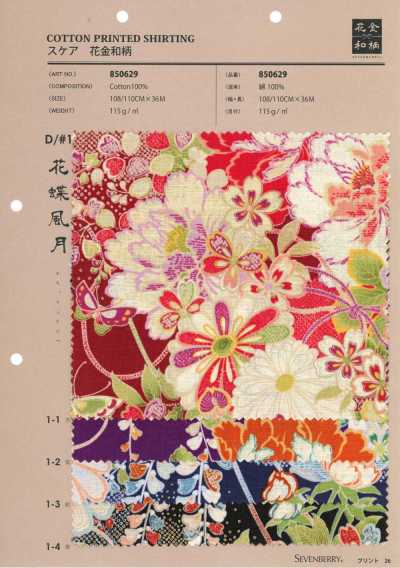
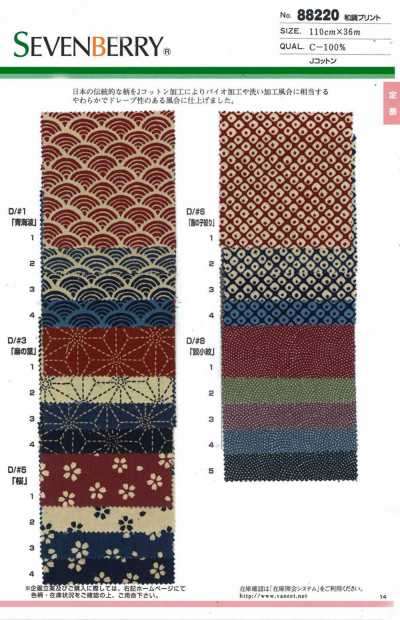
Contents6 sections
Definition and Overview
Wagara refers to patterns that incorporate Japan-origin motifs seen in kimono, dyeing and weaving, and crafts. It is a general term for the pattern itself and does not limit the material, such as cotton or silk, the structure, such as plain weave or chirimen, or the expression method, such as print or woven pattern.
Not only designs that faithfully reproduce traditional patterns, but also those with modernized colors and compositions are treated as wagara. On the other hand, it does not simply mean Japanese-made textiles or textiles for Japanese clothing.
How the Patterns Developed and Main Types
Wagara includes designs based on nature and seasonal scenery, plants, animals, utensils, and abstract geometric shapes. Patterns may have historical origins or symbolic meanings, but in product planning it is important to check the pattern name, motif, color scheme, and pattern size separately.
Representative names include geometric patterns such as ichimatsu, seigaiha, asanoha, shippo, kikko, and tatewaku, as well as plant patterns such as cherry blossoms, chrysanthemums, and plum blossoms. Komon generally refers to patterns made by repeating small motifs, and kasuri refers to a dyeing and weaving expression characterized by blurred outlines; these may be used as part of wagara.
- Continuous patterns: Patterns that make up the entire surface by repeating a fixed unit.
- Scattered patterns: Patterns in which motifs are placed with variation in spacing and direction.
- Eba-style patterns: Patterns composed so that they appear continuous across parts such as the body and sleeves.
- Allover patterns: Patterns placed across the entire textile.
Applications and Seasonal Feel
Wagara textiles are used not only for kimono and yukata, but also for blouses, dresses, skirts, shirts, bags, interior accessories, and stage costumes. By combining the scale of the pattern with the drape and thickness of the textile, applications can be expanded from Japanese clothing to Western-style clothing.
Motifs that evoke a specific season, such as cherry blossoms, wisteria, irises, autumn leaves, and snow rings, are used to create a seasonal feel. However, use out of season is not necessarily inappropriate, and the impression changes depending on the color scheme, material, and product application. Geometric and abstract patterns are also chosen for year-round use.
Points to Note When Choosing Textiles and Cutting
Wagara are expressed through print, yarn dyed, weaving, embroidery, and so on. For detailed patterns, check how they look on a smooth and stable textile, and for large patterns or woven patterns, choose thickness, firmness, and drape according to the product silhouette. During prototyping, confirm the appearance of the pattern at actual size.
Before cutting, be sure to check the pattern orientation, left-right direction, pattern repeat, and pattern position from the selvedge. When matching patterns across the front and back body, left and right sleeves, collar, or pockets, more fabric than usual is required. Especially with one-way patterns or large patterns, the impression changes greatly depending on pattern placement.
- For patterns with an up-down direction, keep the orientation consistent across all parts.
- For designs that require symmetry, determine the pattern position based on the center of the body.
- Specify in the specification sheet whether pockets and facings should match the body pattern or be deliberately offset.
- Allow for cutting loss and order based on yardage that includes pattern matching.
- Before cutting, confirm whether there are differences in color tone or pattern position within the lot or roll.
Differences from Similar Terms
Wagara is a general term for Japanese-style motifs and designs. Komon often refers to fine repeating patterns and is a narrower term than wagara. Ichimatsu pattern is the name of a specific motif with alternating checks and is treated as a type of wagara.
Sarasa often refers to dyed patterns that depict plants, animals, and the like in rich colors, and its origin and design also include overseas influences. Kasuri is a technique and expression that creates blurred outlines by dyeing threads separately, and is not synonymous with wagara.
Frequently Asked Questions
Can wagara textiles only be used for summer?
Wagara is not a textile limited to a particular season. Lightweight cotton that evokes yukata, or motifs with strong seasonal associations such as cherry blossoms and morning glories, are often used in spring and summer, but depending on the thickness of the material, color scheme, and type of pattern, they can also be used for autumn and winter items and year-round items.
Why does cutting wagara require more fabric?
Because aligning the direction and position of the pattern and matching patterns across the left and right body panels or pockets prevents the pattern pieces from being placed as tightly as possible. Large patterns, border-like patterns, eba-style constructions, and one-way patterns are more likely to increase waste, so the pattern repeat is checked to calculate the yardage.
What is the difference between wagara and komon?