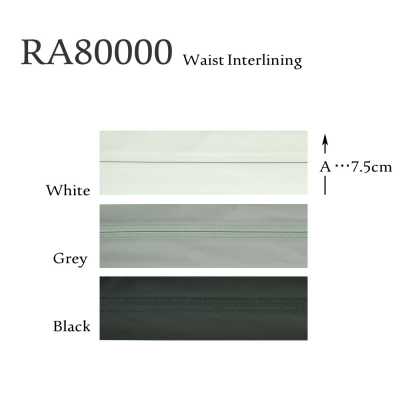
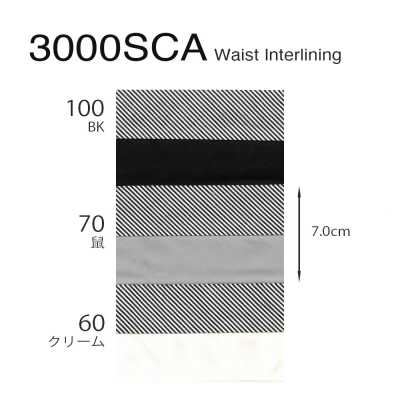
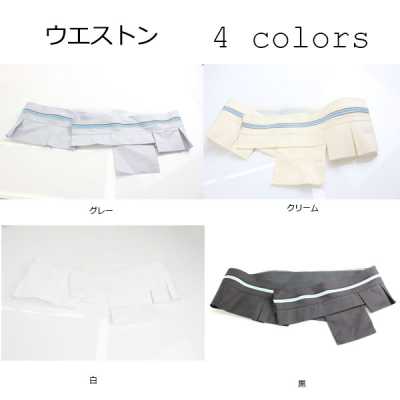
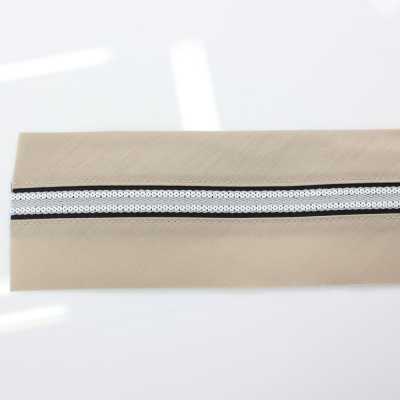
Waistband Interlining
Waistband interlining is a strip-shaped trim mainly used on the inside of the waistbelt of slacks and similar garments. It is used to shape the waist area and improve stability and tailoring appearance when worn.
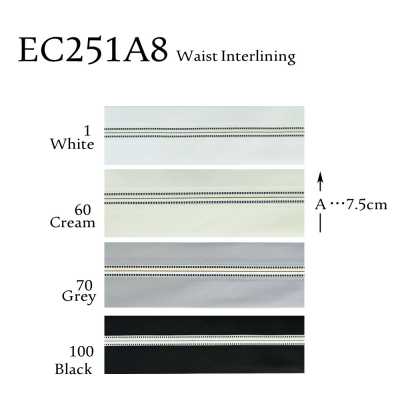
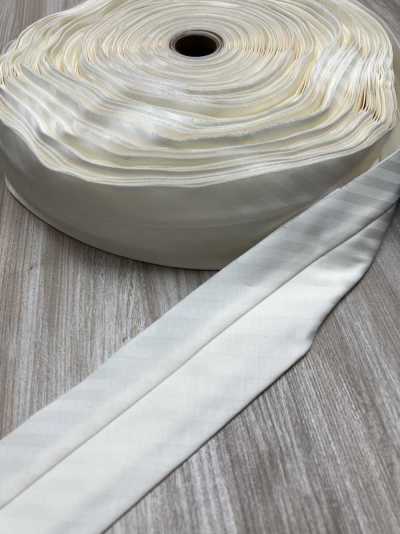
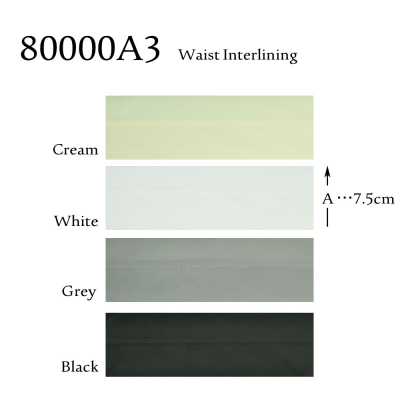
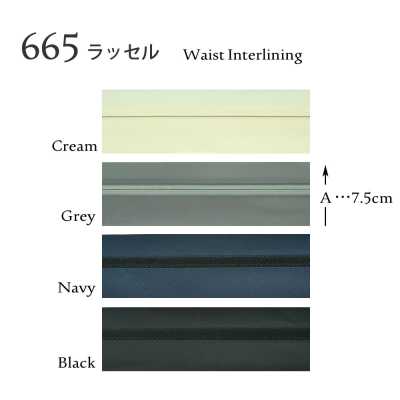
Contents7 sections
Definition and Overview
Waistband interlining is a strip-shaped apparel material sewn to the inside of the waistband of pants. Also called waist lining, it covers the seam allowances and interlining on the inside to give a neat finish while also stabilizing the shape of the belt area.
It is generally supplied in tape form with the folded portions and edges finished. Because it is a component that appears on the inside of the product, it is selected with attention to feel against the skin, non-slip performance, appearance, and how well it blends with the outer fabric.
Placement and Role
The main area of use is the inside of the waistband of pants with a front opening. It is applied continuously to near the center back, and depending on the specification, it is also used including the front end and fly extension. It is often seen in slacks, uniforms, and formal pants.
It supplements the waist area, which can become unstable with only the outer fabric, and covers seam allowances to improve the wearing feel. In types with a non-slip function, it can also help keep shirt hems from coming out of the pants.
- Covers seam allowances and the edges of interlining to tidy the inside finish.
- Suppresses stretching and distortion of the waistband.
- Softens the feel against the skin and improves wearing comfort.
- In non-slip versions, helps prevent shirt hems from riding up.
Materials and Types
Waistband interlining is made from cotton, polyester, or woven fabrics combining these materials. Those with a high cotton content are well suited to a natural texture and moisture absorption, while those containing polyester are suitable for specifications that consider strength and shape stability.
In addition to plain versions, there are striped and patterned versions, as well as versions with woven patterns for added character. There are also types with a non-slip treatment such as silicone on one side, and stretch types, which are used according to the required function.
- Standard type: Mainly for inside finishing and stabilizing the waist area.
- Non-slip type: Used for pants where shirt hems need to be held in place.
- Stretch type: Considered when it should follow the stretch of the outer fabric or waistband specification.
- Patterned type: Used when the interior design, including the facing, should be enhanced.
Main Applications
It is used in business slacks, uniforms such as school uniforms and workwear, and formal pants. It is a secondary material involved in both function and appearance for products that require the inside of the waistband to be carefully finished.
Similar strip materials may also be used around the waist of skirts, but waistband interlining generally refers specifically to the inside waist area of pants. In skirts, a different waistband interlining or facing fabric may be used depending on the specification.
How to Choose and Notes on Handling and Sewing
When selecting it, check the belt width, the visible width after finishing, the thickness of the outer fabric, whether interlining is used, and the product's washing method. Non-slip types are suitable for garments worn with shirts tucked in, but their feel against the skin and their effect on feeding during sewing should also be confirmed with prototypes.
During sewing, confirm in advance the front and back sides of the waistband interlining and how it sits with the front end and fly extension. If the tape is sewn while pulled too tightly, rippling or puckering may appear at the waistband opening, so match the dimensions of the outer fabric and waistband interlining, and sew while feeding them evenly.
It is important to check shrinkage from washing and pressing, color transfer, and the durability of the non-slip section in combination with the outer fabric and interlining. Before mass production, confirm the wearing feel, the thickness of the belt edges, and any impression showing through on the face side using sewing samples.
Differences from Similar Terms
Waist interlining is the interlining built into the waistband to give it firmness and shape stability. Waistband interlining, on the other hand, is the strip-shaped material that forms the visible inside surface of the belt and is not the interlining itself. The two are sometimes used together in the same belt area.
Inbel may refer broadly to belt-shaped components provided inside garments and can include specifications with elastic bands or adjustment functions. Waistband interlining is distinguished by referring mainly to woven tape used as the inside waist lining of pants.
Frequently Asked Questions
Are waistband interlining and waist interlining the same thing?
No, they are not the same. Waistband interlining is the strip material that finishes the visible inside surface of the waistband, while waist interlining is the interlining placed inside the belt to support firmness and shape. Depending on the specification, waistband interlining may be used on top of the waist interlining.
What kinds of pants are non-slip waistband interlining suitable for?
It is suitable for slacks, uniforms, and formal pants worn with shirts tucked in. It can help prevent shirt hems from riding up, but the wearing feel and feeding during sewing should be checked, and suitability for the product should be judged with prototypes.
How should the width of waistband interlining be chosen?
Choose it according to the finished width of the waistband, the seam allowance to be sewn in, the thickness of the outer fabric and interlining, and the front-end specification. It is important to check with samples not only the visible width, but also whether it covers the seam allowances sufficiently and whether the folded section becomes too thick.
- Search products for "waistband interlining"
- Products with material "Cotton"
- Products with material "Polyester"
- Products for style "For Pants"
- Products for style "For Skirts And Dresses"
- Products for style "For Jackets/Suits"
- Products for style "For Formal Wear"
- Products for style "For Uniforms/Workwear"
- Browse Waistband Interlining products