Skein Winding
Skein winding is a rolling direction and supply form in which ribbons, tapes, cords, and the like are bundled into loops of a fixed length and held in shape with tying strings or similar ties.
Contents6 sections
Definition and Overview
Skein winding is a supply form in which narrow materials or cords are bundled into large loops. Skein is also written as "hank" and does not refer to the material name or the structure name of weaving, knitting, or braiding. Even for the same cord, how it is handled in storage or use differs depending on whether it is skein wound or bobbin wound.
In product information, it is shown in units such as "how many meters are made into one skein." When calculating the required quantity, it is important to check separately the length per skein, the ordering unit, and the continuous length available.
Relationship to Materials and Construction
Skein winding indicates a packaging and winding method, so it does not limit the material to cotton, polyester, nylon, or other materials, nor does it limit the manufacturing method to weaving, knitting, or braiding. It is used for a variety of trim items such as flat tape, round cord, braided cord, and cord.
When checking specifications, do not judge elasticity, hardness, abrasion resistance, or wash durability based only on the description skein winding. Check the specifications of the material itself separately, including the material, structure, whether it has a core, and surface finishing.
How Length and Dimensions Are Shown
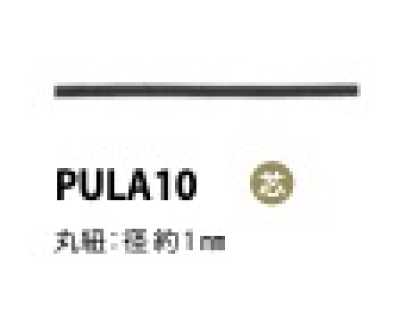
The quantity of skein winding is often expressed in meters by the length per skein. Round cords and round cords generally indicate thickness by diameter, while flat cords and tape are indicated by width. Treat the stated dimensions as a guideline for the finished item, and confirm with the actual product whether they are the dimensions needed for the application.
When used for garments, estimate the required yardage including the sewn-in portion, the portion used for tying or adjustment, and the loss from end finishing. For uses where multiple pieces must look the same, also check color, sheen, and surface texture in addition to thickness and width.
- Round cord: check by diameter.
- Flat cord and flat tape: check by width.
- Required amount: calculate from the length of one skein and the yardage per garment.
Main Uses and Handling Precautions
Skein-wound cord and tape are used for garment cords, decoration, piping, and binding of accessories. Before use, do not pull the bundle out suddenly; loosen the tying strings, spread the loop open, and dispense it little by little while checking the ends. This helps reduce tangling.
If pulled hard during storage or use, the length may change with stretchable materials. Also, cut ends may fray depending on the braided or knitted structure. Shrinkage, color fading, and shape change due to washing depend on the material and processing, so wash testing as an accessory is carried out before mass production.
- To prevent tangling, dispense it in order from the inside or outside without collapsing the loop.
- For materials that fray easily after cutting, consider end finishing according to the application.
- For areas where stretching or shrinkage affects dimensions, check under actual use conditions.
Differences from Similar Terms
Bobbin winding is a form in which material is wound continuously onto a tube or backing paper that serves as a core. Skein winding does not wrap around a core and bundles the material into a loop, so it is easy to handle in short units, but depending on how it is dispensed, it can tangle more easily.
Cut-to-length sale is a sales method in which you purchase a specified length. In contrast, skein winding refers to a form of material made into a predetermined length in advance. The two may be listed together depending on the application.
Frequently Asked Questions
Is the "skein" in skein winding a unit of length?
Skein mainly refers to a winding method in which cords or tape are bundled into a loop. In transactions, it is handled together with the length per skein, but a skein itself is not a common unit that indicates a fixed length. Check the made-to-length size for each product.
How do you use skein-wound cord without tangling it?
Do not force the bundle out; after loosening the tying string that holds it in place, spread the loop open and dispense the end little by little in one direction. If leftover portions are placed carelessly during work, they are more likely to tangle, so manage them while keeping the bundle shape.
With skein winding, are the material and thickness the same?
No. Skein winding is a supply form, and the material, construction, elasticity, and diameter or width differ by product. Check diameter for round cord and width for flat tape, and if necessary, also evaluate stretch and changes after washing.