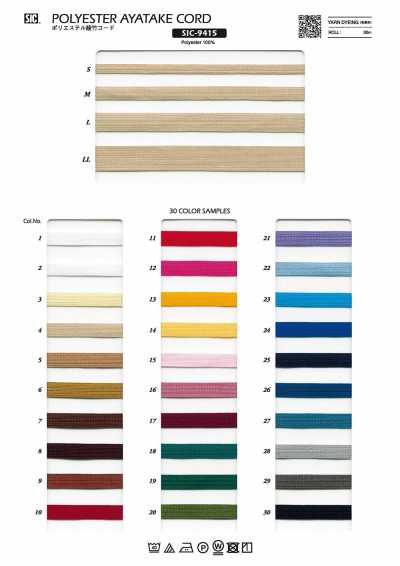
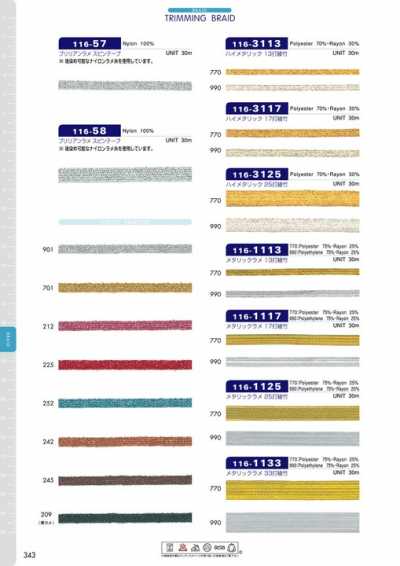
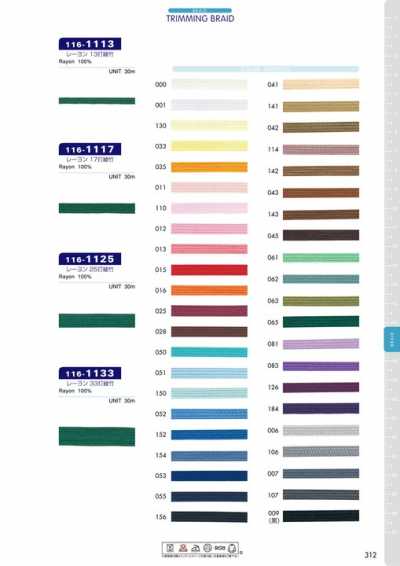
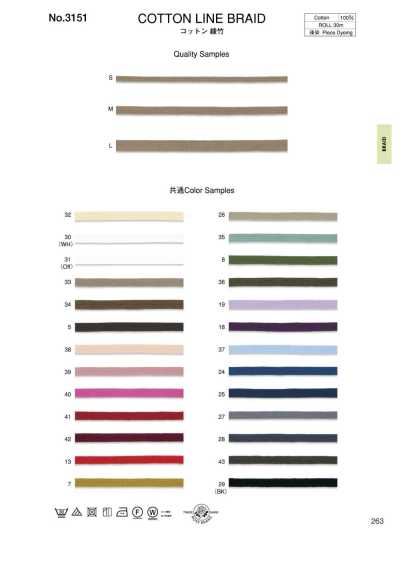
Twill Braid
Twill braid is a decorative braided cord, mainly flat in shape, made by braiding multiple yarns so that diagonal ribs appear, and used as a material for edging apparel and fashion accessories.
Contents6 sections
Definition and Overview
Twill braid is a narrow-width material treated as a type of braided cord. It is characterized by the appearance of threads crossing diagonally, and it may refer either to a cord-like item or to one that looks slightly flat and tape-like. In product names, it is also called twill braid tape or twill braid cord.
Many are intended for decorative purposes, and some types use lustrous yarn or metallic yarn to create a more glamorous look. Since it is not always a practical tape for covering garment seams, the required strength and durability for the intended application should be checked individually.
Materials and Structure
Twill braid is made by braiding multiple yarns together through a braiding process. Unlike woven fabric, which has warp and weft threads woven at right angles, the yarns are braided diagonally, so a continuous twill-like pattern appears on the surface.
Those made with rayon tend to have a soft feel and an easy-to-achieve sheen. In types combined with metallic-looking metallic yarn, the sparkle when catching light becomes a design point. Hardness, slipperiness, and suitability for washing vary depending on the material composition.
- The number of crossings is used as an indication related to the number and braiding method of the yarns that make up the braid.
- Different numbers of crossings may change the apparent density, thickness, width, and flexibility.
- Even with the same number of crossings, the finished dimensions differ depending on the type and thickness of the yarn, so confirm with the actual item.
How to Read Dimensions
Flat twill braid may be managed by width, while round cord-like twill braid may be managed by thickness. However, because measured values can change easily depending on the braiding structure and how it is pressed, it is safer to share not only the nominal size but also the tolerance and a finished sample in the specification sheet.
The number of crossings is not a unit that directly indicates width or thickness itself. When placing an order, do not judge by the number of crossings alone; also list the width or thickness, material, color, whether it has sheen, and the required length, and confirm the balance with the textile it will be sewn to.
Main Applications
Twill braid is used for decorative lines on costumes and dresses, and for edging around necklines and front openings, sleeve openings, and pocket openings. When applied along straight seam lines, it can add a three-dimensional line. It is also used for decoration on bags, hats, stage costumes, and interior accessories.
When sewing it on, the appearance changes depending on whether the center of the braid is held down or the two sides are held down finely. When used on curves, temporarily baste it in advance to adjust the needed ease, and place it so the twill pattern on the surface does not twist.
Selection and Handling Notes
When selecting, check not only the color and sheen, but also the density of the braid, thickness, how well it follows curves, and how the ends are finished. If a twill braid that is stiffer than the outer fabric is used on a lightweight fabric, seam shrinkage or puckering may become noticeable. Check the seam, sewing thread color, and waviness after sewing with a sample piece.
With braided cord, yarn may fray from the cut ends. After cutting, if necessary, temporarily secure the ends, sew them in, or cover them with an edging, and finish according to the specification. Stretching or shrinking, color transfer, and changes in metallic yarn due to washing or getting wet vary by material, so conduct pre-testing in line with the product's care label.
Twill braid has a name similar to twill tape and herringbone tape, but it usually refers to braided cord. Twill tape and herringbone tape are woven tapes, and their braiding structure, cross-section, stretch, and way the ends fray differ. It should also be used differently from flat cord and round cord by comparing the surface pattern and shape.
Frequently Asked Questions
What is the number of crossings in twill braid?
The number of crossings is an indication related to the braiding structure of twill braid. In general, it serves as a guide for understanding differences in the number of yarns and the braiding method, but the width or thickness is not determined by the number of crossings alone. When ordering or deciding specifications, check the actual dimensions, material, thickness, and sample in addition to the number of crossings.
Can twill braid be machine washed at home?
Whether washing is possible depends on the fibers used in the twill braid, the dyeing, whether metallic yarn is included, and the fabric it is sewn onto. Since washing with water may cause stretching, shrinking, or color transfer, if product washing is planned, conduct a washing test with the item in a sewn state and reflect the results in the care label.