Calendering
Calendering is a finishing process in which fabric is passed between heated rollers and pressure is applied to improve surface smoothness, luster, density, and hand feel.
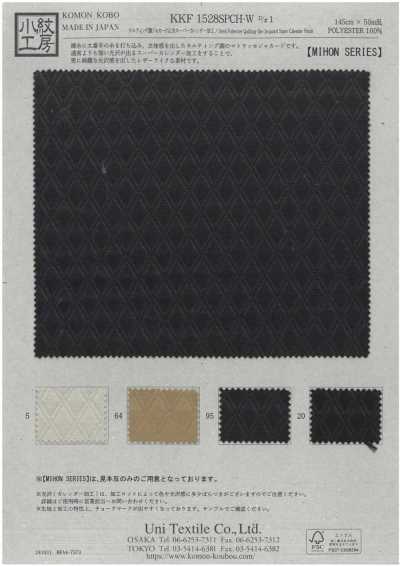
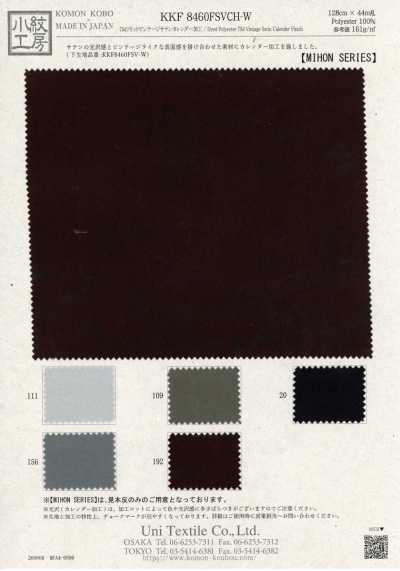
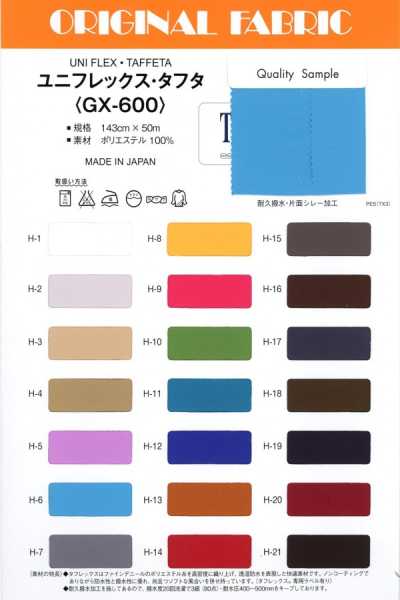
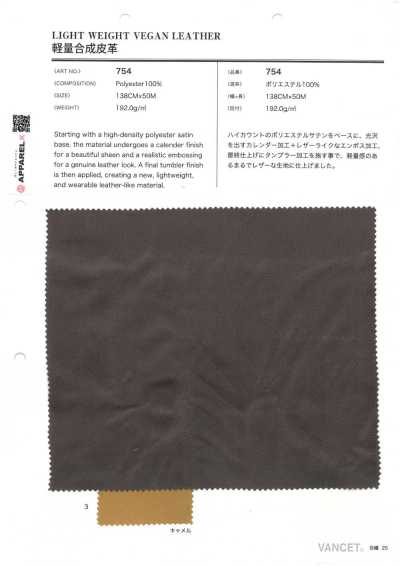
Contents5 sections
Definition and Overview
Calendaring is a finishing process in which textile is passed between multiple rollers and heat and pressure are applied to smooth the surface. It is used for woven fabrics, knit fabrics, nonwoven fabrics, and more, and the finish varies depending on the roller material, surface shape, temperature, and pressure. It is not a term for the weave structure or the material itself, but a type of finishing applied after weaving or knitting.
Features
Fibers and fuzz are laid down, making the surface smoother, and the reflection of light becomes more even, which makes it easier to achieve luster and gloss. Also, because the textile is compressed, the perceived sheerness, breathability, thickness, and softness may change in lightweight fabrics. The finish ranges from subtle smoothness to a strong glossy effect.
With synthetic fibers such as polyester and nylon that have thermoplastic properties, the effect may be achieved by using heat to fix the shape. On the other hand, with cotton, linen, and rayon, surface gloss and smoothness may weaken through washing or friction. Durability is not uniform and depends on the material, density, and pre-treatment.
Main Applications
It is used for shirts, blouses, linings, formal wear, dresses, and lightweight garments where a clean surface and moderate firmness are desired. For high-density textiles, it is also adopted to make the fabric look tightly woven and create a neat appearance. It is not a seasonal process; it is used according to the desired appearance and fabric design.
Processing intended to create a strong gloss is sometimes called ciré finish. Ciré finish is often treated as a name that focuses on the conditions or finishing expression of calendaring, and the scope of the term differs by textile maker and producing region, so it is important to check against a sample.
How to Choose and Handling Notes
When selecting, check the hand before and after processing, the level of gloss, thickness, breathability, and appearance changes after washing using an actual textile. In particular, for light colors, dark colors, and lightweight fabrics, the appearance caused by surface reflection and fading around seams may stand out, so it is important to make prototypes under conditions close to mass production. Shrinkage is affected not only by the process but also by the material and subsequent processing, so confirm the specification values.
During cutting, if the fabric shows directionality in gloss or pile appearance created by the rollers, arrange all parts in the same direction. During sewing, strong pressing pressure or excessive ironing may cause shine, seam fading, or changes in the processed feel. Test sew on seam allowances and adjust the pressing cloth, temperature, steam volume, and press time.
Washing and dry cleaning methods should follow the material of the textile and the specifications of the post-processing. Even if home washing is possible, strong friction, high dryer heat, and storage that strongly compresses the surface may lead to changes in gloss and smoothness. When commercializing the product, evaluate in advance whether it has the durability suited to the care label.
FAQ
What is the difference between calendaring and ciré finish?
Calendaring refers to the overall finishing process of smoothing the textile surface with roller heat and pressure. Ciré finish generally refers to a finish that uses that method to create strong gloss and luster. However, the scope of the term differs by industry and textile maker, so in specifications, share the desired gloss and hand with a sample.
Does calendared textile shrink when washed?
Whether shrinkage occurs and to what extent cannot be determined by calendaring alone. Material, structure, subsequent steps such as dyeing and resin finishing, and washing conditions all have an effect. Washing may also change the surface smoothness and gloss. Before mass production, conduct a washing test on the finished textile and confirm the shrinkage rate and appearance changes.