Ciré Finish
Ciré finish is a calender-type finishing process that strongly presses fabric surfaces with heat and pressure, or friction, to smooth them and give them a glossy, crisp hand.
Contents6 sections
Definition and Overview
Ciré finish is a finishing process in which the surface of the textile is strongly compressed, mainly with a calendar machine, or exposed to friction heat to flatten the surface of the fibers and yarns. It does not refer to a name indicating the weave or type of fiber, but to a post-process that changes the appearance and hand of the textile.
After processing, surface irregularities become less noticeable, creating a smooth appearance that reflects light easily. Depending on the processing conditions, textile material, density, and structure, the level of sheen, firmness, and durability will vary.
Hand and Function
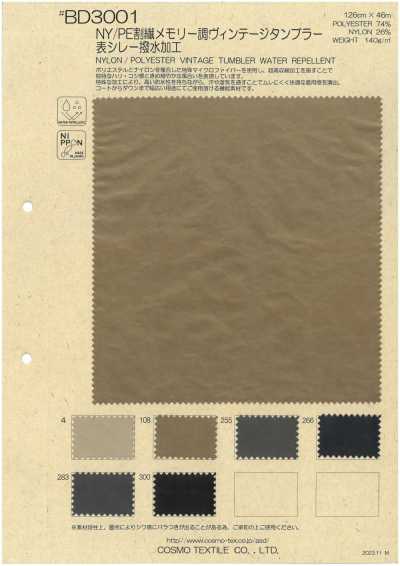
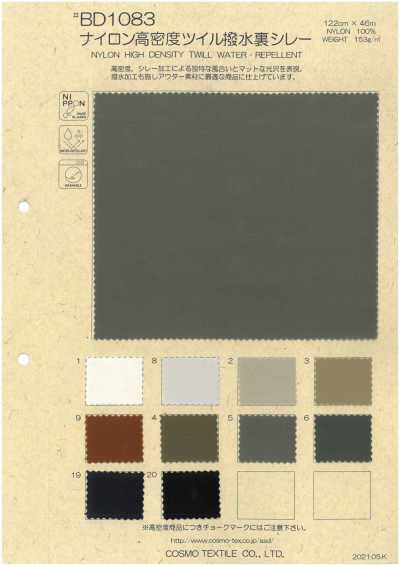
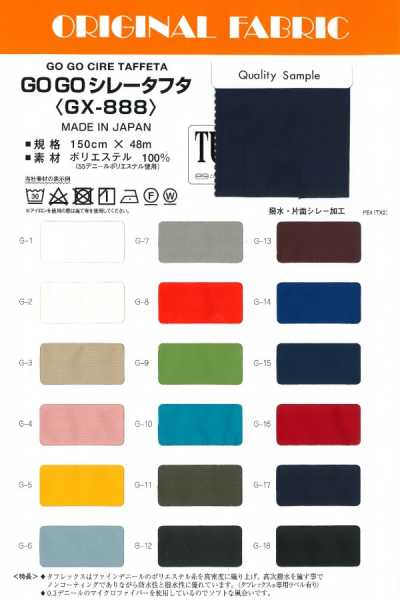
The characteristics are a strong, almost wet-looking sheen and a relatively crisp hand with body. When applied to high-density taffeta and similar fabrics, the surface becomes more compact, making it easier to create a distinctive look even in lightweight materials.
As the surface becomes smoother, the gaps between yarns in woven fabrics may close up, making the fabric feel less breathable. However, ciré finish itself does not guarantee performance such as water repellency, waterproofing, or moisture permeability, so the required functions must be checked separately.
Main Applications
Its sheen and light, crisp body are used for outer shells of blousons, coats, down wear, skirts, costumes, and more. It is often used for thin to medium-weight high-density woven fabrics, and is used not only for autumn and winter cold-weather clothing but also for lightweight spring and summer outerwear.
It is seen in woven fabrics made from synthetic fibers such as polyester and nylon, but applications are not determined by the material alone. Even with the same ciré finish, the suitable items and wearing comfort change depending on fabric thickness, density, and back-side treatment.
Selection and Handling Notes
When planning, check the degree of sheen on an actual sample, and confirm through trial sewing whether fading caused by seams, folds, or rubbing during wear is noticeable. Some fabrics are prone to needle holes or re-sewing marks, so set the needle size, thread, and stitch conditions to suit the fabric.
Heat, friction, and washing may change the sheen and body. Dimensional change after washing varies depending on the material, structure, and pre-treatment, so check the shrinkage rate and reflect it in the pattern. For product care, always follow the washing instructions for each fabric.
- Before mass production, check the sheen, shrinkage, and wrinkle condition after washing.
- When ironing, use a pressing cloth and keep the temperature and pressure low, testing on an inconspicuous area first.
- During cutting and sewing, handle the fabric so that surface damage, press marks, and re-sewing marks do not appear.
Differences from Similar Terms
Calendar finishing refers broadly to finishing processes that compress fabric with heated rollers and the like to smooth the surface. Ciré finish is often treated as a finish within that category for obtaining strong sheen and a smooth surface, and the scope of the term may overlap depending on the production site and processing method.
Coating is a process that applies resin or similar materials to the surface or back of the fabric to form a film. Even when it creates sheen in appearance, the mechanism differs from ciré finish, which mainly changes the surface through compression. Water-repellent finishing is also distinguished by its purpose of repelling water.
Frequently Asked Questions
Is fabric with ciré finish waterproof?
Ciré finish alone does not necessarily provide waterproof performance. The surface may become smooth, and high-density fabrics may feel less breathable, but if waterproofing or water repellency is required, check separately whether waterproof-breathable processing or water-repellent finishing has been applied and review the performance specifications.
Does the sheen from ciré finish come off after washing?
The sheen and body may weaken or the appearance may change due to washing, friction, or heat. The degree of change varies depending on the fiber, processing method, detergent, and washing conditions. Conduct washing tests before mass production, and handle the product according to the care label.
Are ciré finish and coating the same?
No, they are not the same. Ciré finish is a process that mainly uses heat, pressure, and friction to smooth the fabric surface and create sheen. Coating, on the other hand, is a process that forms a film by applying resin or similar materials. Because the appearance can be similar, confirm the required performance and the specifications of the cross-section and surface.