Spacer Knit
What is spacer knit? It is a raised knit textile with volume and firmness, made by connecting the front and back knits with connecting yarn to create an air layer in between.
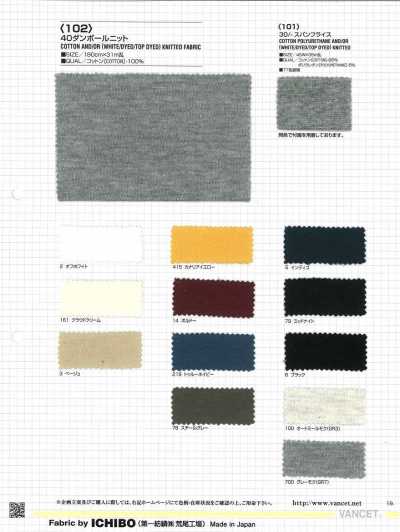
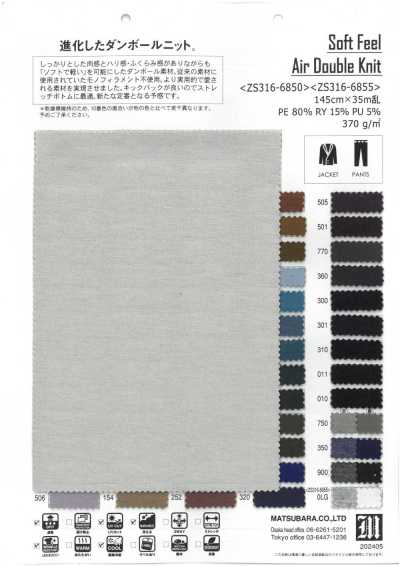
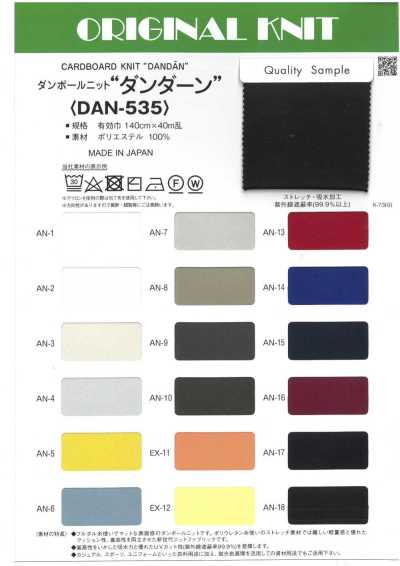
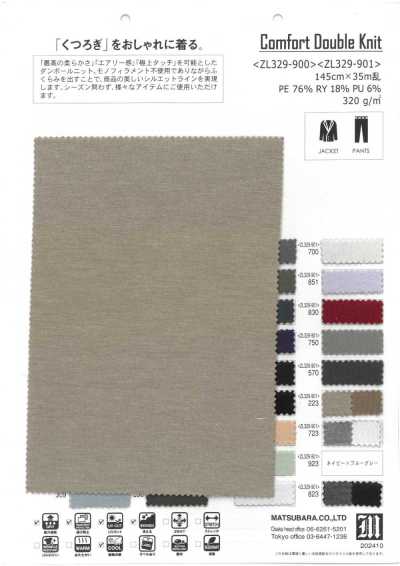
Contents6 sections
Definition and Overview
Spacer knit is a three-layer knit that keeps two knitted fabrics at a fixed distance using connecting yarns. It is named for its cross-section, which looks like corrugated cardboard, and it may also be written as spacer knit or air knit.
It is not a material name, but a term that describes the structure of the fabric. Polyester, cotton, rayon, polyurethane, and other materials are used for the face and back knits and the connecting yarns, and the properties vary greatly depending on the blend ratio and knitting method.
Texture and Functions
Because of the internal air layer, this fabric is lighter than it looks and tends to have a soft, full thickness. Many versions have a relatively smooth surface, and because it is a knit with moderate firmness and rebound, it can create a raised, clean silhouette.
The air layer contributes to heat retention, but even with thickness, breathability and warmth vary depending on knitting density, material, and the size of the air layer. Stretch performance is also not uniform, so it is important to check the stretch and recovery in both the warp and weft directions using the actual material.
Main Applications and Seasons
It is used for hoodies, sweatshirts, cut-and-sew tops, pants, skirts, dresses, and blousons. Since it does not easily show the body line and helps keep shapes such as hoods, sleeves, and tucks, it is also suitable for structured casual wear.
In general, it is used for autumn and winter clothing or transitional-season items by taking advantage of its thickness and warmth. However, lightweight types designed with breathability in mind are also used for spring and summer, so the season should be judged together with fabric weight, thickness, composition, and finish.
How to Choose and Handling Notes
When selecting it, check not only the thickness but also the fabric weight, the appearance of the face and back, stretch, rebound, curling at cut edges, and sheerness. Depending on the application, also test or sample the shrinkage after washing, surface fuzzing and pilling, and flattening in areas that receive strong pressure.
Dimensional changes from washing vary depending on the material and finish. Before mass production, relax the fabric as needed, confirm the shrinkage rate, and reflect it in the pattern. Follow the washing instructions for each fabric or product, and avoid high-temperature drying and strong pressing.
In sewing, choose needles, thread, and presser-foot pressure suited to the thickness to prevent seam waviness, seam shrinkage, and feeding problems. For stretch types, to prevent seam breakage, consider the sewing direction, seam extensibility, and the use of stay tape or interlining in advance.
- Check the thickness and fabric weight, and choose the firmness needed for the product silhouette.
- Confirm the shrinkage rate before and after washing, as well as the stretch and recovery in the warp and weft directions.
- Check the thickness where seam allowances overlap and details such as zippers and necklines through prototyping.
Differences from Similar Terms
Double knit is a general term for a double structure in which the face and back knits are knitted at the same time, and it does not always have a clear air layer. Spacer knit differs in that it emphasizes the structure that maintains the distance between the face and back with connecting yarns.
Ponte is used for knit fabrics with stability and moderate thickness, but it does not necessarily have a space-containing structure like spacer knit. French terry is a fabric with loops on the back side, and the way it creates volume and the appearance of the back side are different.
Frequently Asked Questions
Does spacer knit shrink when washed?
Whether it shrinks and by how much depends on the composition, knitting density, dyeing and finishing, and washing and drying conditions. In particular, items containing natural fibers need dimensional change to be checked. Conduct washing tests before mass production and reflect the shrinkage rate in the pattern as needed.
Is spacer knit difficult to sew?
Because it has thickness and stretch, it requires adjustments different from those for thin cut-and-sew fabrics. If the presser-foot pressure, feeding, and needle-and-thread combination are not suitable, seam waviness and seam shrinkage may occur. Before full production, conduct sewing tests including the actual overlapped sections.