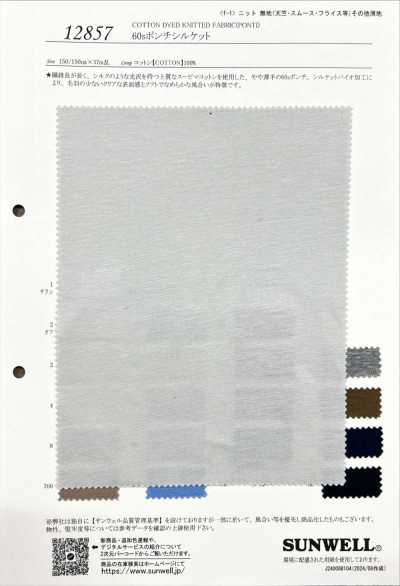
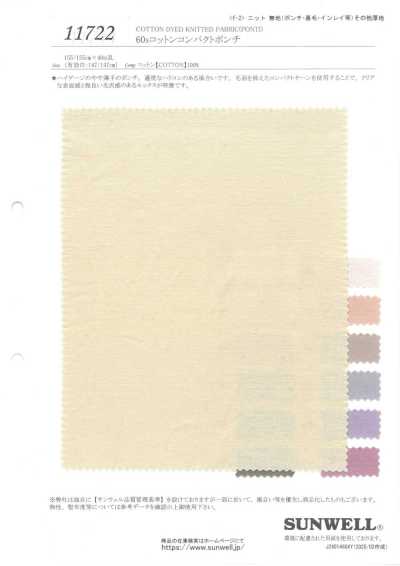
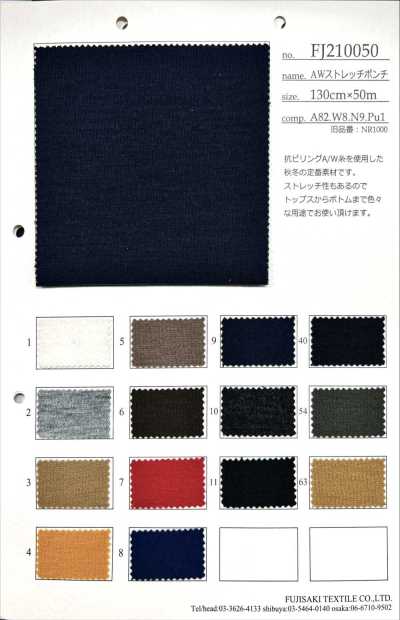
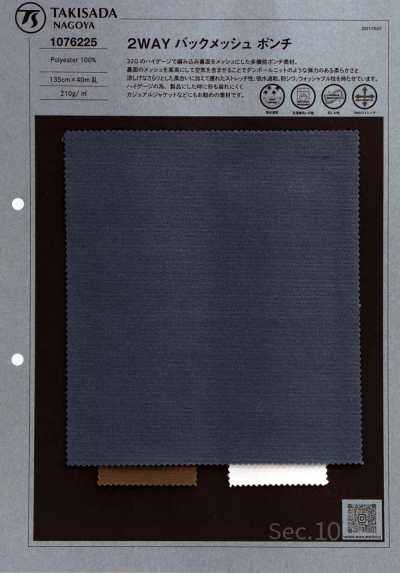
Ponte
Ponte is a type of double knit with a smooth front and back and inconspicuous stitches. It has moderate thickness, firmness, and stretch, and is used for neat-cut tops and bottoms.
Contents6 sections
Definition and Overview
Ponte is a knitted fabric also commonly called ponte roma, and it is a type of double knit made with a double structure. It is characterized by a relatively similar appearance on the front and back, and by how easily it creates a neat, woven-like look despite being a knit.
Depending on the type of yarn used, the knitting density, and the structure design, the thickness, firmness, stretch, and surface texture can vary greatly. For that reason, the name “ponte” alone cannot be used to judge the blend ratio or specific performance.
Features
In general, ponte is thicker than single-layer knits such as jersey, and it tends to have body and firmness. It is less likely to show the shape of the body and is easy to tailor beautifully, making it suitable for clothing with a polished, clean impression.
While it has stretch derived from the knit structure, some tightly constructed fabrics may have limited elasticity. In fabrics blended with elastic fibers such as polyurethane, stretch and recovery in both the horizontal and vertical directions may be added.
- The front and back are both relatively smooth, and the stitches are not very noticeable.
- It has moderate thickness and tends to be less sheer.
- The cut edges are less likely to curl, so it may be easier to handle during sewing.
- Depending on the fiber composition, pilling or sheen may occur.
Main Applications
Ponte is used for cut-and-sew tops, dresses, skirts, pants, jacket-style items, and more. It makes it easy to balance stretch and a neat appearance, so it may also be chosen for business wear, uniforms, and matching sets.
Because it ranges from lightweight to heavyweight, the intended use and season are determined by the fabric weight, blend ratio, and finish. More substantial types are used in autumn and winter or during seasonal transitions, while lighter types are also used for spring and summer items.
How to Choose and Handling Precautions
When selecting it, check not only the blend ratio but also the fabric weight, thickness, stretch direction, stretch recovery, sheerness, and drape on the actual fabric. For pants and tight silhouettes, it is also reassuring to check knee bagging and stretch at the seams when worn.
Before cutting, prepare the fabric and check shrinkage and skew. Use needles for knit fabrics and seams suited to stretch, and it is important not to pull the fabric too much during sewing. For washing and ironing, follow the care instructions for the blended fibers and the product.
Differences from Similar Terms
Jersey is a representative single-layer knit, with different looks on the front and back, and is often lighter and softer than ponte. Smooth is also a double knit with a similar appearance on both sides, but ponte is generally treated as having more density and firmness.
However, the naming and classification of ponte, ponte roma, and smooth vary depending on fabric makers and common market usage. It is necessary to confirm the specification sheet, swatch, and actual fabric rather than identifying the structure by name alone.
Frequently Asked Questions
Is ponte a woven fabric or a knit?
Ponte is a knit, that is, a knitted fabric. Because it is knitted in a double structure, the surface looks neat and may have the polished appearance of a woven fabric. However, its structure, stretch, and behavior during cutting and sewing differ from woven fabrics.
Is ponte suitable for pants?
Ponte with moderate thickness and firmness is one of the easier fabrics to use for pants. However, thinner fabrics or fabrics with low recovery can be prone to knee bagging and visible lines, so we recommend a wearing test and checking stretch recovery.