Power Net
Power Net is a fine mesh warp-knit textile made mainly from nylon and polyurethane, with high stretch and moderate compression and shaping support.
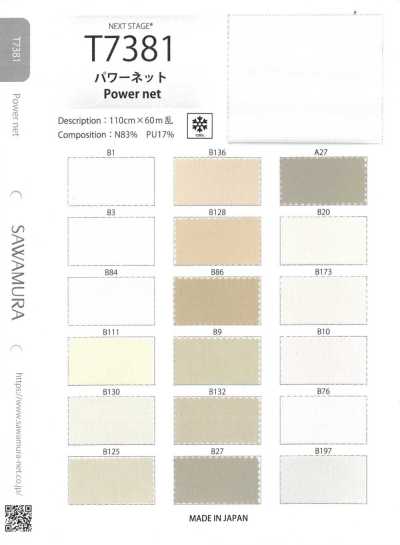
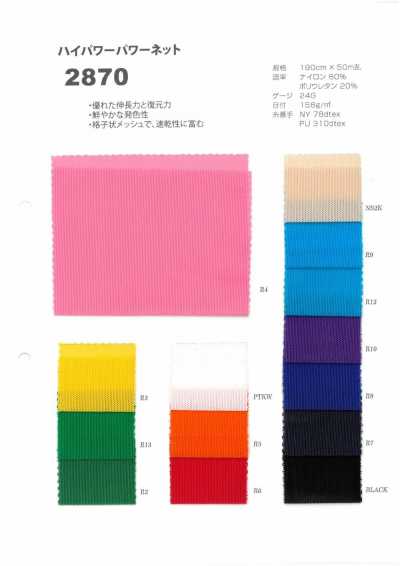
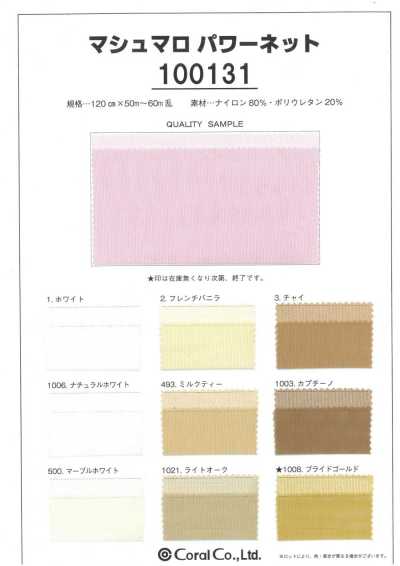
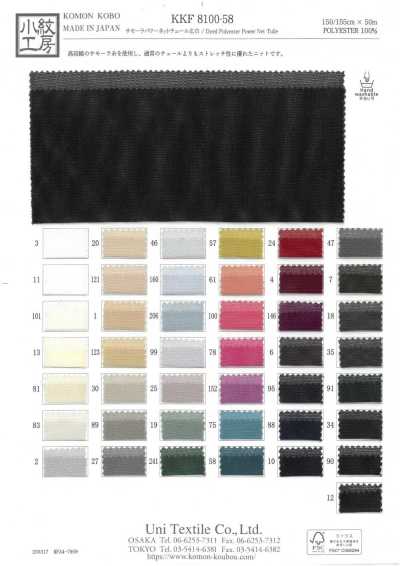
Contents6 sections
Definition and Overview
Power net is a thin, net-like knit that uses polyurethane elasticity to stretch along the body and then recover. It is often made as a warp knit, and its strength and stretchability vary depending on the mesh size, yarn thickness, and how the polyurethane is used.
“Power” refers not simply to stretch, but to the holding force and compression feel created when stretched. However, there is no standardized measure for the degree of holding force, so even products called power net can vary widely in texture and compression.
Features
It generally has a thin, sheer appearance, but higher-density knits can reduce the visibility of the skin underneath. The surface is relatively smooth, and while it is light and breathable, coarse meshes or certain yarn constructions may make it prone to snagging.
Many types stretch in both the lengthwise and widthwise directions, but the stretch rate and recovery differ by direction. For body-support applications, it is important to check not only stretchability, but also recovery after repeated stretching, feel against the skin, and sheerness.
- Flexible and easy to fit closely to the body
- Can provide a moderate hold even when thin
- Mesh construction helps reduce stuffiness
- The knit structure may catch on nails or hook-and-loop fasteners
Main Applications
It is used in areas that require body fit and support, such as shaping underwear, lingerie, the sides and back of bras, and girdles. In swimwear, sportswear, and dance costumes, it may also be used as a lining, insert, or layering material.
Because it is thin and makes use of breathability, it is also suitable for spring and summer innerwear and costumes. However, since it is not a material for insulation, it is commonly used in autumn and winter products as an inner shaping component or as a layer with other textiles.
Selection and Handling Notes
Depending on the application, check the stretch direction, holding force, thickness, mesh fineness, and sheerness by actually stretching the material. Select it by organizing the required performance for each use area, such as prioritizing appearance for outer layers and skin feel and recovery for linings and shaping parts.
When cutting, lay it out with the grain aligned so that the textile is not stretched. During sewing, consider adjusting the differential feed and using a stretch-friendly stitching method to avoid waviness caused by excessive feeding. The seam also needs a construction that can follow the stretch of the textile.
If polyurethane is damaged by washing or heat, stretchability and recovery may decrease. Shrinkage and dimensional change vary depending on blend ratio, knit structure, and finishing, so before mass production, perform washing and sewing tests and confirm the washing instructions suitable for the product.
Differences from Similar Terms
Mesh refers broadly to textiles with an open, net-like structure and does not necessarily imply holding force. In contrast, power net generally refers to a net-like knit that emphasizes stretch and body-supporting force.
Tulle is also a sheer, net-like textile, but it often emphasizes decoration and a light appearance, and is usually not intended to provide shaping support. Tricot is a type of warp knit, and power net may be made from a warp-knit structure including tricot.
Frequently Asked Questions
How much does power net stretch?
The stretch rate varies greatly depending on the knit structure, yarn thickness, polyurethane blend ratio, and placement. It may also stretch differently in the lengthwise and widthwise directions. Check the actual material not only by numbers, but by whether it stretches in the required direction and recovers sufficiently after release.
Can power net be washed at home?
Some types are suitable for home washing, but this depends on the material composition, processing, and product specifications. Strong friction, heat, and chlorine bleach can all contribute to deterioration. Follow the care label, and confirm the dimensions and recovery after washing before productization.
How can waviness in power net seams be prevented?
Sew without pulling the textile, and adjust the presser foot pressure and differential feed through trial sewing. Match the sewing thread, needle, and stitch type to the stretch of the textile. After sewing, it is important to stretch the seam and check for thread breakage or popped stitches.