Differential Feed
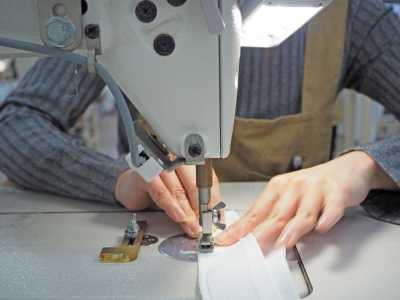
Differential feed is a feed mechanism mainly used on overlock machines that changes the amount of feed from the front and rear feed dogs to reduce fabric stretching and waviness, or to intentionally gather fabric.
Contents6 sections
Definition and Overview
Differential feed is a mechanism that moves two sets of feed dogs positioned before and after the needle plate by different amounts. By creating a difference in the amount of fabric fed before and after it enters the seam, it controls the stretch and shrinkage of fabric during sewing. It is mainly used as a function built into overlock machines.
When the front feed amount is increased, the fabric is fed in a way that pushes it in, allowing shrinkage or gathering. When the rear feed amount is increased, the fabric is fed in a way that pulls it, and it is used to prevent waviness. The effect varies depending on the fabric direction and sewing conditions.
Position in the Process
Differential feed is adjusted during the sewing process after cutting, when joining pieces or overlocking edges. It is an important condition, especially for knit or stretch materials, to prevent stretching, shrinkage, and seam waviness that occur at the plain-sewing stage.
In mass production, the sewing specification sheet clearly defines not only the seam type, but also the target area, the face and reverse sides of the fabric, and the sewing direction. In factories, trial stitching before mass production combines differential feed, thread tension, presser foot pressure, and stitch count to check appearance and stretchability.
- Sewing areas that should not stretch, such as shoulder seams and armholes
- Finishing areas where waviness tends to stand out, such as hems and necklines
- Processes that gather fabric while sewing gathers or ruffles
- Overlock finishing and plain sewing of stretch materials
Setting and Practical Points
Settings are determined while checking edge waviness, shrinkage, puckering, and how well the seam follows when stretched. If only differential feed is changed greatly, dimensions and hand feel are likely to be affected, so it is important to adjust thread tension, presser foot pressure, and sewing speed as well.
Even with the same fabric, the proper conditions change depending on the grain direction, the shape of the cut parts, the number of layers, and whether tape or elastic band is used. Curved sections and bias directions are especially likely to behave differently, so confirmation should be made with test pieces under the same conditions as mass production.
Notes for Ordering and Quality
When requesting sewing, do not simply specify that differential feed is to be used; instead, share concretely the defect conditions that are unacceptable in the finished product. For example, check hem waviness, shrinkage around the seam, thread breakage when stretched, and side-to-side differences against samples and the specification sheet.
The way differential feed settings are expressed differs depending on the machine model and the factory's management method, so it is safer not to give instructions by numbers alone. Based on an approved sample, agree on the target area, sewing direction, seam, and appearance standards, and also check during the early stage of mass production.
- Whether the sewing machine used supports differential feed
- Trial stitching using the mass-production specification including fabric, trims, and interlining
- Whether waviness or shrinkage remains noticeable after washing
- Whether there is variation in the amount of gathering or the finished dimensions
Differences from Similar Terms
Top and bottom feed is a method in which the fabric is fed not only by the feed dogs but also by an upper feeding mechanism. It helps prevent the layered fabric from shifting and has a different purpose and mechanism from differential feed. On machines equipped with both, they may be used together depending on the material and specifications.
Puckering is a phenomenon in which fine shrinkage and wrinkles appear around the seam. It can occur due to improper differential feed settings, but thread tension, the combination of fabric and thread, and sewing conditions can also be causes, so it cannot be judged by differential feed alone.
Frequently Asked Questions
Is differential feed needed for fabrics other than knits?
It may be needed. With lightweight fabrics, bias-cut parts, slippery materials, and woven fabrics that stretch easily, waviness or stretching can occur during sewing. However, do not decide based on the material alone; judge by trial stitching that includes the seam type, sewing direction, and layered components.
What should be noted when creating gathers with differential feed?
Gathering created by differential feed can vary in appearance depending on the feed amount, sewing speed, and fabric friction. It is important to check the required finished dimension and the uniformity of the gathers, and to define the sewing direction and start/end points. If the design requires an exact amount, consider another gathering method as well.
Can seam waviness be improved only with differential feed?
It can be improved, but there are cases where it cannot be solved by differential feed alone. Also check factors such as thread tension being too strong, high presser foot pressure, needles or thread not matching the fabric, or the fabric being pulled during sewing. Evaluation should include the stretching and recovery after washing and wearing.