Nordic Pattern
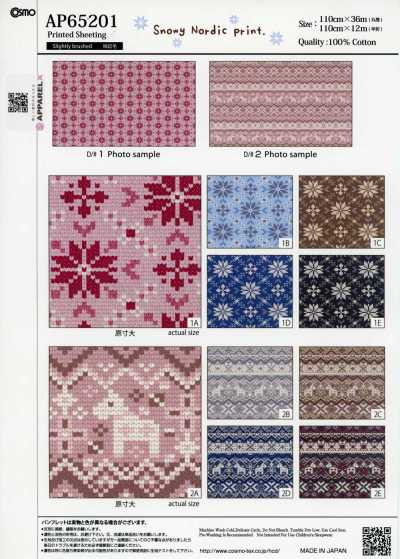
What is a Nordic pattern? It is a pattern inspired by traditional Scandinavian knit motifs, with snowflakes, stars, geometric designs, and other motifs arranged in a repeating sequence.
Contents5 sections
Definition and Overview
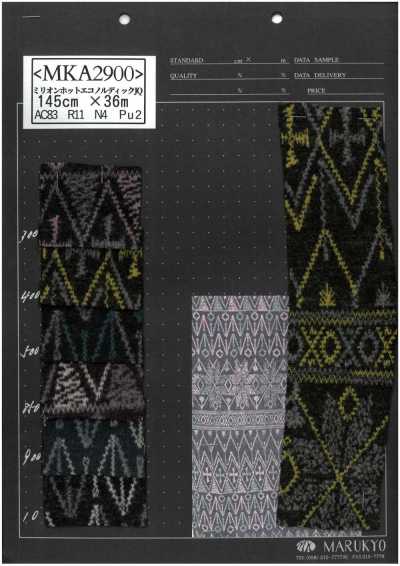
Nordic pattern is a general term for patterns based on the decorative motifs seen in traditional knitwear from the Nordic region. It is often composed by repeating motifs such as snowflakes, stars, diamonds, crosses, and reindeer in bands.
In Japanese apparel, the term may be used for designs that use winter-like geometric patterns or snow motifs, regardless of whether they are strictly derived from Nordic tradition. For this reason, the scope of the term varies depending on the planning or sales context.
How the Pattern Developed and How It Is Named
Originally, it mainly referred to stranded patterns created by knitting multiple colored yarns, but it also includes designs expressed by printing, embroidery, and jacquard. It refers to the pattern itself and does not mean a specific material, knit structure, or woven structure.
Snow pattern is the name used for a pattern centered on snowflakes. Snow pattern can be included in Nordic pattern, but Nordic pattern also includes geometric motifs and animal motifs other than snow, so the two are not exact synonyms.
Fair Isle pattern refers to a traditional stranded pattern characterized by color combinations and fine geometric motifs. In practice, it may also be grouped as Nordic pattern, but treating it separately as a term indicating a distinct stranded style makes it easier to share the design intent.
Main Applications and Seasonality
It is often used for autumn and winter knits such as sweaters, cardigans, vests, hats, and scarves. It is also used for cut-and-sew items printed on brushed materials, fleece, and French terry, as well as loungewear, kids' clothing, and blankets.
Because of the motifs and color combinations that evoke cold regions and winter life, it is generally a pattern that easily creates an autumn-winter impression. However, by making the material lighter and adjusting the color combinations and motif size, it can also be used for designs with a less seasonal feel.
Points to Note When Choosing Fabric and Cutting
When expressed through knitting, check the fineness of the pattern, number of colors used, thickness of the knit, and stretchability. In multicolor knits, the yarns carried across the back may catch on clothing during wear, so check the back side condition and sewing specifications according to the intended use.
For printed or jacquard fabrics, be sure to check the repeat size, which is the unit of the pattern, and the direction of the pattern relative to the grain. Even motifs such as snowflakes that do not clearly show an up or down direction may have a set top and bottom in the overall arrangement.
Because band-like patterns are especially noticeable if they shift at the boundaries between the front body, back body, sleeves, and other parts, plan the pattern layout with pattern matching in mind. Specifying the pattern position at cutting may increase fabric consumption, so it is important to confirm the required amount of fabric through marking before mass production.
- Check the continuity of the pattern at the neckline, front opening, and side seams.
- Align the height of the main motifs on the left and right bodies and sleeves.
- For large patterns, check whether the center position of the pattern looks unnatural in each size.
- For striped arrangements, check how the pattern edges appear at the hem and cuffs.
Frequently Asked Questions
What is the difference between Nordic pattern and snow pattern?
Snow pattern is the name used for a pattern centered on snowflakes and similar motifs. Nordic pattern is often used as a broader term that includes snow pattern as well as Nordic-style repeated motifs such as stars, diamonds, and animals. However, in sales settings, the two may also be treated as having the same meaning.
Does Nordic pattern fabric require pattern matching?
If there are band-like motifs or large motifs, pattern matching should be considered. This is because noticeable shifts in the side seams, center front, or sleeve attachment positions stand out. Specifying the pattern position may reduce cutting efficiency and increase fabric consumption compared with standard layouts.
Can Nordic pattern be used for anything other than knitwear?
Yes. If printed, it can be used on cut-and-sew fabrics, shirting fabrics, and French terry; if made as jacquard, it can be expressed in woven fabrics or knits. The way the pattern appears, thickness, warmth, and ease of handling during sewing differ depending on the material, so choose according to the item's intended use.