Knit Denim
Knit denim is a general term for knit textiles that combine the stretch and softness of knitwear with indigo-like coloring and a denim-like appearance.
Contents6 sections
Definition and Overview
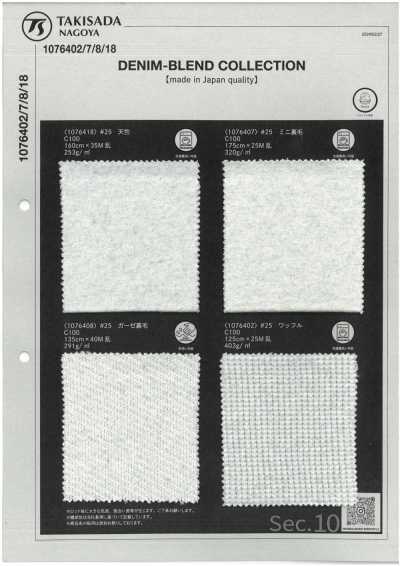
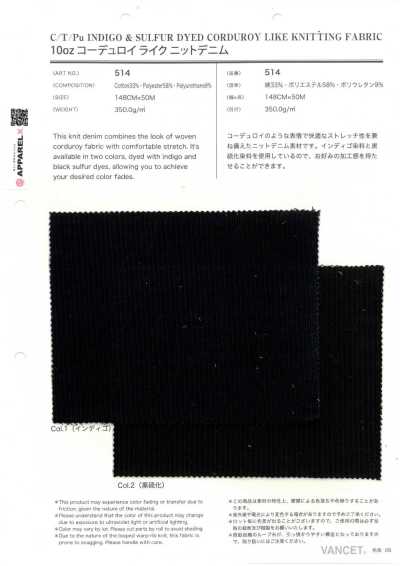
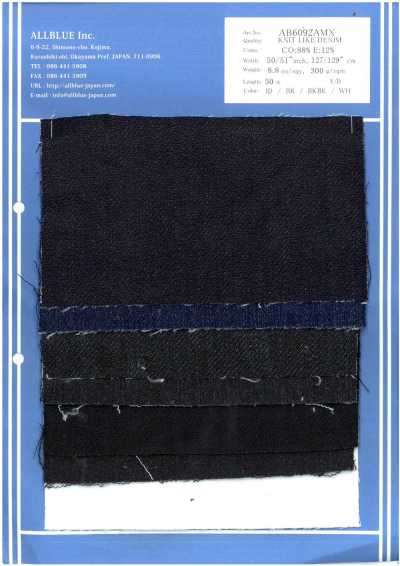
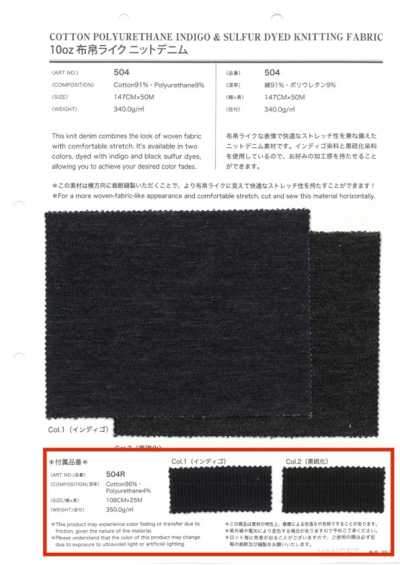
Knit denim is a knitted fabric that incorporates design elements such as the blue-toned color, uneven texture, and twill-like surface seen in denim. The material, knitting structure, and dyeing method are not fixed; some are made with jersey or French terry as the base.
While ordinary denim is a woven fabric made by interlacing warp and weft yarns, knit denim is made by continuously forming loops. Therefore, even though the name includes denim, its structure and handling during sewing should be considered as knit.
Feel and Function
Compared with woven denim, it is characterized by being easier to achieve stretch, softness, and a comfortable fit against the body. Depending on thickness and knitting structure, it can deliver a lightweight wearing feel while maintaining a casual denim-like appearance.
The appearance varies depending on indigo-style dyeing, heather effects, printing, and surface finishing. Stretch performance is not determined only by polyurethane blending; because the knitting structure itself also provides stretch, it is important to check the stretch in each direction.
Main Applications
Used for cut-and-sew items, shirts, outer layers, dresses, skirts, pants, and more. It is also suitable for kids' wear that takes advantage of ease of movement, relaxed set-ups, and casual jackets.
Lightweight types are suited to spring and summer tops and shirts, while heavier types are suited to autumn and winter pants, outer layers with a sweatshirt-like feel, and outerwear. However, warmth retention and breathability vary depending on thickness, blended fibers, and the construction of the reverse side.
Selection and Handling Notes
Choose according to the intended use by checking fabric weight, thickness, rebound, denim-like appearance on the surface, and sheerness. For pants and high-stress areas such as the knees and elbows, verify through testing or sewing samples how well the fabric recovers after stretching, and whether there is pilling from friction or color transfer.
Knits may stretch during cutting and sewing, or the edges may curl. Align the grain and relax the fabric before spreading, and consider sewing specifications that accommodate differential feeding and stretch. Use stay tape as needed at shoulder seams, pocket openings, and front edges.
The degree of shrinkage, skewing, color fading, and color transfer caused by washing differs by fabric. In particular, dark denim-style fabrics require handling based on the product care label and test results, such as washing separately, turning inside out before washing, and avoiding leaving them wet for long periods.
- Check post-wash shrinkage and skewing before mass production.
- Let the fabric rest before cutting, and check for curling or twisting.
- Confirm measures against seam puckering and thread breakage due to stitch stretch.
- Check colorfastness to rubbing for dark colors, and be careful when pairing with light-colored products.
Difference from Denim
Denim generally refers to woven fabric made with a twill weave. It has a firm feel and the stability characteristic of woven fabrics, with the twill texture created by the crossing of warp and weft yarns as a defining feature. Knit denim is a knit fabric with a denim-like appearance, and its structural classification is different.
Because knit denim stretches easily, it is easier to design for wearing comfort, but dimensional stability, stitch stretch, and changes after washing must be checked more carefully than with woven denim. Rather than choosing it only for its denim-like appearance, select it based on the required durability and silhouette.
Frequently Asked Questions
What is the difference between knit denim and regular denim?
Regular denim is mainly a twill woven fabric, while knit denim is a knit fabric with a denim-like appearance. Knit denim more easily provides stretch and softness, but because dimensional changes such as stretching, shrinkage, and skewing can occur, patterns and sewing specifications need to be designed with those changes in mind.
Does knit denim shrink when washed?
Whether it shrinks, and by how much, depends on the fiber type, knitting structure, and dyeing and finishing processes. Since vertical and horizontal dimensions may change or skew during washing, fabric testing and product wash testing should be carried out under the intended washing conditions before mass production.
What should be noted when sewing knit denim?
Due to the stretch of the knit fabric, seam waviness, stitch stretch, and thread breakage may occur. Set the needle, thread, and feeding conditions appropriate for the fabric, and choose a stretchy sewing specification if needed. For shoulder seams and openings, the use of stay tape should also be considered.