Unlined Back
Unlined back refers to a construction mainly used in jackets where the lower back is left without lining, while the shoulders, upper back, front panels, sleeves, and other areas are lined.
Contents6 sections
Definition and Overview
Backless lining is a tailoring method used mainly for jackets in which the lining is not attached across the entire back; instead, lining is placed on the upper back, the facing side of the front body, and, if needed, the sleeve lining. Because the lower back shows the shell fabric on the inside, it tends to feel lighter than a full lining.
In contrast to a full lining, which covers the entire back with lining, backless lining limits the area where lining is used. However, the shape of the back lining, whether sleeve lining is included, and the extent of lining used in the front body vary depending on the product design and sewing specifications.
Areas Used and Their Roles
With backless lining, the back lining is placed from around the shoulder blades to the upper back to cover seam allowances around the shoulders and improve ease of putting on and appearance. The front body is often constructed by combining the facing and lining, and sleeve lining is generally used to make it easier to put the arms through.
Leaving the lower back as shell fabric makes it easier to reduce heat buildup and weight caused by layered lining. On the other hand, because the back side of the shell fabric contacts the skin or shirt, the feel of the fabric itself, friction, and the handling of seam allowances affect comfort when worn.
Lining Materials and Types
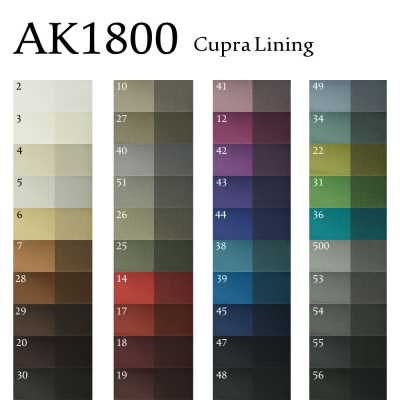
For lining, woven fabrics such as cupro, rayon, and polyester are used with consideration for slipperiness and drape. In the sleeves and front body, properties that reduce friction with the shell fabric and innerwear and help the arms pass through and the garment go on and off are especially important.
For shell fabrics with stretch, one option is to choose stretch lining or knit lining that can follow the stretch more easily. Since the lower back has no lining, fabrics that are prone to showing through, coarse weaves, or brushed materials should be checked for the finished appearance, including whether the back side of the shell fabric or seam allowances will show.
Selection and Sewing Considerations
Lining is selected by considering slipperiness with the shell fabric, thickness, stretch, tendency to generate static electricity, and dimensional changes caused by washing or dry cleaning. If the shell fabric is thin, check whether the color or luster of the lining will show through to the outside, and if sheerness is a concern, the specification should be reconsidered.
If there is a large difference in stretch between the shell fabric and the lining, it can cause pulling, sagging, and waviness at the seams when worn. Since the edges of the back lining, the center back, and the shoulder insertion area are subject to movement-related stress, the extra ease from the back, seam allowance finishing, and the amount of easing during sewing should be clearly defined in the specification sheet.
Because backless lining has no lining in the lower back, the appearance is affected by the internal overlock finishing, piping, and how the seam allowances are opened. It is important to choose the finishing method according to the structure and thickness of the shell fabric, and to check skin feel, seam allowance show-through, and fraying tendency in a prototype.
Difference from Full Lining
Full lining is a specification in which the inside of the front body, back, sleeves, and other areas is broadly covered with lining. While lining makes it easier to hide seam allowances in the shell fabric and helps provide warmth and ease of putting on and taking off, it may increase weight and heat buildup compared with backless lining.
Backless lining does not simply mean omitting lining; it refers to a construction in which the lower back is shown with the shell fabric. It differs from a specification that omits only sleeve lining, or from an unlined single-layer construction that does not use lining at all, so the parts lined and the purpose should be clearly distinguished when communicating the specification.
Frequently Asked Questions
Does a backless-lined jacket need sleeve lining?
In many cases, sleeve lining is included even in backless lining. This is because sleeve lining helps the arms go through more easily and reduces friction with shirts and innerwear. However, in designs that prioritize stretch or light weight, sleeve lining may be omitted. The decision is made based on the slipperiness of the shell fabric and wear testing.
Is backless lining only a specification for summer jackets?
Backless lining is sometimes used in spring and summer garments because it is easier to achieve lightness and breathability, but it is not a specification determined by season alone. It is selected according to the thickness and warmth of the shell fabric, the intended use, and the desired appearance on the inside. Even with autumn and winter materials, backless lining may be chosen to emphasize a lighter feel.
If the shell fabric is stretch material in backless lining, what should be noted?
If the shell fabric stretches but the lining does not, pulling or tightness may occur at the shoulders, sleeves, or front body. Consider stretch lining or knit lining, and adjust including the amount of extra ease. Since the lower back consists only of the shell fabric, it is also necessary to check recovery from stretching and the finishing of seam allowances.