Full-needle Rib
Full-needle Rib is a type of rib knit made on a flat knitting machine by alternately using needles on the front and back needle beds, creating ribs across the entire fabric. Taking advantage of its elasticity and recovery, it is mainly used for cuffs, hems, and collars.
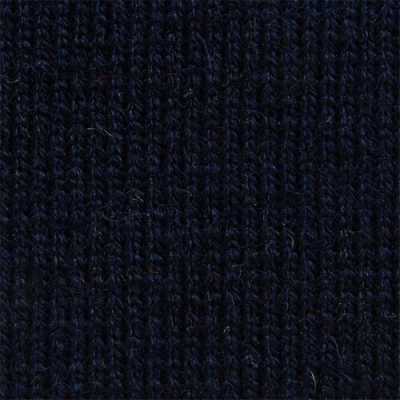
Contents6 sections
Definition and Overview
Souhari is a rib structure knitted on a flat knitting machine by alternately using needles on the front and back needle beds. Because the needles are used consecutively across the arrangement, it is called Souhari, and the front and back look relatively similar, producing a neatly arranged ribbed knit.
In apparel materials, the term often refers to ribs used for cuffs, hems, and collars attached to the body fabric. However, the naming and scope of the structure vary by knitting factory and trading partner, so specifications should be confirmed together with a structure sample.
Knitting Method and Structure
In Souhari, adjacent stitches are alternately arranged on the front needle bed side and the back needle bed side. As a result, vertical ribs appear on both the front and back, and the fabric stretches horizontally when pulled and is likely to return to its width when released.
The material of the knitting yarn, yarn thickness, stitch density, and whether elastic yarn is used all affect thickness, firmness, and rebound. The name of the structure alone does not determine the texture or level of stretch.
How to Specify It
Souhari rib is specified by combining gauge, finished width, color, material and blend ratio, yarn usage, and whether elastic yarn is used. Gauge indicates the fineness of the knitting machine needles, and it is important to confirm not only the number but also the desired thickness and appearance of the ribs with a sample.
Width is often handled as the finished measurement when laid flat, and it differs from the measurement in a stretched state. The number of elastic bands may indicate the number of elastic yarns knitted in or fed, but since notation differs, the installation position and stretch direction should also be clearly stated.
- State that it is Souhari and note the gauge in the specification sheet.
- Specify the finished width when laid flat and, if necessary, the width when stretched.
- Confirm the yarn material, count, and number of ends, as well as whether elastic yarn is used and how it is used.
- Manage an actual sample for color matching or a color number.
Main Applications
Souhari rib is used for areas such as cuffs, hems, and collars where the edges need to be shaped while following the body or body fabric. In cut-and-sew, knitwear, sweatshirts, and blousons, it is also used to improve the fit of openings and as a design color change.
The required tightness and thickness differ depending on the application. For cuffs and hems, the balance with the body fabric is considered; for collars, the stretch and recovery around the neck; and for button plackets and similar parts, the relationship with buttons or zippers is considered when selecting the knit structure specification.
Selection and Sewing Notes
If the rib’s recovery is weaker than the body fabric, the cuffs or hems may wave or look stretched after wear or washing. Conversely, if the tightening is too strong, it can impair ease of putting on and wearing comfort, so confirmation is made not only of the finished product dimensions but also of the stretched state.
During sewing, the rib is evenly stretched to the required amount and sewn to the body fabric. If the amount of stretch is uneven, it can cause puckering or twisting. Before mass production, it is reassuring to carry out sewing tests including sewing thread, stitch, and dimensional changes after washing.
TERECO Rib Fabric is used as a name for rib knit fabrics with varying rib width and front-back stitch arrangement, and it may be distinguished from Souhari. Circular rib is also sometimes used to refer to rib knit fabrics, but because it can include the fabric form and distribution terminology, it is important not to judge them as the same based on the name alone.
Frequently Asked Questions
What is the difference between Souhari and TERECO Rib Fabric?
Souhari generally refers to a rib structure that alternately uses the front and back needle beds. On the other hand, TERECO Rib Fabric may be used to refer to rib knit fabrics with variations in rib width and needle arrangement. However, because usage varies even within the industry, confirmation is made using a structure chart or actual sample.
What does the number of elastic bands in Souhari rib mean?
The number of elastic bands generally indicates the number of elastic yarns aligned into the knit fabric or how they are used. As the number increases, it affects recovery strength and tightening, but the finish varies depending on the yarn type, knitting method, and notation standard. When ordering, also confirm the type and placement of the elastic.
What points should be noted when attaching Souhari rib to the body fabric?
It is important to decide in advance the shrinkage ratio of the rib relative to the body fabric and to distribute it evenly around the entire circumference during sewing. If the rib is stretched too much, waviness or sewing shrinkage will occur; if it is too weak, the opening will lose shape. Before mass production, confirm the sewing sample and the condition after washing.