Gauge
Gauge is an indication used mainly for knitwear and rib knit, showing the fineness of the knitting machine needles and serving as a guide to stitch size, thickness, appearance, and stretch of the knitted fabric.
Contents6 sections
Definition and Overview
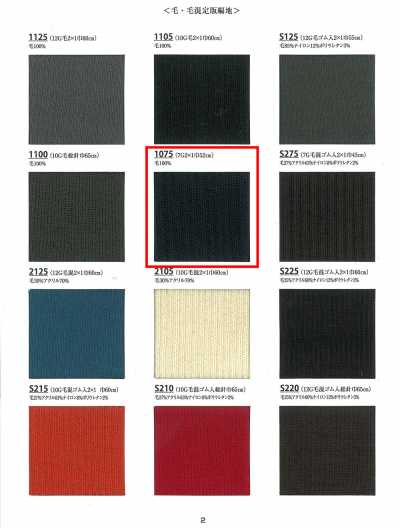
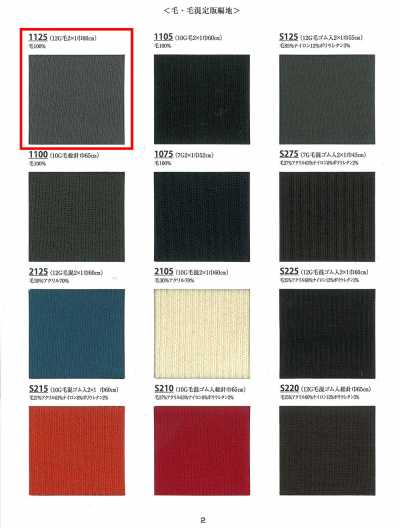
Gauge is an index of knitting-machine fineness, generally expressed as the number of needles arranged per a fixed length of the knitting machine. For rib knit, it is written as "7G" or "10G," where G means gauge. The larger the number, the finer the needle spacing.
However, it is not an indication that directly guarantees the number of stitches or dimensions of the finished knitted fabric. Depending on the yarn thickness, knitting density, structure, and finishing process used, the same gauge can produce different thickness, texture, and stretch.
Knitting Method and Structure
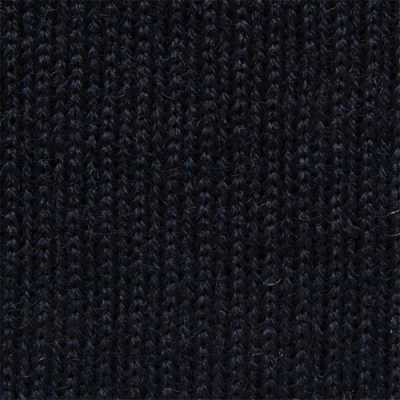
Knitted ribs used for cuffs, hems, and collars are based on rib knitting, in which knit stitches and purl stitches are arranged alternately in the vertical direction. Because this structure creates ridges, it stretches easily in the horizontal direction and uses its tendency to recover after stretching to fit the edge along the body.
Specifications may also include notations such as "1×1" and "2×1," which indicate the arrangement of knit and purl stitches. These show the number of rib stitches and the ridge structure, and do not indicate how many elastic yarns are used.
- 1×1 is a structure in which one knit stitch and one purl stitch are arranged alternately.
- 2×1 is a structure in which two knit stitches and one purl stitch are repeated.
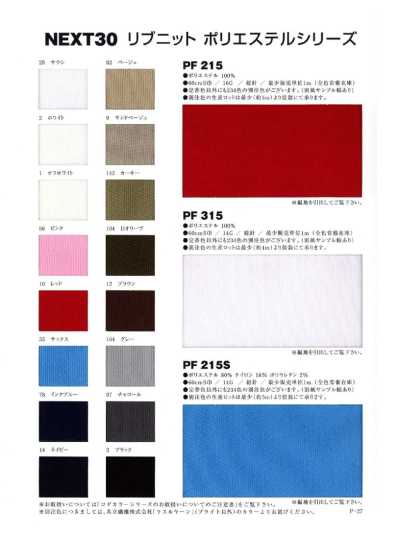
- Full needle is often used to refer to a knitting method or knitted-fabric specification that uses all needles without resting, and it should be checked separately from the ridge structure of rib knit.
- Elastic yarn rib is a specification with improved recovery, such as by knitting elastic yarn into the fabric.
How to Describe Specifications
When ordering or managing rib knit, specify not only the gauge but also the finished width, length, structure, color, material, thickness, and whether elastic yarn is included if necessary. Gauge alone cannot determine the finished dimensions or tightness.
Clarify whether the width refers to the finished measurement when laid flat or the circumference when made into a loop. Also, since the amount of stretching differs before and after attachment to cuffs or hems, share the pattern dimensions, seam allowance, and stretch rate during sewing in the specification sheet.
Main Applications
Knitted ribs are widely used for the cuffs, hems, and collars of cut-and-sewn items, knitwear, and blousons. They are used to secure stretch at the edge while neatly finishing sleeves and hems or shaping the neckline.
Depending on the application, consider fit and recovery for cuffs, balance with the body fabric thickness for hems, and skin feel and neck stretch for collars. When selecting a gauge or structure different from the garment body material, check both the appearance and the ease of sewing.
Selection and Sewing Notes
Fine gauge tends to produce a compact, delicate appearance, while coarse gauge tends to show more visible stitches and thickness. Choose according to the thickness of the body fabric, the product style, and the desired fit, and confirm stretch and recovery with a physical sample.
In sewing, it is important to evenly distribute the difference in circumference between the rib and the body and not to sew while pulling excessively. Choose stitching methods and thread that follow the stretch, and prevent seam shrinkage, waviness, and puckering. Also check shrinkage and twisting after washing in advance tests.
Gauge indicates the fineness of the knitting-machine needles, while density is a concept that indicates how tightly stitches and yarn are packed within a given measurement. Yarn count is an index that expresses yarn thickness, and it is different from gauge.
Frequently Asked Questions
Does a larger rib gauge number mean finer knitting?
Generally, the larger the number, the finer the needle spacing and the finer the stitches appear. However, because thickness, firmness, and stretch of the knitted fabric vary depending on yarn thickness, knitting density, structure, and finishing, do not judge by gauge alone; check the actual sample.
Does the number in "2×1 rib" indicate the number of elastic yarns?
No. It usually indicates the structure of rib knitting, in which two knit stitches and one purl stitch are repeated. Whether elastic yarn is used is a separate specification. When ordering, confirm whether elastic yarn is included and the stretch properties in addition to the structure notation.
How should the width of rib knit be specified?
Clearly state whether it is the finished width when laid flat or the circumference in loop form, and specify it together with the length, gauge, structure, color, and material. In addition, sharing the body dimensions of the attachment point and the amount of stretch during sewing makes it easier to reduce side-to-side differences and waviness.