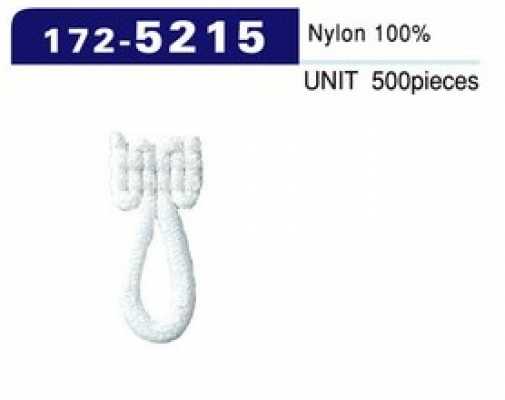
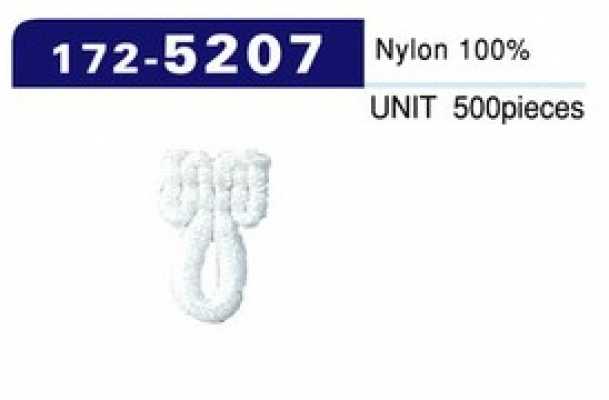
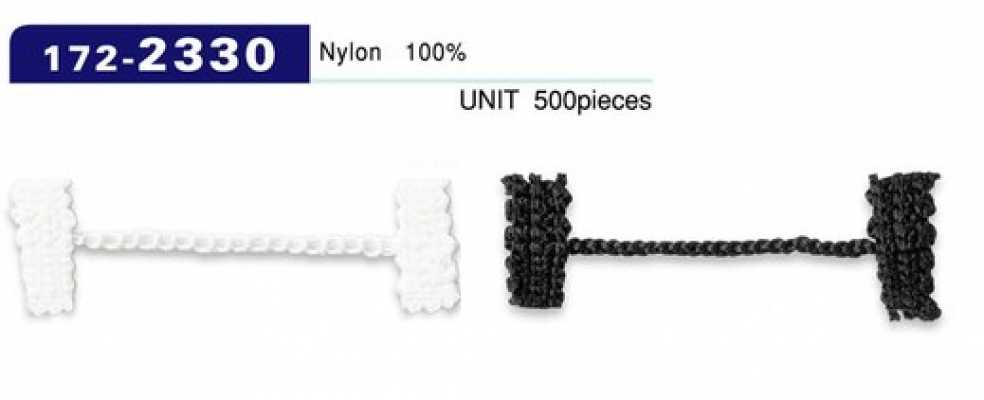
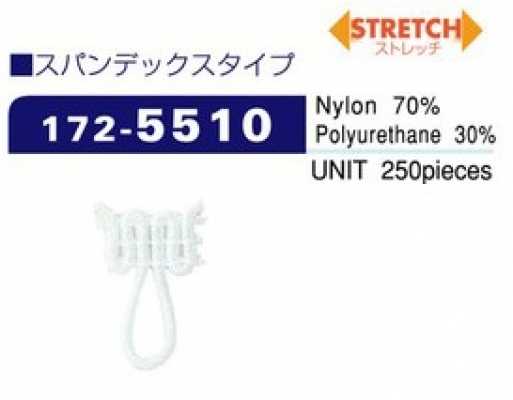
Frog
A frog is a highly decorative fastener used to secure an opening in a garment, made by tying cords or braids into ornamental knots to form loops and ball-shaped closures.
Contents6 sections
Definition and Overview
A frog is a fastener made by tying cords or braids. It is opened and closed by hooking one looped side over the knot or braided closure on the opposite side. It serves both as a fastening function and as decoration, and is often attached as a pair on the center front.
Frog can refer either to an individual fastener or to the overall front-opening design made by arranging multiple frogs in sequence. In specifications, stating the number used, left-right orientation, attachment position, and amount of overlap helps prevent misunderstandings.
Areas of Use and Role
It is mainly used for the front openings and necklines of jackets, coats, blouses, and dresses. While it is a practical fastener for opening and closing the front edge, its curved knots and repeated arrangement also play a decorative role in emphasizing the front of the garment.
Outside the front opening, it may also be used at cuffs, necklines, and side openings. However, in areas subject to repeated strong pulling, it is advisable to consider a specification that adds auxiliary fasteners such as snap buttons on the inside rather than concentrating the load on the frog alone.
Materials and Types
Materials include cords and braids made from rayon, polyester, cotton, silk, nylon, and similar materials. Thin shiny cords create a delicate and elegant impression, while thicker, firmer braids produce a clearer outline and a more three-dimensional look.
The basic structure consists of loops and ball-shaped fasteners, but the appearance changes depending on the knot shape, cord thickness, presence or absence of tassels, and the number arranged in sequence. In addition to flat styles, there are three-dimensional styles that emphasize the braid, and these are selected according to the garment's style and the thickness of the fabric.
- Basic type with paired loops and balls
- Highly decorative type with curved elements linked in sequence
- Type with tassels for added movement
- Continuous type with multiple pieces arranged along the front edge
Main Uses and Differences from Similar Terms
Frogs are often seen in garments that incorporate Chinese-style design elements, or in decorative front openings derived from military uniforms. They are used in ethnic-style clothing, stage costumes, and formal wear, and in modern clothing they are used partly as accents at the neckline or front edge.
China buttons generally refers to a fastener made from braided cord similar to a frog, or to a Chinese-style button specification using such a fastener. Brandenburg, on the other hand, often refers to a design in which decorative braids are laid horizontally across the front opening, and the scope of the term may overlap depending on the industry or product.
A button loop is a looped component used for passing buttons and similar items through, and it is a structure also used in the loop part of a frog. However, a frog refers to a more decorative fastener that includes not only the loop but also the corresponding knot or decorative braid on the other side.
How to Choose, Handle, and Sew
When selecting, check the cord thickness and firmness, the inner diameter of the loop, the size of the ball part, and the thickness of the fabric together. If the loop is too small, it will be difficult to fasten and unfasten; if it is too large, it may come undone easily. Before mass production, it is important to conduct opening and closing tests using the actual fabric and interfacing.
The sewn area is where the force during opening and closing is concentrated. For fabrics that stretch easily at the front edge or thin fabrics, stabilize the base with facing or interfacing, and use reinforcing tape if necessary. Align the left and right heights, the distance from the front edge, and the direction of the knots, and attach them so that the sewing thread is not visible from the front.
Washing and friction may cause fuzzing, fraying, deformation, or color transfer of the cord. In particular, with shiny yarns or dark-colored cords, check the fabric's friction fastness in advance. For specifications that make it difficult to retain shape after washing, consider care methods according to the care label instructions.
Frequently Asked Questions
Are frogs and China buttons the same?
They are sometimes used with overlapping meanings. China buttons is used as a term for Chinese-style braided fasteners, while frog broadly refers to a decorative braided fastener made of loops and ball-shaped closures. When ordering, it is important to confirm by including a shape sample and dimensions.
What should be considered when using frogs for a coat front opening?
For coats, the ease of hooking and unhooking the loops changes depending on the thickness of the fabric and the stiffness of the front edge. Make a prototype using the thickness including the front interfacing, and check whether the attachment area is pulled during opening and closing. If it needs to support a heavy front edge, another method is to add an auxiliary fastener on the inside.
Can frogs be used on garments that are machine-washable at home?
It depends on the material of the cord used and the sewing specification. Because some materials change in stiffness or shape when wet, and some are prone to fuzzing from friction, washing tests must be conducted under the same conditions as the product. Check whether the loop size and knot shape are maintained after washing.
- Search products for "Frog"
- Products with material "Cotton"
- Products with material "Polyester"
- Products with material "Nylon"
- Products with material "Silk"
- Products with material "Rayon"
- Products for style "For Outerwear/blousons/coats"
- Products for style "For Jackets/Suits"
- Products for style "For Shirts/blouses"
- Products for style "For Skirts And Dresses"
- Products for style "For Costumes/dresses"
- Products for style "For Formal Wear"
- Browse Button Loop・frog Button products