Custom Order
A custom order is a transaction in which, rather than using an existing fabric specification, part or all of the material, weave structure, color, pattern, finishing, or specifications are designated according to the buyer’s request and then produced or arranged.
![HK3300LB [Custom Order 1 Color, 25 M] 30×30/2 Double-sided Flannel Brushed Lezave](/img/item/thumb/OKURA/1111401_t2.jpg)
Contents6 sections
Definition and Overview
In fabric trading, custom order means not purchasing standard fabric that has already been stocked as an inventory item, but instead making fabric to match the brand's or buyer's specifications, or arranging it by changing the specifications of an existing fabric. It is used for woven fabric and knit production, dyeing, printing, and finishing processes.
"Custom order" may refer either to the finished fabric itself or to the transaction for its production and arrangement. The extent of specification changes varies by case, so the content cannot be judged from the term custom order alone; the changes must be clearly defined.
How It Is Used in Fabric Trading
Custom orders are considered for situations such as dyeing to a desired color, printing an original pattern, changing the material blend ratio or yarn usage, adjusting fabric width and fabric weight, and adding functional finishes such as water repellency. Some cases use existing greige fabric and specify only dyeing or finishing, while others are designed from the yarn stage.
At the early planning stage, the direction is confirmed with fabric samples or swatches, and small tests such as lab dips are carried out if necessary. After that, mass production feasibility, minimum lot size, delivery lead time, and pricing conditions are checked, and full production proceeds based on the approved specifications.
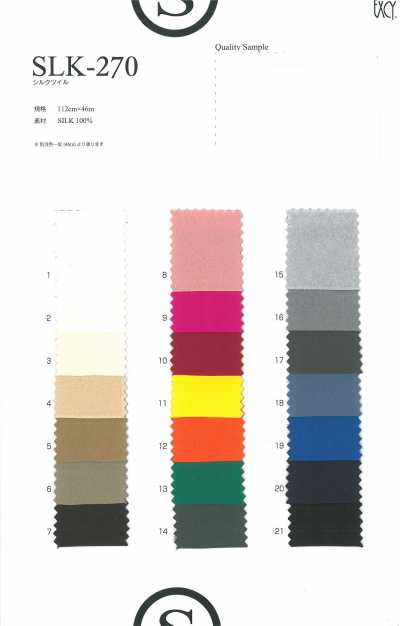
- Color custom order: arranging for an existing quality to be dyed to a specified color.
- Pattern custom order: specifying printed patterns, yarn-dyed color combinations, or woven patterns.
- Specification custom order: designing or changing the structure, blend ratio, yarn count, density, fabric width, fabric weight, and similar factors.
- Finish custom order: specifying finishing conditions such as brushing, water repellency, or coating.
Specification and Numerical Checkpoints
In custom orders, do not proceed based only on a verbal image; fix the conditions with a specification sheet and approved samples. Record the material name, blend ratio, structure, yarn type, color number or color sample, pattern data, finishing details, fabric width, fabric weight, required quantity, and desired delivery date. Applications and sewing conditions are also information related to quality design.
Quantities should be confirmed using the units used by the trading partner, such as meters, yards, or rolls. Minimum lot size and the conditions for additional production vary greatly depending on the fabric construction, dyeing method, finishing details, and production background. Do not judge based on a general standard; confirm in advance for each color count and pattern count.
For fabric width, fabric weight, shrinkage rate, and colorfastness, it is important to agree not only on standard values but also on tolerances and measurement methods. Since lot-to-lot variation can occur in mass production, share judgment samples and inspection standards for color difference, texture, width, length, and variations within and between rolls.
Points to Prevent Misunderstandings
In custom orders, differences between the sample approved at the prototyping stage and the mass-produced item often become an issue, so the items subject to approval must be made clear. Confirm not only color but also texture, thickness, sheerness, front and back sides, nap, pattern direction, and finish feel as much as possible using physical samples. Some colors may look different depending on the lighting conditions, so caution is needed.
Before ordering, confirm whether quantity can be increased or decreased, the date from which delivery time is counted, whether split delivery is possible, roll length, how defects are handled, and reproducibility when placing additional orders. Since custom order fabric may be difficult to change or cancel after the order is placed, designate the person responsible for finalizing the specifications, the approval date, and revision history, and share them among all parties involved.
Differences from Similar Terms
Minimum lot size is a condition indicating the minimum quantity necessary for production or acceptance of an order to be established. Custom order, on the other hand, indicates a form of transaction in which production and arrangement are carried out by specifying the specifications. Although custom orders often have a minimum lot size, the two do not mean the same thing.
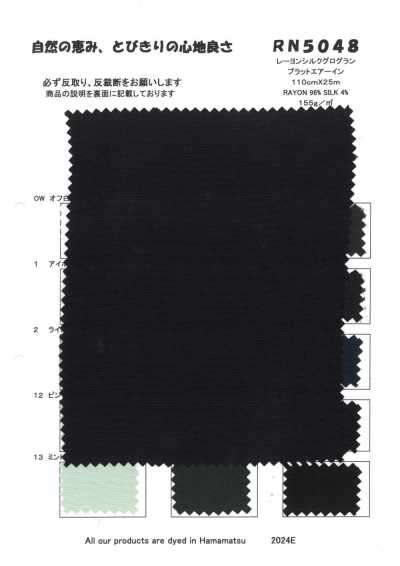
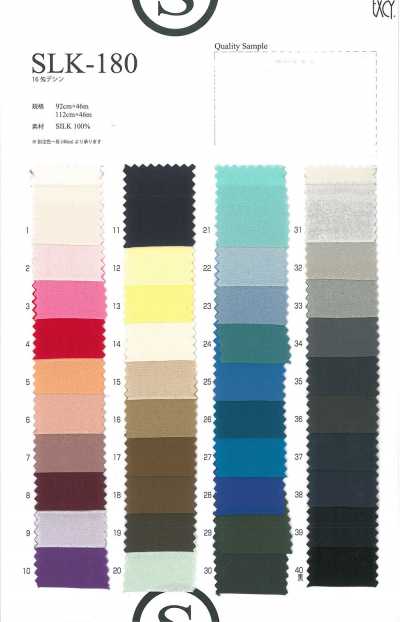
Sample rolls and swatches are samples used to check a fabric's color, pattern, texture, and specifications. Custom orders may proceed based on those samples, but the term does not refer to the samples themselves. A lab dip is mainly a step for checking a dyeing color sample, and it is not a term that represents the entire custom order.
Frequently Asked Questions
What should be decided first in a fabric custom order?
First, organize which item you want to change: color, pattern, structure, blend ratio, or finishing. Then present the application, required quantity, desired delivery date, and the physical sample or color sample to be used as the standard. The specification sheet should also include fabric width, fabric weight, quality standards, and tolerances, and the approval process should be decided.
Can a custom-order fabric be requested even in a small quantity?
Whether this is possible depends on the fabric specifications, dyeing and finishing methods, production equipment, and the number of colors or patterns. It may be possible even for small quantities, but the minimum lot size, unit price, and delivery conditions may change. Consult early, including the possibility of additional production, not just the desired quantity.
Will the color of a custom order match the sample in mass production?
In dyeing, the appearance may differ depending on the raw materials, lot, finishing, lighting conditions, and other factors. It is important to share in advance the approved color sample to be retained, judgment conditions, and the standard for acceptable color difference. Also determine the pre-production confirmation sample and the inspection standards at delivery.