


Crest Button
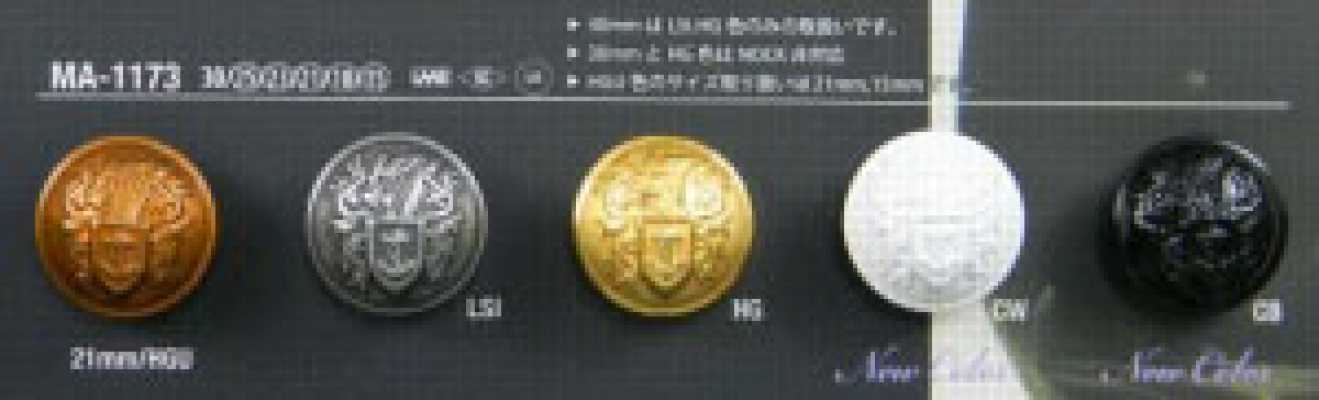
A crest button is a decorative button with designs such as shields, crests, or crowns on its surface, and it is mainly used for the front opening and cuffs of jackets and blazers.
Contents6 sections
Definition and Overview
Crest means a coat of arms in English, and a crest button is a button decorated with a heraldic relief or emblem. It is a practical item used to fasten garments, and at the same time an accessory that creates a traditional, formal impression.
The key element is the surface pattern, so it is not a name that limits the material or attachment structure. It differs from a plain metal button with no pattern on the surface, or a covered button wrapped in textile, in terms of whether it has decoration and how that decoration is expressed.
Materials and Structure
In many cases, it is made of metal and expresses a raised design through stamping or casting. There are also resin versions finished to look metallic, and their lightness, thickness, cost, and suitability for washing and dry cleaning vary depending on the material and surface treatment.
For the attachment structure, a shank button with a looped shank on the back for threading the yarn is common. It preserves the front design without interruption and is easy to attach even to thick textiles. On the other hand, depending on the design, there are also two-hole and four-hole perforated versions.
- Shank: A structure in which yarn is passed through a looped back shank and sewn on.
- Perforated version: A structure in which yarn is passed through holes on the button surface and sewn on.
- Thread-wrapping base: A sewing method that creates a thread stem between the button and the textile to add thickness and ease.
Size Expression
The size of a button is shown by diameter in mm, and may also be expressed in lignes. Since ligne is a traditional unit used for buttons, orders and specifications should be checked in mm, ligne, or both.
Even with the same nominal size, the appearance and thickness change depending on the raised edge and the relief in the center. When changing the size between the front opening and the cuffs, the buttonhole length, shank height, and textile thickness should also be designed accordingly.
Main Applications and Selection
Used for the front openings and cuffs of blazers, tailored jackets, uniforms, and coats. Because the metallic sheen and heraldic design become an accent, combining it with solid or subtly woven-patterned textiles makes the button stand out effectively.
When selecting, check not only the design and color, but also the button weight, back shape, inner diameter of the shank, and the thickness of the textile used. When attaching a heavy button to a thin textile, consider methods that distribute the load on the sewing area, such as using a backing button together with it.
How to Attach and Handling Notes
For shank versions, sew by passing yarn through the shank, and add thread-wrapping if necessary. If the thread-wrapping height is insufficient, the front edge is more likely to be pulled in on thick textiles; if it is too long, the button becomes unstable. Determine mass-production conditions only after checking compatibility with the buttonhole.
Resistance to washing and dry cleaning varies depending on the material, the surface treatment such as plating, and whether there is any adhesive part. Check the care label and the handling conditions for the accessory, and avoid strong impact, friction, and direct contact with an iron. Be aware that discoloration, plating wear, and cracking of resin parts may occur.
Frequently Asked Questions
Are crest buttons and metal buttons the same?
No, they are not the same. Metal button is a term mainly indicating that the material is metal. Crest button is a term indicating a heraldic design; most are made of metal, but there are also resin versions. Therefore, some buttons fall into both categories.
Can crest buttons be machine washed at home?
It cannot be judged uniformly. Depending on the type of metal, surface treatment, and how the decoration is fixed, the risks during washing, such as discoloration, scratches, and peeling, differ. Check not only the product care label but also the handling conditions for the button being used, and conduct tests if necessary.
What should be noted when attaching a shank-type crest button?
Adjust the thread-wrapping length according to the thickness of the textile so that the button does not dig into the textile or float excessively. If the button is heavy, choose the sewing yarn appropriately, and there is also a method of attaching a backing button on the reverse side to distribute the load on the textile.





