Woven Label
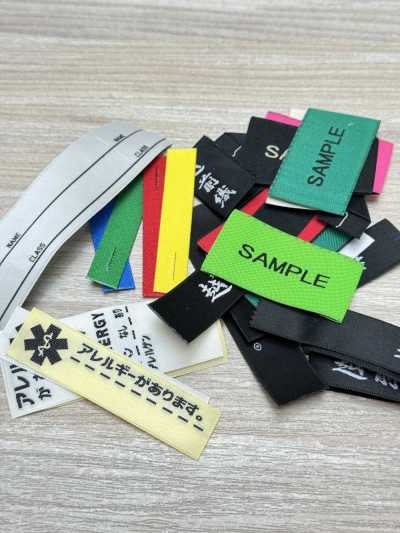
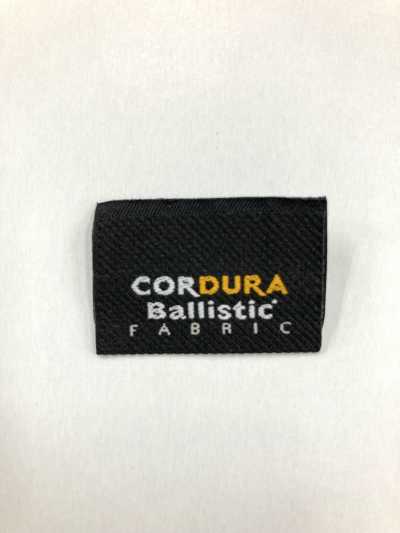
A woven label is a textile label that weaves in brand names, logos, sizes, and other information with yarn and is sewn onto clothing and fashion accessories.
Contents6 sections
Definition and Overview
A woven label is a narrow textile label that expresses text, logos, patterns, and other elements using warp and weft yarns. Its main purpose is brand identification, and it is attached to the neckline, side seams, hem, pocket opening, or the inside or outside of bags.
Its Position in Product Development
A woven label is one type of trim, like fabric and buttons. The display content and attachment position are decided at the planning stage and specified in the specification sheet. Before mass production, the sewn-on sample is checked for appearance, feel against the skin, and ease of sewing.
After the label itself is made, it is temporarily fixed or sewn onto parts such as the body panels during the sewing process. Methods include inserting it into the seam allowance or sewing around the edges, and the cutting and sewing procedures change depending on the specification.
How to Proceed with Design and Ordering
When ordering, specify not only the submission data but also the finished dimensions, text or logo orientation, ground color and pattern color, weave structure, edge finishing, folding method, and attachment position. If the front/back or top/bottom orientation is unclear, it can lead to mistakes during sewing.
Fine text, complex patterns, and light color combinations vary in reproducibility depending on yarn thickness and weaving density. Check legibility and outlines with a prototype close to actual size, and simplify the pattern or adjust the spacing between characters if necessary.
- Mass production quantity, required number of pieces, and allowance for extras
- Finished visible dimensions and the portion hidden in the seam allowance
- Folding specification and the margin from the fold position to the text
- Ground color, text color, and the appearance of yarn floats on the back side
- Attachment method, sewing thread color, and sewing points
Quality and Sewing Precautions
Check for fraying at the edges, crushed woven text, color differences, dimensional differences, and misalignment of the fold position. In areas that touch the skin directly, the hardness of the edges and irritation from thread ends also affect comfort, so it is important to evaluate under the same conditions as the actual product.
When sewing, watch for twisting of the label, upside-down attachment, insufficient stitching, and text or patterns being hidden by the seam. If the product will be washed, confirm in advance whether shrinkage, waviness, or color transfer occurs after washing.
Differences from Similar Terms
A piece label often refers to a small label inserted into a seam such as a side seam or pocket opening, and it is treated as one type of woven label attachment specification. Woven label is a broader term that does not limit size, shape, or attachment position.
A hang tag is a paper tag temporarily attached to a product with a string or pin, and it carries product information and sales appeal. In contrast, a woven label is usually sewn onto the product itself and remains attached.
Frequently Asked Questions
How should woven labels and printed labels be used differently?
Woven labels express text and patterns with yarn, so they are used when a textile-like three-dimensional feel and durability are desired. Printed labels may be better suited to fine text and multicolor expression. Choose based on the design, display content, feel against the skin, and washing conditions.
What should be checked before ordering a woven label?
Confirm the finished dimensions, colors, text orientation, folding method, edge specification, attachment position, and sewing method using the specification sheet and submission data. In particular, clearly separate the visible dimensions from the portion that will go into the seam allowance, and confirm text legibility with an actual-size sample.
Can a woven label replace a care label?
A woven label is mainly a label for brand identification. Required information such as washing method, composition, and the party responsible for the labeling must be displayed separately as a care tag. Even if required information is combined with the brand name, confirm the display content and attachment method in advance.