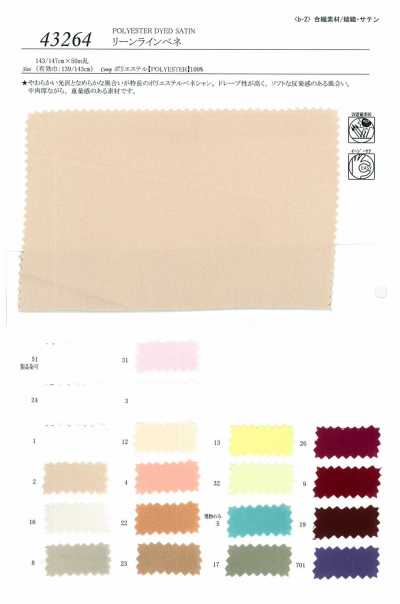
Venetian
Venetian is a woven fabric that is woven with a high density based on satin weave, and is characterized by a smooth surface, subdued luster, and moderate thickness with good drape.
![59560-14 26AW HERDREX [PREMIUM VENETIAN] Premium Venetian Black Solid](/img/item/thumb/YX/1103661_t2.jpg)
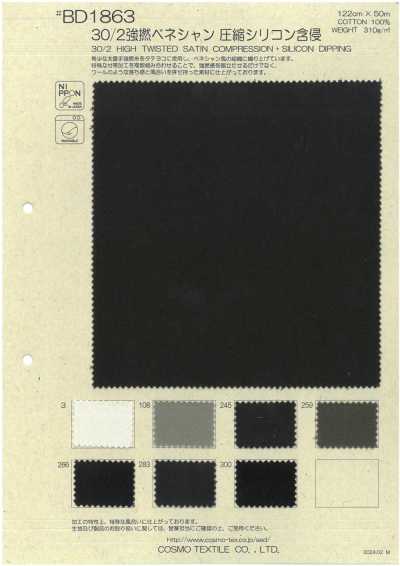
![59561-26 26AW HERDREX [PREMIUM VENETIAN] Premium Venetian Navy Solid](/img/item/thumb/YX/1110838_t2.jpg)
![59561-12 26AW HERDREX [PREMIUM VENETIAN] Premium Venetian Black Solid](/img/item/thumb/YX/1110837_t2.jpg)
Contents6 sections
Definition and Overview
Venetian is a densely woven textile based on satin weave. Because the structure allows warp or weft threads to appear long on the surface, the twill lines are less visible, creating a uniform and smooth appearance. It is not a name for a fiber type, but a term referring to the weave and texture.
Wool versions are representative, but there are also versions made with polyester, rayon, Cupro, and blends of multiple fibers. Depending on the raw material, yarn thickness, density, and finishing, thickness, luster, firmness, and drape can vary greatly.
Characteristics
It is often woven at high density and has a smooth surface with a subdued luster. It has moderate thickness and weight, does not easily show body lines, and is characterized by its ability to create a beautiful drape. Dark colors give it a deeper appearance and create a neat, formal impression.
Because satin-weave fabrics have long floating yarns on the surface, shine and abrasion may become noticeable due to friction or pressure. Also, in product numbers with high density and thickness, it may not be suitable for clothing that prioritizes breathability and lightness.
Main Applications
Used for suits, jackets, pants, skirts, dresses, and more. It is especially chosen for formal wear, formalwear, and uniforms where its drape and neat surface can be utilized. Depending on the material composition and fabric weight, it may also be used for coats, stage costumes, and decorative items.
In general, medium- to heavy-weight Venetian is suitable for autumn and winter wear, or for year-round formal applications. On the other hand, lightweight versions made mainly from synthetic fibers may also be used without being limited to a specific season. When judging applications, confirm not only the weave name but also the fabric weight, blend ratio, and sheerness.
Selection and Handling Notes
When selecting, check the surface luster, drape, firmness, and thickness on the actual fabric. Even among Venetians, wool-based versions tend to have a warmer appearance, while those based mainly on filament yarns tend to have a sharper luster. Also consider whether there will be a lining, compatibility with interlining, and areas where rubbing during wear is expected.
Because shrinkage and changes in texture depend on the fiber type and post-processing, it is important to conduct washing tests and straightening at the fabric stage. In sewing, align the grain and cut carefully, and check conditions with scraps so that seam puckering, iron shine, or presser marks do not appear.
Always follow the washing label and handling instructions for each fabric regarding washing method and ironing temperature. Product numbers containing wool or rayon may require caution regarding shrinkage or loss of shape when washed in water. For dark-colored items, also check friction fastness and possible color transfer to white items in advance.
Differences from Similar Terms
Satin is a general term for satin-weave fabrics, covering a wide range from lightweight to heavyweight textiles. Venetian is a name often used for fabrics within that category that are relatively high in density, moderately thick, and have a subdued luster. However, the distinction between the two varies depending on the region of production and trading partner.
Gabardine is a twill fabric with prominent diagonal twill lines on the surface, so its appearance differs from Venetian. Twill also features diagonal lines, whereas Venetian is characterized by a smooth surface with less noticeable twill lines. Even when uses overlap, they are selected based on surface texture and how well they tailor.
Frequently Asked Questions
Is Venetian the same as satin?
Because Venetian is based on satin weave, it can be considered a satin-type fabric in a broad sense. However, Venetian is generally handled as a fabric with higher density, moderate thickness and weight, and a restrained luster. Since satin also includes many lightweight, thin fabrics, they are not synonymous.
Can Venetian be machine washed at home?
Whether home washing is possible depends not on the weave name Venetian, but on the blend ratio, dyeing, and finishing. In particular, items containing wool or rayon may shrink or change texture when washed in water. Always check the washing label for each fabric, and conduct tests before mass production.
What should you watch out for when sewing Venetian?
The smooth surface may make presser marks, seam puckering, and iron shine more noticeable. Adjust the needle, thread, feed, and ironing conditions using scraps, and avoid pressing the surface too strongly. Before cutting, align the grain, and take care with slippage in product numbers that are prone to shifting.
![59560-35 26AW HERDREX [PREMIUM VENETIAN] Premium Venetian Blue Solid](/img/item/thumb/YX/1103663_t2.jpg)
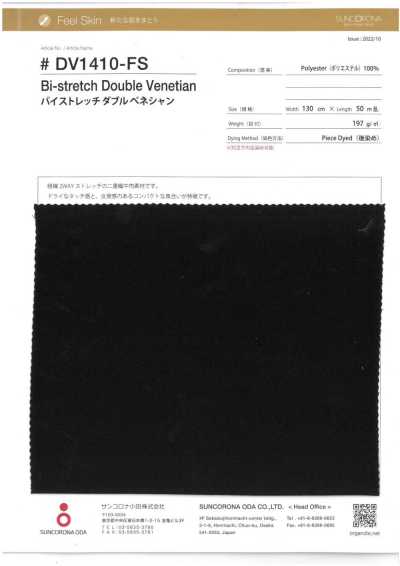
![59560-28 26AW HERDREX [PREMIUM VENETIAN] Premium Venetian Deep Navy Plain](/img/item/thumb/YX/1103662_t2.jpg)