Tuxedo Stripe
A tuxedo stripe is a narrow decorative tape sewn along the side seam of formalwear or tuxedo pants, or the stripe-style design itself.
Contents6 sections
Definition and Overview
A tuxedo stripe is a band-like decoration placed along the outside of pants, that is, along the left and right side seams. It is often used in tuxedo and formalwear pants, and works together with glossy materials used for jacket lapels to create a formal impression.
The term tuxedo stripe is used both as the name of the decoration on the finished product and as the name of the narrow tape used for sewing it on. In specifications, it is important to state whether the tuxedo stripe is present, the visible width, material, color, and sewing position, and to match the appearance on both left and right sides.
Materials and Structure
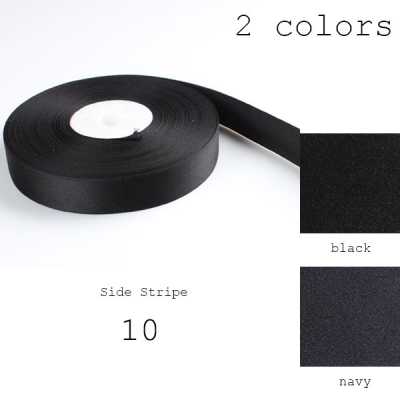
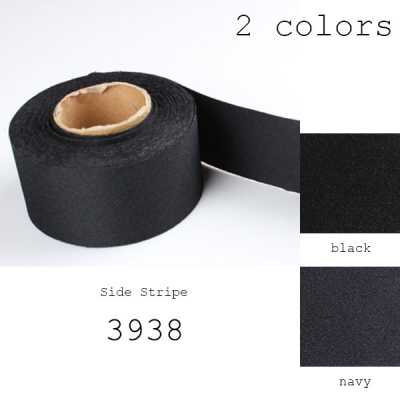
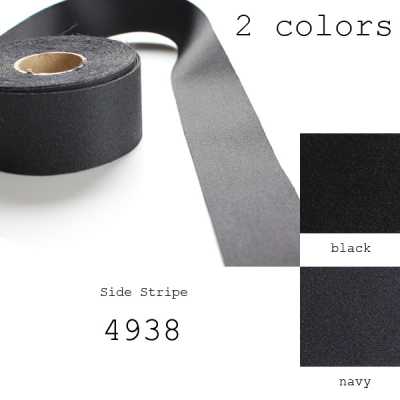
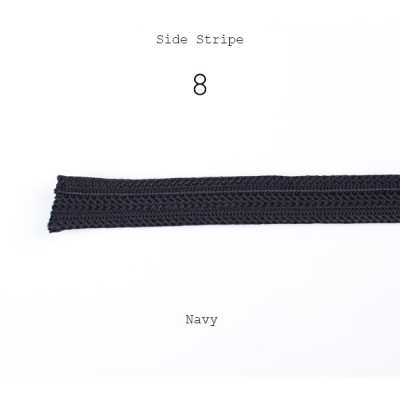
For tuxedo stripes, satin-woven tape with a glossy surface, woven tape with a ribbed grosgrain-like texture, and narrow braided tape are used. Depending on the woven, knitted, or braided structure, the type of yarn, and the finish, the gloss, thickness, tendency for the edges to fray, and stretch characteristics differ.
Materials such as silk-like fibers, rayon, and polyester are selected, but the name tuxedo stripe itself does not limit the material. Selection is based not only on the color difference from the pants fabric, but also on the direction of gloss and the surface feel.
- Woven tape: tends to hold its shape well, and the edge appearance is easier to control.
- Knitted tape: soft and easy to blend in, but some types stretch easily.
- Braided tape: easy to give a sense of depth and thickness, and the look changes depending on the design.
How Width Is Indicated and Main Applications
The width of a tuxedo stripe is generally expressed as the width of the tape itself in millimeters. However, in constructions where it is inserted into the side seam or where the edges are overlapped and sewn, the visible width after finishing becomes narrower than the tape width. In ordering and specification instructions, the tape width and the finished visible width are distinguished.
The main applications are formal pants such as tuxedos and tailcoats. It is also sometimes used in stage costumes, uniforms, and sporty pants as decoration to emphasize the side seam. Depending on the application, the level of gloss and wash durability are considered.
Selection and Handling Precautions
If there is a large difference in shrinkage or stretch between the pants fabric and the tuxedo stripe, waviness along the side seam, puckering, or pulling may occur after sewing or washing. Before mass production, it is important to conduct sewing tests and washing tests using the intended combination of pants fabric and tape.
During cutting, do not pull the tape more than necessary, and keep the left and right sides the same length and direction. For materials whose cut edges fray easily, consider a finish suited to the specification, such as inserting it into the seam allowance, folding in the edges, or applying a fray-prevention treatment.
During washing and pressing, check for changes in gloss, color transfer, and shrinkage caused by heat, friction, and moisture. In particular, smooth-surfaced tape may show press marks under strong pressure, so attention to finishing conditions, such as using a pressing cloth, is necessary.
Differences from Similar Terms
Tuxedo stripe is a term that indicates the position and purpose of being placed at the side of the pants. Satin ribbon and grosgrain ribbon indicate types of tape or ribbon mainly based on surface feel and weaving method. Therefore, satin-like or grosgrain-like tape may be used as a tuxedo stripe.
Piping is a specification in which a cord is used as the core and inserted into a seam to create a narrow raised edge. In contrast, a tuxedo stripe is generally a flat band shown along the side seam, and does not necessarily use a cord core.
Frequently Asked Questions
How should the width of a tuxedo stripe be specified?
Indicate not only the tape width but also the finished visible width seen from the front after sewing. Because the visible width changes depending on the amount inserted into the side seam, the overlap width at the ends, and the seam position, checking with a cross-section drawing or sewing sample helps prevent misunderstandings.
Can satin ribbon be used for a tuxedo stripe?
Yes, but satin ribbon has strong gloss, and the surface appearance may change depending on friction and pressing conditions. Check in advance the shrinkage difference from the pants fabric, the condition after washing, and waviness during sewing, and choose a quality suitable for the intended use.
Are a tuxedo stripe and piping the same?
No, they are not the same. A tuxedo stripe mainly refers to a band-like decoration shown on the side of pants, and it is generally made with a flat tape. Piping is a narrow edge finish that wraps a cord core and creates a raised line in the seam.