Ribbon
Ribbon is a general term for apparel materials made into strip-shaped narrow-width woven or knitted goods, used for tying decorations, ornamentation, sewing onto items, wrapping, and binding.
Contents6 sections
Definition and Overview
Ribbon is the general name for narrow-width strip-shaped materials. In addition to being tied onto clothing and accessories for decoration, it is also sewn on to create design lines, or used for practical parts such as loops, belts, and handles. Appearance and applications vary depending on weave, surface texture, stiffness, material, and width.
In general, ribbon refers to narrow-width materials with an emphasis on decoration, but in practice it also includes items used in cord-like form. In catalogs, narrow-width materials that can be used for hood cords, hem drawstrings, and bag handles are sometimes handled as ribbon, so it is important to check the shape and required strength.
Main Types and Features
Ribbon comes in a wide variety of types depending on surface structure and finishing. Even at the same width, thickness, flexibility, sheen, and tendency for the edges to fray differ, so choose not only by design but also by sewing method and place of use.
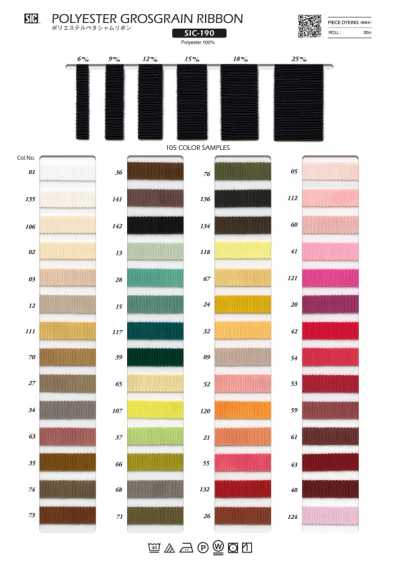
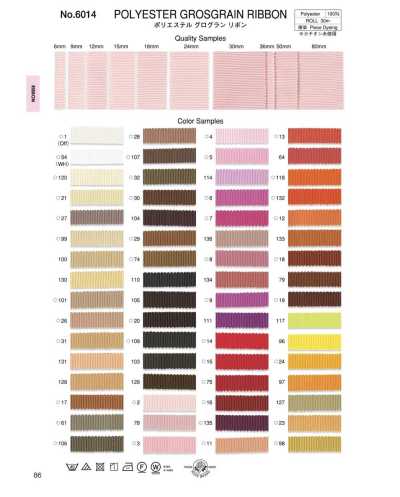
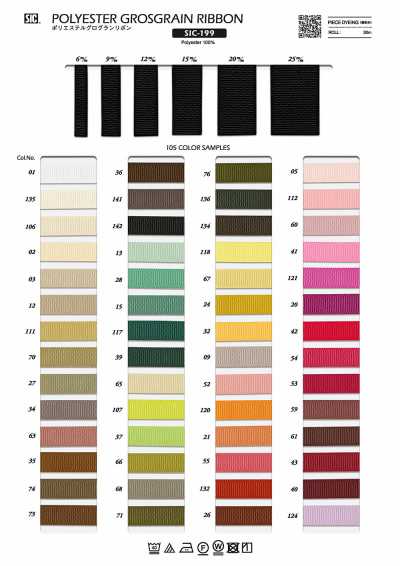
- Grosgrain ribbon has horizontal ridges and a relatively firm look. Grosgrain ribbon is suitable for applications that need to hold their shape, such as bows and edging.
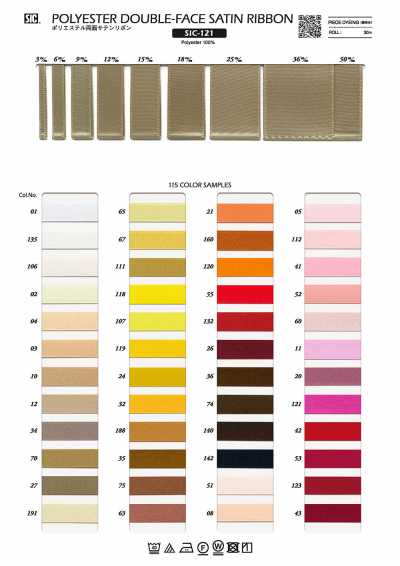
- Satin ribbon is characterized by its smooth, glossy surface. Satin ribbon is used for areas where a glamorous look is desired, such as dresses, gift decoration, and accessories.
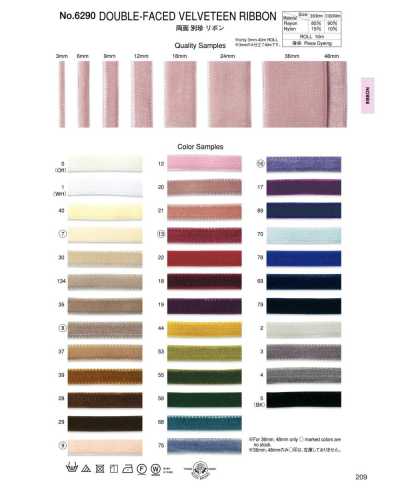
- Velvet ribbon has a deep sheen from its pile and a soft touch. Velvet ribbon is suitable for autumn and winter clothing and formal decoration.
- Organza ribbon has a sheer appearance and creates a light finish. Organza ribbon is used for layering, gathering, and decoration that makes use of sheerness.
- Jacquard ribbon is a ribbon that expresses patterns, letters, and the like through woven designs. Jacquard ribbon is used when a three-dimensional feel different from a flat print is desired.
How to Choose and How to Find It in Product Listings
First decide the finished width and required length. Narrow widths are suitable for delicate ties and accessories, while wider widths are suitable for belt-like decoration and large bows. When making knots, check flexibility; when you want it to hold its shape, check thickness and stiffness.
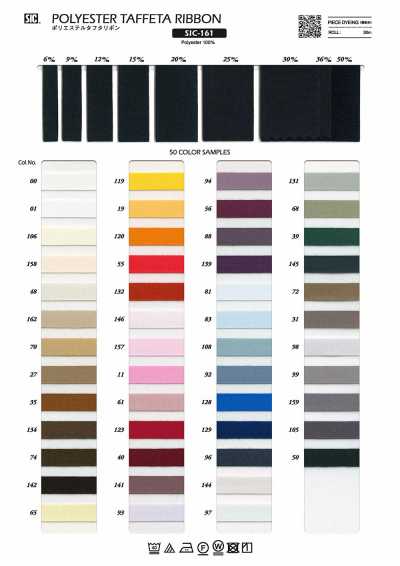
Material is related to ease of handling, sheen, strength, and washing conditions. Polyester may be chosen for applications that require color vividness and shape stability, cotton for applications that seek a natural texture, and silk for applications that make the most of delicate sheen. Caution is needed when the product itself and the washing method differ.
Methods of attachment include sewing on, tying, inserting in a loop, and bonding with adhesive. In product listings, combining filters for type, width, material, color, and application makes it easier to search. If you want a glossy look, search by type name such as satin; if you want a ribbed appearance, search by type name such as grosgrain.
Difference from Tape and Cord
Tape is also a narrow-width material, but it often refers to items mainly intended for reinforcement, finishing, fixing, or adding function, such as bias tape, herringbone tape, and stretch tape. By contrast, ribbon is generally distinguished as a decorative narrow-width material used for tying and embellishment.
Flat cords, round cords, and spindle cords are three-dimensional materials suitable for tightening, hanging, and bundling. However, there is overlap in applications and handling categories, and flat cords are sometimes called ribbon. Judge by the required cross-sectional shape, tensile strength, and resistance to friction.
Handling and Sewing Precautions
For woven ribbons that fray easily at the cut edge, edge finishing should be included in the specifications. Methods include folding and sewing, heat-sealing the edge, or using a fray-prevention agent, but whether heat treatment is possible depends on the type of fiber, so check in advance with offcuts.
With glossy or pile-rich items, seam misalignment, presser marks, and shine caused by pressing may stand out. Do not make the seam allowance too small, and test the sewing needle, thread, and presser foot before mass production. For products that will be washed, also check color transfer, shrinkage, and waviness at sewn areas in advance.
Frequently Asked Questions
How should ribbon and tape be used differently?
Ribbon is generally chosen mainly for decoration, such as tied ornaments and design lines. Tape is a material that often serves functional roles such as reinforcement, edge finishing, and stretch prevention. However, because narrow flat materials can serve both purposes, check not only the name but also the structure, thickness, strength, and method of attachment.
Why does ribbon wave when sewn on?
If the stretchability, thickness, or feed amount of the ribbon and fabric differ, one of them may stretch during sewing and cause waviness. An upper-feed mechanism or adjustment of differential feed, temporary basting, and reviewing the stitch length are effective. For stretch fabrics, it is also worth considering a material that follows the stretch.
- Browse Ribbon products
- Products with material "Cotton"
- Products with material "Polyester"
- Products with material "Nylon"
- Products with material "Silk"
- Products with material "Rayon"
- Products for style "For Formal Wear"
- Products for style "For Costumes/dresses"
- Products for style "For Bags"
- Products for style "For Interiors"
- Browse Ribbon, Tape, Cord products