Quilted Lining
Quilted lining is a warm lining material made by layering and stitching together lining and quilt batting, and is mainly used in the body and sleeves of coats and blousons.
Contents6 sections
Definition and Overview
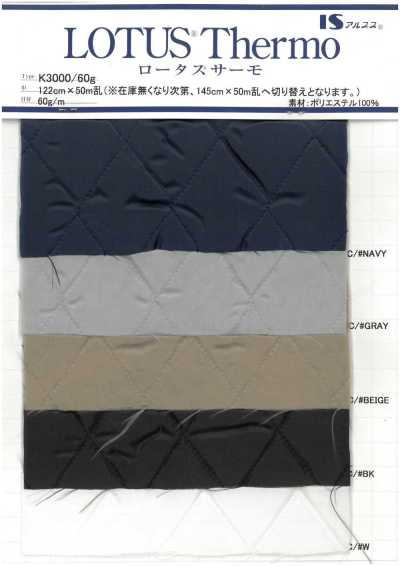
Quilted lining is a lining material made by layering the outer lining, quilt batting, and, if needed, a backing fabric, then stitching them together in a grid, diamond, or similar pattern. It helps create a thermal layer inside the garment while keeping the batting from shifting.
Sometimes it refers only to the lining itself, but in practice it often means a lining-integrated material with quilt batting. It differs from quilted fabric made by quilting the shell fabric itself in terms of where it is used and its purpose.
Use Locations and Functions
It is mainly used in the body and sleeves of coats, blousons, jackets, and similar garments. It creates an air layer between the shell fabric and the wearer, adding warmth and helping to smooth the inside of the shell fabric to reduce friction when putting on and taking off the garment.
Using quilted lining through the sleeves improves cold protection, but thickness and stitch lines affect arm mobility. There are also specifications that use it only in selected areas, such as the body only or the front body only.
- Body: adds warmth around the torso.
- Sleeves: check both ease of putting on and taking off and warmth.
- Facings and collar area: because thickness tends to build up here, it may be switched to ordinary lining.
Materials and Types
Woven fabrics such as polyester and nylon are often used for the lining surface, and polyester batting is generally used for the quilt batting. Depending on the lining weave, sheen, finish, and amount of batting, slipperiness, lightness, warmth, and loft will vary.
Quilt patterns include diamonds, grids, and waves. Wider stitch spacing tends to create a softer appearance, while narrower spacing helps stabilize the batting, but stitch hardness and sewing effort also need to be considered.
How to Choose and Points to Note
If the shell fabric is thin or has a drape, combining it with thick quilted lining may cause the stitch lines or batting loft to show through on the surface. It is important to check the shell fabric’s thickness, firmness, and sheerness, and to confirm the appearance with a sewn sample.
For garments where ease of putting on and taking off is important, check the slipperiness of the lining surface. On the other hand, if quilted lining with limited stretch is used with a stretch shell fabric, the lining may be pulled during movement, causing tightness and stress on the stitch lines.
With light-colored or thin shell fabrics, the lining color, batting, and quilt stitch lines may show through. Check sheerness with the shell fabric layered over it, and adjust the lining color or specifications as needed.
Sewing Precautions
Before cutting, confirm the direction of the quilt lines and the position of the pattern. If the pattern shifts greatly between the left and right body pieces or sleeves, it may count as a specification inconsistency even if it is not visible on the finished inside. If the batting is thick in the seam allowance area, pay attention to step thickness caused by overlapping layers.
When sewing pieces together, arrange the batting so it is not sewn in too much, and reduce seam allowance bulk. Because the shell fabric and quilted lining may differ in stretch or shrinkage, let them relax before sewing and check the sewing conditions and dimensional change after washing.
Frequently Asked Questions
What is the difference between quilted lining and thermal lining?
Quilted lining is a term for a structure in which lining and batting are stitched together. Thermal lining refers to lining materials in general that provide warmth, including non-quilted types. Choose according to why warmth is needed and the required thickness and ease of putting on and taking off.
Can quilted lining be used in stretch outerwear?
It can be used, but if the quilted lining does not follow the stretch of the shell fabric, tightness during wear and stress on the stitch lines may occur. Check stretch and recovery with the shell fabric and lining layered together, and consider the amount of ease and partial use in the specification.