Pinstripe
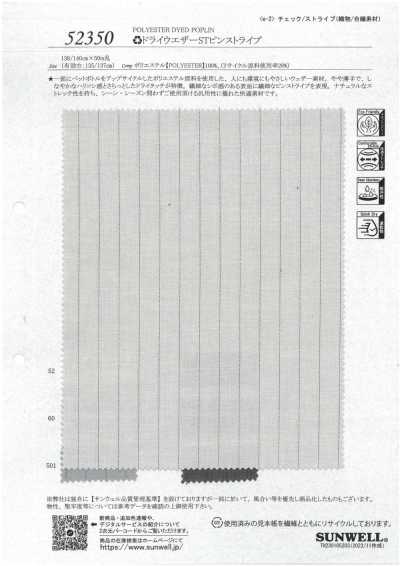
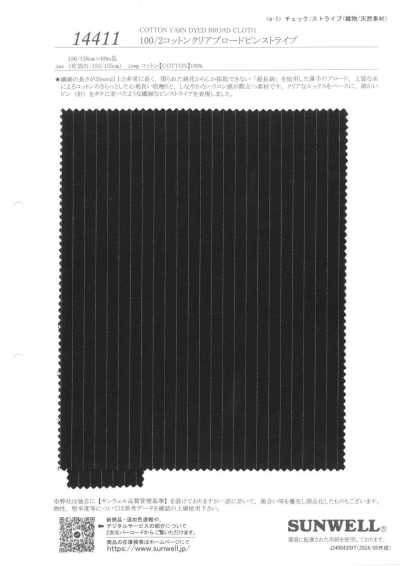
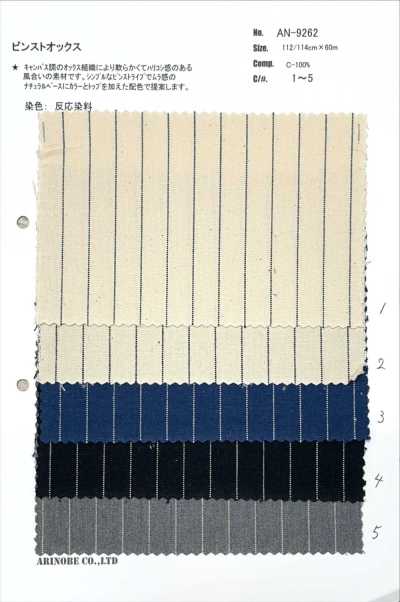
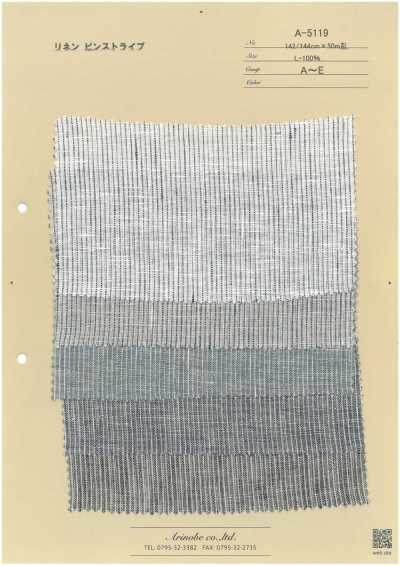
Pinstripe is a vertical stripe pattern in which very fine lines, like they were drawn with a pin, are spaced at regular intervals or with a consistent gap over a solid-colored ground that appears plain.
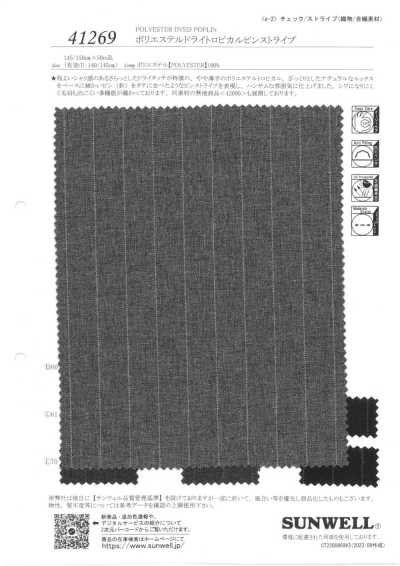
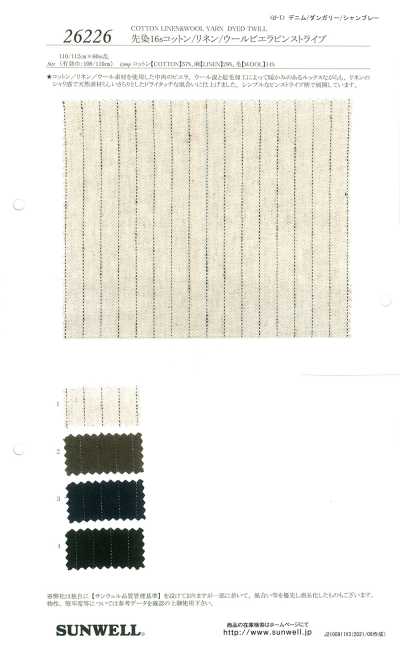
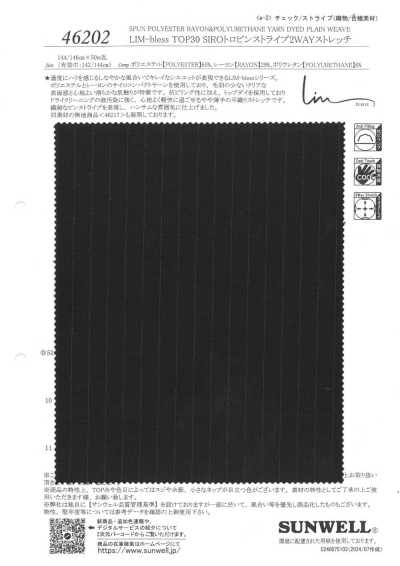
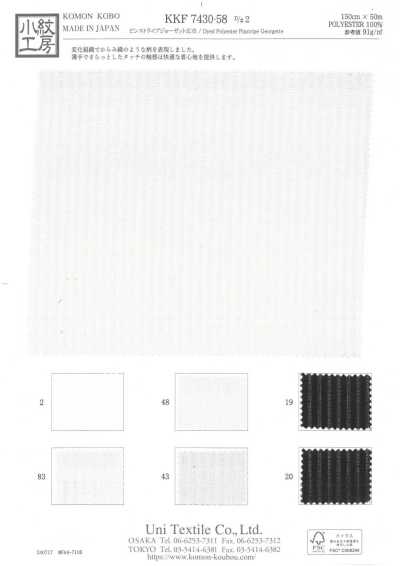
Contents5 sections
Definition and Overview
Pinstripe is a stripe pattern with very narrow lines that appear as subtle bands when viewed from a distance. It is generally used as a lengthwise stripe, and because the vertical lines are emphasized, it creates a neat and sharp impression.
It is a name for a pattern and does not restrict the structure, such as woven or knitted fabrics, or the material, such as wool or polyester. The method of production varies by textile, including woven patterns made with yarn-dyed thread, printing, and expressions created by differences in weave structure.
How the Pattern Is Formed and What It Is Called
Yarn-dyed pinstripes are often created by arranging thin warp threads in a different color from the ground color at regular intervals, so the lines appear along the fabric structure. With printing, the line color, thickness, and spacing can be designed relatively freely.
Stripes are distinguished by line width and appearance, but the boundaries of the names vary by industry and by plan. Pinstripe refers to narrow stripes, pencil stripe to thin lines like those drawn with a pencil, and chalk stripe to a line that is thicker and slightly softer in outline, like chalk.
Shadow stripe is a pattern that keeps the stripes subtle by reducing color contrast or using differences in sheen from the weave structure. Its appearance and method of expression may differ from pinstripe, where the lines themselves are clearly visible.
Main Uses and Seasonality
It is often used for tailored items such as suits, jackets, and slacks. Narrow vertical stripes help maintain a calm impression and are also used for shirts, blouses, skirts, dresses, and more.
Season is not determined by the pattern alone. In worsted-style lightweight fabrics, tropical wool, and lightweight polyester blends, it is made for spring and summer; in flannel and wool fabrics with a brushed feel, it is made for autumn and winter. Applications are judged by combining material thickness, fabric weight, breathability, and drape.
Points to Note When Choosing and Cutting the Fabric
When selecting, check the line thickness, spacing, and contrast with the ground color in relation to the product size and seam positions. Even with a small pattern, misalignment may be visible up close, so if possible, check the appearance at a size that assumes cutting, not just with a swatch.
During cutting, place the stripes parallel to the grain and align the line positions on the front body, back body, sleeves, pockets, collar, and other parts. Specifications that align the pattern at the center front, side seams, and pocket openings tend to require more fabric, so decide the required pattern-matching standard at the planning stage.
With fabric that has a clear stripe direction, cutting with the fabric turned upside down may make the lines and color impression look inconsistent. Check the selvage, grain, and face and reverse sides, then cut in one direction. It is also important to check pattern flow and whether there is any skew when spreading the fabric.
- Check whether the stripes at the center front and pocket positions should be aligned.
- Make sure the stripe angle and position do not shift greatly between the sleeves and body.
- Allow for pattern matching and calculate fabric usage with extra margin.
- Clearly state the stripe spacing and the required pattern-matching positions in the specification sheet.
Frequently Asked Questions
What is the difference between pinstripe and pencil stripe?
Both refer to vertical stripes made of thin lines, but the criteria for distinguishing the names are not uniform. In general, pinstripe is treated as an extremely fine line like one drawn with a pin, while pencil stripe is treated as a thin line like a pencil mark. When placing an order, check the line width and pitch, not just the name.
Does pinstripe require pattern matching?
Consider pattern matching in areas that affect the appearance of the product, such as the center front, side seams, pockets, and collar. In particular, jackets and pants may show stripe misalignment clearly. Because the fabric usage and cutting efficiency change depending on how much is matched, decide this in advance as part of the specification.
What season is pinstripe fabric suitable for?
The pattern itself has no seasonality. If the fabric is thin and breathable, it is suitable for spring and summer; if it has a brushed surface or thickness, it is suitable for autumn and winter. Match it to the item being made and judge the seasonal feel and wearing comfort based on the material, fabric weight, weave structure, and whether or not there is a lining.