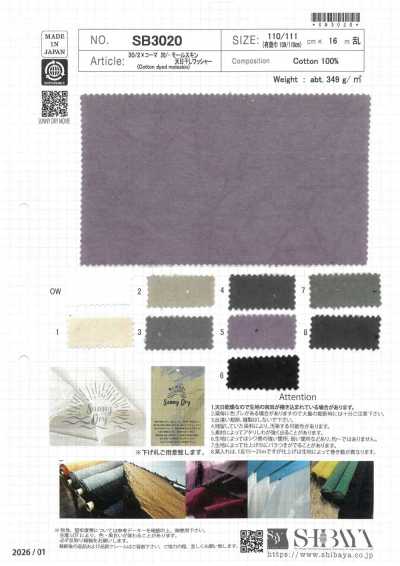
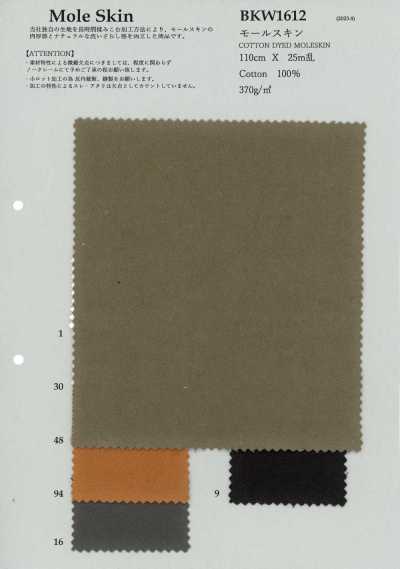
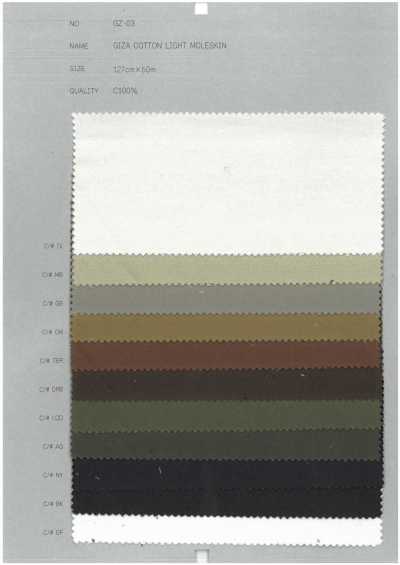
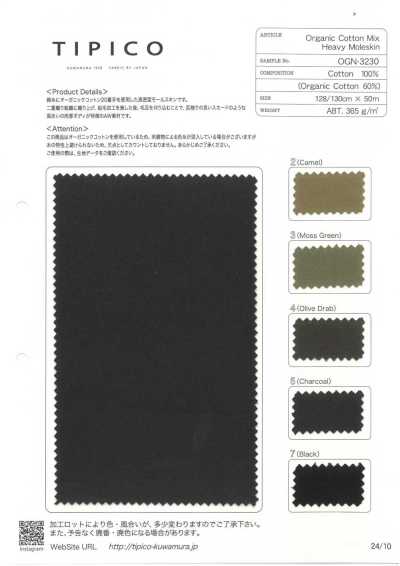
Moleskin
Moleskin is generally a woven fabric made by weaving cotton densely and brushing the surface to give it a smooth, mole-fur-like feel and substantial thickness.
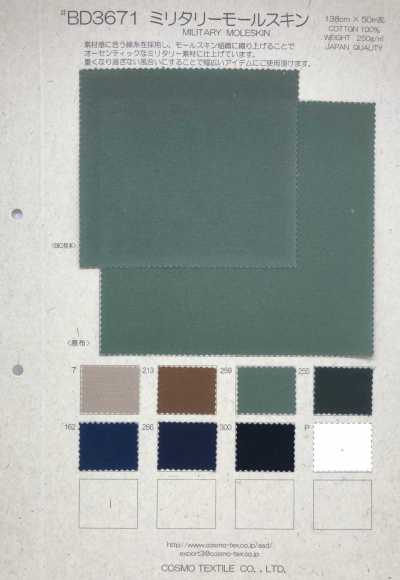
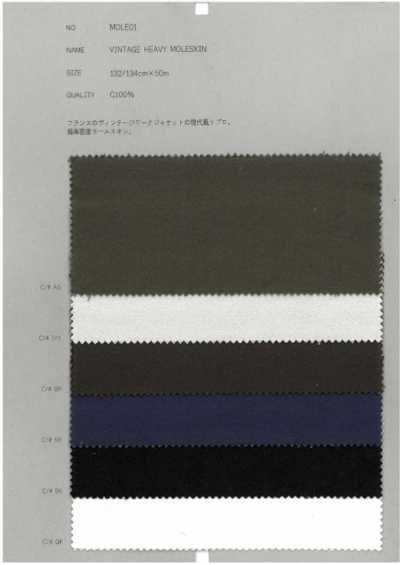
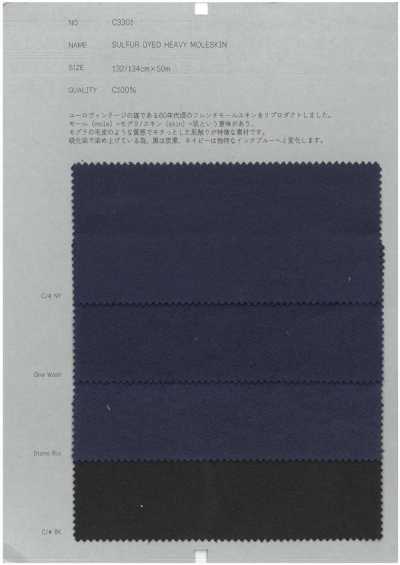
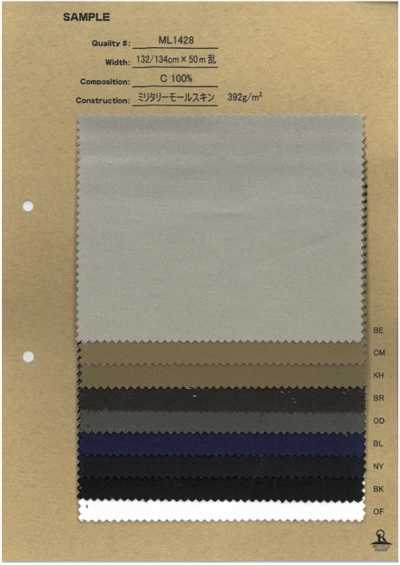
Contents6 sections
Definition and Overview
Moleskin is a thick brushed fabric made mainly from cotton. By brushing one or both sides of a densely woven textile to raise short nap, it creates a smooth feel and a calm luster. The weave, blend ratio, and brushing intensity vary by product number.
The name comes from the surface texture, which resembles mole fur. In some overseas markets, it may also refer to an adhesive sheet used for clothing repairs, so when handling the fabric, check the composition and specifications.
Features
The surface is covered with fine nap and has a soft, moist feel. Meanwhile, the base fabric is often woven at high density, giving it firmness and durability. Depending on the light and the direction of the nap, the brushed surface can appear lighter or darker, creating a deep look.
Depending on its thickness and density, some versions feel less breathable and are often used for fall and winter. However, thermal insulation, breathability, and stretch depend on the composition, fabric weight, and finishing, so it is important not to judge performance by the name moleskin alone.
Main Uses and Season
It works well for styles ranging from casual to workwear, and is used for pants, jackets, coveralls, shirt jackets, skirts, dresses, and more. Taking advantage of its thick and durable impression, it may also be used in uniforms and workwear-style designs.
In general, it is suitable for fall and winter clothing, but lighter-weight specifications are also used for spring outerwear and bottoms. When made into a product, check the finished weight and bulk against the fabric weight and fabric width, and select it according to the item's silhouette and yardage requirements.
- Pants, work pants
- Jackets, coveralls
- Outer fabric for coats and blousons
- Skirts, dresses
- Part of uniforms and bags
How to Choose and Handling Notes
When selecting, check the composition, fabric weight, thickness, nap direction, stretch, and shrinkage after washing. Since cotton-based fabrics may shrink during washing, perform prewashing, trial sewing, and wash tests before mass production, and reflect the results in pattern dimensions and specifications.
During cutting, aligning the nap direction across all pieces helps reduce the appearance of color differences in the finished product. The brushed surface can show shifting seams or presser marks, so adjust feed and presser pressure, and consider a walking foot if necessary. For ironing, use a pressing cloth to avoid crushing the nap or causing shine, and test in an inconspicuous area first.
Differences from Similar Terms
Corduroy is a woven fabric with cut pile that forms ribs, and its appearance differs from moleskin, which has an even brushed surface without ribs. Velvet is characterized by the texture of its pile, while moleskin differs in that it is a high-density base fabric that has been brushed.
Suede refers to leather with a brushed grain side, or to materials that imitate that texture. Some moleskins have a suede-like smoothness, but they are usually woven fabrics made from cotton or similar fibers. Flannel is a general term for soft brushed fabrics, and many versions are lighter and thinner than moleskin.
Frequently Asked Questions
Does moleskin shrink when washed?
Moleskin made mainly from cotton may shrink through washing and drying. The amount of shrinkage varies depending on the composition, density, finishing, and whether shrink-resistant processing has been applied. For products, check the fabric's care label and shrinkage data, and perform prewashing or wash tests if necessary.
What is the difference between moleskin and corduroy?
What should I watch out for when sewing moleskin?
If the nap direction is not cut in the same direction, each piece may appear to be a different color. Also, because of the thickness of the fabric, seam allowances can overlap easily, so watch for presser marks and shine. Check the needle, thread, presser pressure, and ironing conditions with a test stitch first.