Discharge Printing
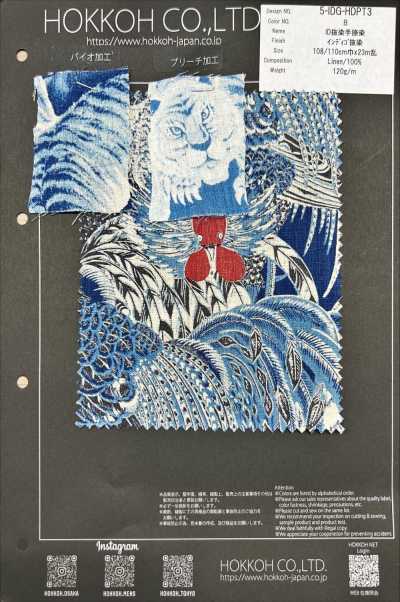
Discharge printing is a printing process that uses chemicals to decolorize part of a pre-dyed textile, removing the ground color to create a pattern. If needed, another color can also be developed in the discharged area.
Contents6 sections
Definition and Overview
Discharge printing is a process that prints a paste containing a discharge agent onto textile dyed in a dark color or similar, then develops a pattern by decomposing and removing the dye through steaming and other steps. There is also color discharge, in which color is applied to the discharged area at the same time.
Whereas ordinary printing creates a pattern by placing coloring material on the surface of the textile, discharge printing expresses the pattern by removing the original dye. However, depending on the dye used, the material, and the dyeing conditions, it may not discharge sufficiently, so it is necessary to confirm suitability in advance.
Feel and Appearance Characteristics
Because the thickness of the coloring material is less likely to remain on the surface, it is characterized by preserving the textile's original softness and breathability more easily even in the printed area. It is especially suitable for uses that want to reduce stiffness in the patterned area on lightweight fabrics and knitted fabrics.
The discharged area often appears white or pale, allowing expression that makes use of the contrast with the ground color. It may not become completely white, and a natural off-white look or residual color due to the under-dyed color tone or the condition of the fibers is also a discharge-printing characteristic.
- There may be little difference in how the pattern appears on the front and back.
- The action of the discharge agent may change the strength or feel of the textile.
- Even with the same design, the color development and discharge effect may vary depending on the ground color, material, and lot.
Main Applications
It is used on jersey, French terry, shirt fabrics, and similar materials made with cellulosic fibers such as cotton and rayon. It is suitable for garments that emphasize lightness and a soft wearing feel, such as T-shirts, sweatshirts, shirts, blouses, dresses, and loungewear.
Because it avoids a thick printed feel, it is used not only for lightweight cut-and-sew items for spring and summer, but also for year-round products intended for layering. On the other hand, when deciding the application, it is important to confirm not only processing suitability but also fabric weight, stretchability, and the required fastness.
Selection and Handling Notes
When selecting a fabric, confirm not only the material composition but also whether the dye used for under-dyeing is compatible with discharge printing. In blended fabrics, the degree of decolorization may differ by fiber, so determine through a test roll whether mottled effects or residual color can be accepted as part of the design.
Heat, chemicals, and washing during processing may cause shrinkage or dimensional change. Before mass production, confirm the shrinkage rate, hue, feel, and strength after processing, and reflect them in the pattern and fabric consumption. Cutting is done using processed fabric, after checking the pattern position and direction.
For washing, follow the care label, and dark-colored items should basically be washed alone or with similar colors. Because there is a possibility of color fading due to friction or washing, or color transfer to light-colored areas, confirm wash fastness and rubbing fastness as a product, and consider care warnings if necessary.
Difference from Similar Terms
Printing is a general term for processes that create patterns by applying dyes or pigments to textile. Discharge printing is one type of printing technique, but its feature is that it creates the pattern by removing the ground color. Pigment printing tends to form a layer of coloring material on the surface, so its feel and appearance differ from discharge printing.
Resist dyeing is a method of creating patterns by preventing dye from reaching specific areas during dyeing. While discharge printing removes color from already dyed textile, resist dyeing differs in that it prevents color from entering in advance. Bleach processing is a process that creates expression by decolorizing all or part of the material, and it does not necessarily aim for a detailed printed pattern.
Frequently Asked Questions
Is discharge printing softer than ordinary printing?
In many cases, it is a process that more easily preserves the softness and breathability of the textile than printing that applies a thick layer of coloring material. However, the feel varies depending on the under-dyeing, fabric structure, discharge agent, and post-washing conditions. It is important to check a processed sample using the actual fabric.
What materials can be discharge printed?
It is often used on dyed textiles made from cellulosic fibers such as cotton and rayon. However, whether discharge printing is possible is not determined by the fiber name alone, and it depends on the dye used, blend ratio, and dyeing conditions. Please confirm with the textile manufacturer or processing supplier in advance.
Does discharge-printed fabric shrink when washed?
The steaming and washing in the discharge process may cause the fabric to shrink and change dimensions. In addition, the material's own washing shrinkage is also added. In product design, measure the shrinkage rate of the fabric after processing, and set the pattern and fabric consumption according to mass production conditions.