Covered Snap Button
A covered snap button is an accessory that wraps the surface of a snap button for fastening in the same textile or similar textile, blending it into the outer fabric so the fastener is less noticeable.
Contents6 sections
Definition and Overview
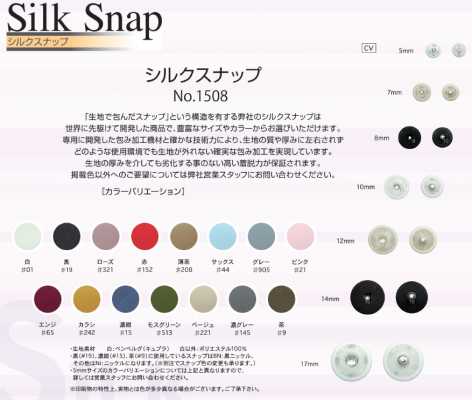
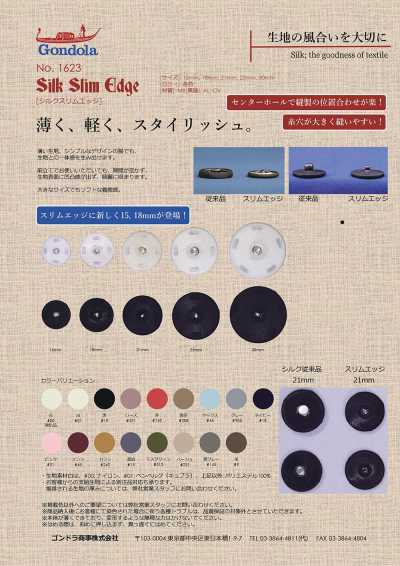
A covered snap button is an accessory in which the snap fastener is covered with fabric. By using the same fabric as the outer material or a similar color fabric, it blends into the outer fabric when used on a front opening or cuff, making the metal parts less noticeable and giving a softer appearance. It is also sometimes called a silk snap.
It is opened and closed by pressing the concave side and convex side together. It is often sewn on, combining visual appeal from the outside with the practicality of opening and closing without making a buttonhole.
Materials and Structure
In general, it consists of the snap button body on the concave and convex sides, and the fabric portion that covers it. The body is often made of metal parts, and depending on the product, it may have a sewing edge or tape-like base fabric. The covering fabric is selected to match the product's outer fabric or another fabric.
The fabric that appears on the surface plays a major role in appearance, while the fastening strength depends mainly on the structure of the snap button body and the sewn condition. For this reason, it is necessary to check not only the appearance but also specifications suited to the frequency of opening and closing and the thickness of the fabric.
How Sizes Are Expressed
In many cases, size is expressed in millimeters as either the outer diameter of the snap button or the finished diameter after covering. However, since the measurement point and naming vary by product, when placing an order, confirm not only the diameter but also the thickness, the combination of the concave and convex parts, and the shape of the sewn section.
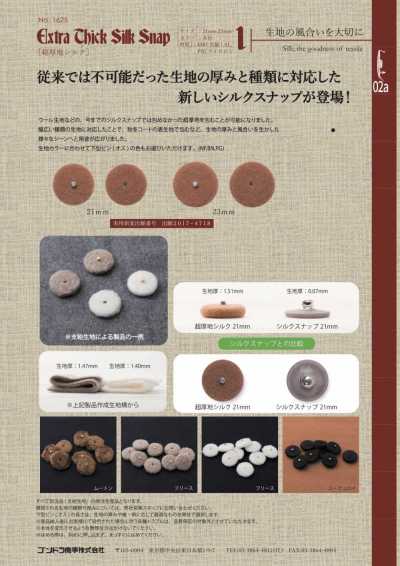
Even with the same stated diameter, the appearance and fastening behavior change depending on the thickness and pile of the covering fabric. Before mass production, make samples using the actual outer fabric to check the overlap at the front opening, ease of opening and closing, and how the surface sits.
How to Attach It and Main Applications
The concave and convex sides are placed at corresponding positions such as the front opening, and their sewn sections are secured by hand sewing or by sewing methods suited to the specification. Since force concentrates when opening and closing, the stitches should not merely catch the fabric; if necessary, secure them to a stable layer including interfacing or reinforcing fabric.
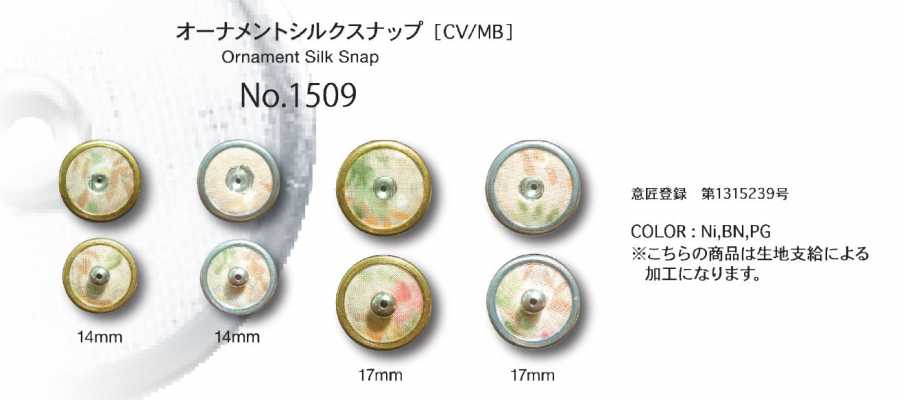
It is used on dresses, formalwear, blouses, innerwear, stage costumes, and other items where the fastener should be kept discreet. It is also suitable for specifications in which a decorative button is attached on the front side while the actual opening and closing is done with a covered snap button.
- Opening and closing on the inside of a placket or overlapped section
- Auxiliary fastening around the neckline, cuffs, and sleeve openings
- Faux fly-front specifications combined with decorative buttons
How to Choose and Points to Note
With thick fabrics, stiff fabrics, or fabrics with strong stretch, the thickness of the fabric may prevent the concave and convex parts from engaging sufficiently, or the sewn section may be damaged by the load during opening and closing. Based on the fabric thickness, number of overlapping layers, and direction of pulling, reinforce as needed.
In specifications that include metal, rust or discoloration may occur depending on humidity, storage conditions, washing, or dry-cleaning conditions. Check whether a surface treatment suited to the usage environment and a nickel-free specification are necessary. For products that go through needle detection, also confirm in advance whether they are needle detector compatible and how they will be handled.
A covered button is a button wrapped in fabric that is fastened by passing it through a buttonhole. A covered snap button, by contrast, fastens by pressing the concave and convex parts together, so it does not require a buttonhole. Another feature is that its surface blends into the fabric more easily than a standard sewn-on snap button.
Frequently Asked Questions
Can covered snap buttons be used with thick fabrics?
Yes, but if the covering fabric or the front overlap is too thick, the concave and convex parts may not engage sufficiently and may come undone easily. With thick fabrics, it is important to check the size, the thickness of the body, and the fastening position, and to verify the feel of opening and closing as well as the strength of the sewn section through a prototype using the actual fabric layers.
How should covered snap buttons and covered buttons be used differently?
If you want to show the button design on the front side and fasten with a buttonhole, a covered button is suitable. A covered snap button is used when you want the fastener to be unobtrusive and to open and close by pressing. Another method is to attach a covered button as decoration and use a covered snap button for practical fastening on the inside.
Are covered snap buttons subject to needle detection?
Covered snap buttons that include a metal body may trigger a needle detector. Since the standards for needle detection and equipment settings vary by production site and sales destination, it is necessary to verify the component alone and the finished product before adoption. If a needle detector compatible specification is required, also confirm the specification sheet and inspection procedure together.