Yuzen
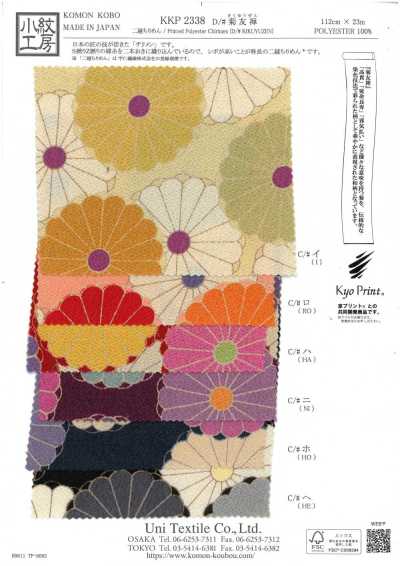
Yuzen is a representative dyeing technique and its dyed fabrics, in which outlines and patterns are expressed using resist printing with paste and other methods to create a variety of delicate motifs such as flowers, birds, and seasonal scenery.
Contents6 sections
Definition and Overview
Yuzen is a dyeing technique that expresses patterns by placing outlines on fabric and adding color inside them. The paste used for the outlines acts as a resist, preventing adjacent colors from mixing and making it easier to express fine patterns and overlapping colors.
Yuzen refers not to the weaving method or fiber name of the textile, but to decorative expression created through dyeing. While it is strongly associated with Japanese garments made with silk, Yuzen-style pattern expression is also used on fibers other than silk depending on the application and processing method.
Features and Appearance
Typical examples include vivid patterns featuring flowers, plants, flowing water, and birds, as well as painterly designs drawn in detail. From clear patterns that make use of outlines to soft gradations created with blurring, a wide range of colors and expressions can be seen.
The handfeel is not determined by the Yuzen technique alone. Depending on whether the textile is silk, cotton, rayon, polyester, or another material, as well as whether it has a jacquard pattern or post-processing, the sheen, drape, suppleness, and texture can differ greatly.
Main Applications
It is mainly used for Japanese clothing items such as kimono, obi, and haori. Depending on the formality of the pattern, color scheme, and placement of the design, uses range from formal wear to everyday Japanese clothing. It is also suitable for accessories and fashion items that use only part of the pattern.
In Western clothing and costumes, it may be used to bring Japanese decorative qualities to dresses, skirts, blouses, stage costumes, and more. Seasonal feeling is considered not only in terms of the material thickness and sheerness, but also through motifs such as cherry blossoms, autumn leaves, and snow-ring patterns.
Selection and Handling Notes
When selecting, check the size of the pattern, repeat, top and bottom direction, and any pattern matching needed at cutting. For large-scale patterns and allover placement designs, the appearance and required yardage change depending on how the pattern pieces are laid out, so it is important to mark them first.
Changes caused by washing, such as shrinkage, color fading, color transfer, and changes in handfeel, vary depending on the type of fiber, dye, and processing conditions. Check the care label and test results, and especially for dark-colored or multicolor items, confirm rubbing fastness and wash fastness before setting handling instructions such as washing separately.
In sewing, align the grain line and pattern direction, and on materials where needle holes or re-sewing marks are likely to stand out, perform trial stitching in inconspicuous areas. For thin or slippery textiles, spread and secure them stably to prevent cutting misalignment, and when ironing, use a pressing cloth and check the temperature.
Differences from Similar Terms
Printing is a general term for processes that add patterns to the surface of fabric using screens, inks, and similar methods. Yuzen refers to a dyeing technique that combines resist methods and color insertion to express patterns. However, since some fabrics sold in the market express Yuzen-style patterns by printing, confirm the processing method in the specification sheet.
Stencil dyeing is a dyeing technique that uses stencils for resist and coloring. Yuzen also includes expressions that use stencils, but in general it is understood as including painterly expression that makes use of outlines, coloring, and blurring. The way the two terms are distinguished may vary by production region and process.
Frequently Asked Questions
Are Yuzen and Japanese-pattern print the same?
No, they are not the same. Yuzen is a technique for dyeing patterns through resist and coloring, while Japanese-pattern print generally refers to fabric with Japanese-style patterns expressed by printing. Because it is difficult to judge by appearance alone, check the processing method, material, and washing conditions individually.
Can Yuzen fabric be washed at home?
This cannot be judged uniformly. Because the Yuzen name indicates a dyeing technique, whether washing is possible depends on the fabric fiber, dye, finishing process, and tailoring. Follow the care label on the product or fabric, and be sure to check for shrinkage and color transfer in advance.
What should I pay attention to when cutting and sewing Yuzen fabric?
Check the direction and placement of the pattern, and allow for the pattern matching required when setting the yardage. In particular, for allover placement designs and large-scale patterns, confirm in advance how the left and right sides will look and how the pattern will continue across the seams. For slippery thin fabrics, pay attention to cutting misalignment, and for delicate fabrics, also watch for needle marks.