Royal Oxford
Royal Oxford is a shirting fabric that elegantly expresses oxford weave with fine threads and a fine weave structure, and often combines smoothness with a moderate texture.
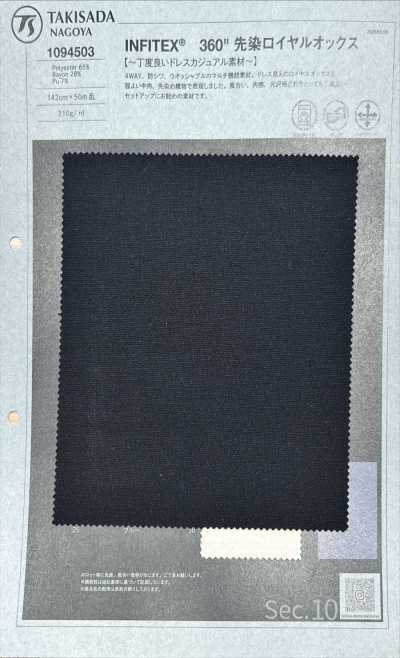
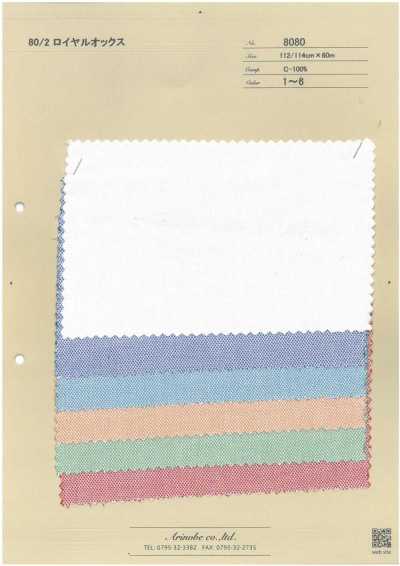
Contents6 sections
Definition and Overview
Royal Oxford is a woven fabric in the Oxford family. It often refers to a fabric made with finer yarns than standard Oxford, with the texture's raised and recessed structure rendered more delicately, and it is characterized by a neat, refined surface.
However, there are no standardized specifications for structure, yarn count, or material in Royal Oxford. Because the scope of the name varies by fabric maker and place of origin, it is important to check not only the name but also the blend ratio, fabric weight, density, and finish.
Hand and Appearance
Because of its fine weave, this fabric tends to have less surface texture than standard Oxford and is relatively easy to achieve a smooth hand and an elegant sheen. At the same time, it is not too flat, and the woven structure can be felt when viewed up close.
Thickness, firmness, breathability, and wrinkle behavior vary depending on yarn thickness, material, weave density, resin finishing, and other factors. For cotton-based fabrics, absorbency can be expected, but functionality should be judged based on the material composition and processing details.
Main Uses and Seasons
It is used for shirts, dress shirts, blouses, and similar items. It is suitable when you want to keep a polished impression while giving even solid colors depth through the structure. In shirt construction, including collars and cuffs, the finished look changes depending on the interfacing combination.
Seasonal suitability depends on the fabric weight and material. Relatively lightweight, breathable fabrics are suitable for spring and summer, while denser, firmer fabrics may be treated as year-round shirt fabrics.
Selection and Handling Notes
During development, check not only the swatch but also the hand after washing, shrinkage rate, wrinkles, and seam puckering. In particular, fabrics with a high proportion of natural fibers may change in dimensions and appearance after washing, so it is reassuring to conduct washing tests on the product in its finished state before mass production.
When cutting, align the grain and make the weave appearance consistent. On thin or high-density fabrics, seam slippage and needle holes may stand out, so confirm the needle size, thread, and sewing settings in advance to match the fabric. Follow the care tag for washing and ironing.
Differences from Similar Terms
Oxford broadly refers to shirt fabrics with a slightly coarse, casual appearance created by a basket-weave-type structure combining multiple yarns. Royal Oxford is a type of this and is often used to describe fabrics characterized by a finer structure and a more elegant appearance.
Pinpoint Oxford is also an elegant Oxford-type fabric woven with fine yarns, but the distinction from Royal Oxford is not fixed. Do not judge quality by the product name alone; compare the actual structure, density, thickness, and hand when selecting.
Frequently Asked Questions
Is Royal Oxford thinner than ordinary Oxford?
Royal Oxford is often made to look delicate with finer yarns and a finer structure, but thickness is not uniform. Yarn thickness, density, material, and finishing all affect thickness and firmness. When adopting it, check the fabric weight, the actual sheerness, and how it changes after washing.
Can Royal Oxford be used for business shirts?
Fabrics with an elegant, fine surface are used for business shirts and dress shirts. However, whether they feel more casual or more formal also depends on color and pattern, sheen, thickness, the interfacing in the collar and cuffs, and sewing specifications. Confirm them according to the intended wearing occasion.