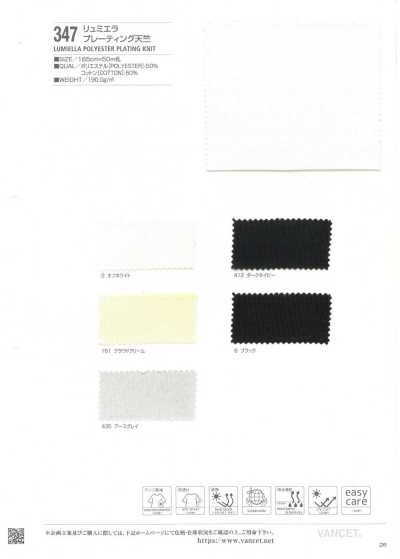
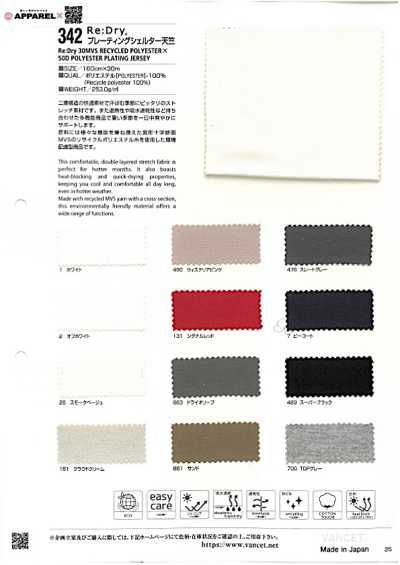
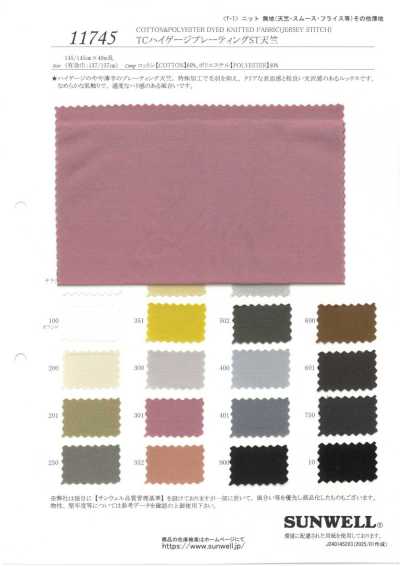
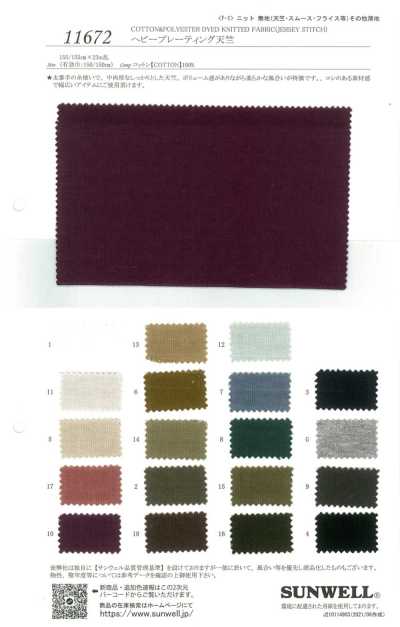
Plated Knitting
Plated Knitting is a knit construction method in which two or more threads are knitted into the same stitch to separate the threads that appear on the front and back surfaces, adjusting handfeel, appearance, and function.
Contents6 sections
Definition and Overview
Plated Knitting is a knitting structure and knitting technique in which a ground yarn and an overlay yarn are fed into the same stitch so that different yarns are preferentially visible on the front and back of the knitted fabric. Different materials, colors, and yarn thicknesses can be used on the front and back.
Unlike double knit, which divides the entire knitted fabric into two layers and bonds them together, plating basically forms one stitch with multiple yarns. However, how the yarn appears on the front and back depends on factors such as yarn combination, knitting machine settings, and knitting density.
Features
The roles can be divided between the front and back, such as using a lustrous yarn or a yarn with vivid color on the front and a yarn selected for skin feel and absorbency on the back. If different colored yarns are used, the color tone can also change between the front and back.
In designs that place cotton on the skin side and polyester on the outer side, it is possible to balance comfort against quick drying. However, absorbency, warmth, and stretchability depend not only on the type of fiber, but also on the yarn structure and knitted fabric design.
- It is easy to express different material textures and colors on the front and back.
- It is easy to choose fibers that contact the skin side.
- By combining yarns, it can create a heathered or layered appearance.
- Depending on knitting conditions, unintended yarns may be visible on the front or back.
Main Uses
It is used for knit products where both appearance on the outer surface and comfort against the skin are important, such as T-shirts, polo shirts, sweatshirts, cut-and-sew items, underwear, and socks. Plating may also be applied to jersey or pique knit fabrics.
For spring and summer items, yarn selection emphasizes absorbency and a dry hand feel against the skin; for autumn and winter items, softness on the skin side and warmth are considered. It is also used for sportswear, but suitability for a given application is determined by checking fabric thickness, breathability, and dimensional stability.
Selection and Handling Notes
When selecting, check the composition on the front and back, fabric weight, thickness, stretch, rebound, and sheerness. It is important not to judge only the surface, but also to confirm through trial sewing the hand feel of the back side that touches the skin during wear, the thickness of seam allowances, and the stretch of the seams.
The degree of shrinkage and twisting varies depending on the fibers used, knitting density, and dyeing and finishing processes. Before mass production, perform washing tests to check shrinkage and skew. When different fibers are used on the front and back, reflect the washing conditions and detergents suitable for both in the care label.
In sewing, choose a stitch specification and thread that follow the stretch of the knitted fabric to prevent seam stretching and seam failure. Excessive pulling during sewing affects the balance between front and back and the finished dimensions, so adjust feed amount, thread tension, and needle type to match the fabric.
Differences from Similar Terms
Interknitting is a broader concept in which different types of yarn are used alternately in stitches, courses, and so on. Plating, among these, focuses on feeding multiple yarns into the same stitch and making different yarns visible on the front and back.
Inlay is a technique in which yarn is inserted into the knitted fabric in addition to the yarn that forms the stitches. The overlay yarn in plating differs in that it is involved in forming the stitch. Also, French terry is a knitted fabric with loops formed on the back side, and its structure differs from plating, which simply separates the yarn use on the front and back.
Frequently Asked Questions
Is plating a material name?
Plating is not a material name like cotton or polyester, but refers to a method of knitting yarns together. Even with the same plating, the feel, appearance, and function can vary greatly depending on the fibers used, yarn thickness, knitting structure, and finishing process.
Does plated fabric shrink?
Whether and how much it shrinks is not uniform. In particular, when different fibers are used on the front and back, differences in the shrinkage characteristics of each fiber can affect dimensions and surface texture. Check the washing instructions for each fabric, and perform washing and sewing tests before mass production.
What is the difference between plating and double knit?
Plating is a technique in which multiple yarns are knitted into one stitch to make different yarns easier to appear on the front and back. Double knit is a knitted fabric made by bonding two layers, front and back. Thickness, structure, and stretch behavior differ according to each design.