Artificial Leather
Artificial leather is a material that reproduces the appearance, feel, and structure of genuine leather by impregnating and coating a base material such as nonwoven fabric made of microfiber with resin.
Contents6 sections
Definition and Overview
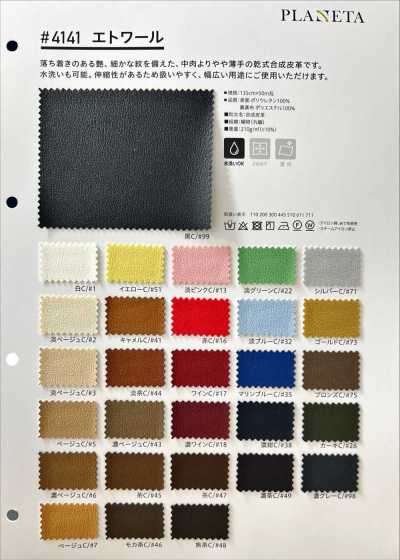
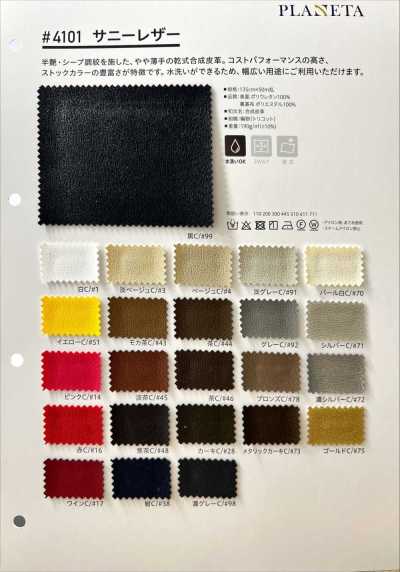
Artificial leather is a material made by using a nonwoven fabric of intertwined ultrafine fibers as a base material and combining it with resin such as polyurethane. In addition to products finished with a smooth leather-like surface, there are also products that are raised to create a suede-like texture.
It is sometimes confused with synthetic leather, which is made by coating textile with resin. Artificial leather often refers to material whose base material itself has a three-dimensional fiber structure, and in product labeling and distribution, both may also be called artificial leather in a broad sense.
Texture and Functional Features
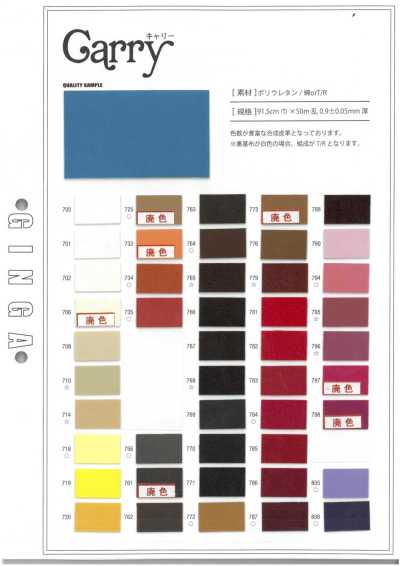
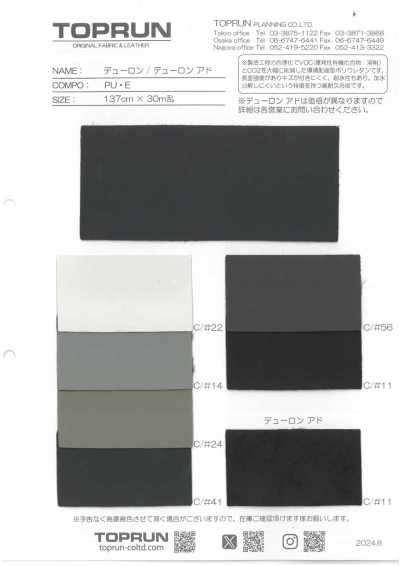
The surface grain, gloss, presence or absence of pile, and thickness can be designed easily, so it offers a wide range of textures from smooth to firm. Compared with genuine leather, it is easier to match color and quality, and it also has the advantage of requiring less care to avoid large defects during cutting.
On the other hand, breathability, moisture absorption, stretch, and abrasion resistance vary greatly depending on the base material, resin, and surface finishing. Because it has a resin layer, stickiness, cracking, and peeling may occur depending on long-term use and storage conditions due to hydrolysis.
Main Applications and Seasonality
It is used for clothing such as jackets, coats, skirts, pants, and dresses, as well as for bags, hats, shoes, belts, and interior applications. Raised types are used for autumn and winter clothing and accessories, while thin, supple types are used for partial applications in shirts, bottoms, and dresses.
When deciding on applications, check not only the appearance but also the thickness, firmness, drape, condition of the reverse side, and the load on seams. In areas with frequent contact or designs with many bends, abrasion resistance and resistance to flexing are also important.
Selection and Handling Precautions
At the planning stage, check the actual surface to be used and confirm color transfer, friction, needle holes at seams, and recovery from fold wrinkles with a test stitch. For stretch types, confirm the stretch direction and recovery, and also consider compatibility with interlining and lining.
Washability, ironing temperature, and whether dry cleaning is possible differ by material, so follow the care label and the manufacturer's handling conditions. In general, high-temperature ironing, drying, and long-term storage in direct sunlight can cause surface deterioration, so care should be taken to avoid them.
During cutting, needle holes and presser marks may remain on the surface, so be careful where straight pins are used. During sewing, use a fine needle, proper thread tension, and a presser foot that ensures smooth feeding, and do a test stitch before the main stitching to reduce rework.
- Thickness and firmness affect sewing specifications, turning processes, and wearing comfort.
- For raised types, cut while keeping the direction of the nap aligned.
- During storage, avoid high temperature and humidity, and beware of transfer contamination caused by contact with or stacking with other materials.
Differences from Similar Terms
Synthetic leather is a term often used for materials that are coated or laminated with resin on a base material such as woven fabric, knitted fabric, or nonwoven fabric to give a leather-like appearance. Artificial leather may be distinguished as using a three-dimensional structure of ultrafine fibers, but there is variation in how the term is used in practice.
Suede originally refers to leather with a raised flesh side of genuine leather. Raised artificial leather products are called suede-like or artificial suede, and although they look similar, the raw materials, structure, and care methods are not the same.
Frequently Asked Questions
Can artificial leather be washed?
Whether it can be washed depends on the combination of base material, resin, adhesive layer, and surface finishing. Water washing may cause hardening, wrinkling, surface damage, or peeling, so always check the product's care label and the fabric handling conditions.
What should be noted when sewing artificial leather?
Because needle holes are difficult to eliminate even after restitching, it is important to determine the needle size, thread, thread tension, and stitch length with a test stitch. Take steps to reduce surface damage and presser marks, and in thick materials, also check step differences caused by overlapping seam allowances and any difficulty in turning.
Are artificial leather and synthetic leather the same?
Strictly speaking, they may be distinguished. Artificial leather often refers to material using a three-dimensional nonwoven base made from ultrafine fibers, while synthetic leather is a broader term that includes materials made by processing resin onto a base such as textile. However, they may be used interchangeably in sales and conversation.
- Search products for "Artificial leather"
- Products with material "Synthetic Leather"
- Products for style "For Outerwear/blousons/coats"
- Products for style "For Pants"
- Products for style "For Skirts And Dresses"
- Products for style "For Jackets/Suits"
- Products for style "For Bags"
- Products for style "For Interiors"
- Browse Textile products