Welt
A welt is a sewing finish in which the cut edge of fabric or the edge of an opening is wrapped with a narrow strip of matching fabric or similar material, with the stitching arranged neatly on the outside, or the narrow strip of fabric itself.
![100UP [Outlet] Polyester Button For Welt Pockets](/img/item/thumb/YX/1056197_t2.jpg)
Contents6 sections
Definition and Overview
A welt is a tailoring finish in which a narrow strip of fabric is sewn to the edge of a body panel or pocket opening and folded over to cover the edge. It hides seam allowance and raw edges while adding durability and a clean appearance. The narrow strip of fabric used at the edge may also be called a welt.
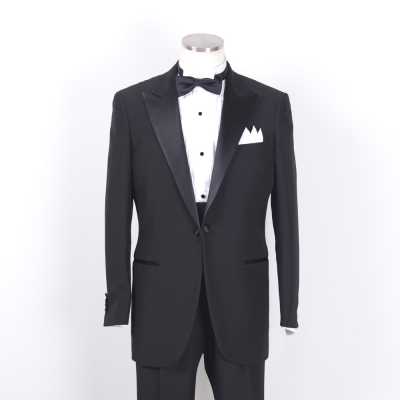
In garment specifications, it is also common to use the term welt pocket for a pocket with a welt at the opening. In this case, welt refers to the strip of fabric that forms the pocket opening, and its scope differs from welt finishing, which covers the edge of the entire area.
Position in the Process
Welt finishing is done during the sewing process after cutting, as the individual parts are assembled. When applied to openings such as pockets, the process includes marking the opening position, sewing the welt fabric and reinforcing fabric, making the cut, turning, shaping the corners, and then finishing the pocket bag or reverse side.
Because some areas are difficult to finish after the parts have been sewn together, the sewing order is important. In mass production, the direction of the seam allowance turn, the grain direction of the welt fabric, and whether interfacing is used are confirmed at the sample-making stage and reflected in the specification sheet and process instructions.
- Clearly mark the opening position and welt width.
- Check the color, thickness, and grain direction of the welt fabric before stitching.
- After cutting, confirm that the corners have been fully turned.
- Use final pressing to adjust the edge shape and left-right symmetry.
Approach and Practical Points
The visible width of the welt can be specified not only in the design drawing but also in the approved sample and cross-sectional image to reduce misunderstandings. In addition to using the same fabric as the shell fabric, there are also designs that use contrasting fabric or another material to make the edge stand out.
With thick fabrics, pile fabrics, and highly stretchy fabrics, the stitching can become bulky or the shape can become unstable, so the thickness of the welt fabric and interfacing should be considered in advance. For patterned fabrics, the way the pattern appears on the welt also affects the finished look.
Ordering and Quality Notes
When placing an order with a sewing factory, specify the area where the welt is to be applied, whether it is a single welt or double welt, the finished visible width, the welt fabric specification, whether interfacing is used, and whether stitching is required. For pockets, also instruct the pocket bag specification and reinforcement positions such as bar tacks.
During quality inspection, check the left-right difference in welt width, distortion at the opening, bulk at the corners, exposed stitching, and puckering in the shell fabric. If the welt is designed too narrow, the edge may come loose during use or the seam allowance may show, so sample verification matched to the material is necessary.
Differences from Similar Terms
Piping often refers to an edge trim with a cord wrapped in fabric, or the finish itself, and it creates a raised effect. A welt does not necessarily include a cord and is finished as a relatively flat strip edge.
Bias tape finishing is a method of wrapping a curved fabric edge with tape cut on the bias. A welt also finishes an edge with fabric, but it may be used to describe a specification that includes forming an opening such as a pocket mouth, so it is important to confirm the application and shape with a drawing or sample.
Frequently Asked Questions
What is the difference between a single welt and a double welt pocket?
A single welt pocket shows a welt strip on one side of the pocket opening, while a double welt pocket shows two welt strips on the upper and lower sides, or left and right sides, of the opening. Which one is meant should be confirmed according to the pocket orientation and specification drawing, and the welt width and opening dimensions should be specified separately.
What causes the edge to come loose in welt finishing?
This is more likely to occur when the visible width of the welt or the amount sewn in is too small, or when the seam allowance does not stay stable in thick or stretchy fabrics. Prototype the welt including the cutting direction, interfacing, and seam allowance width, and also check the condition after washing and wearing.
Are welt and piping the same?
They are sometimes treated as the same, but in general piping often refers to a corded, raised edge, while welt refers to a flat strip edge or a pocket-opening specification. In specifications, it is important to share the finished appearance with a cross-section drawing or sample.