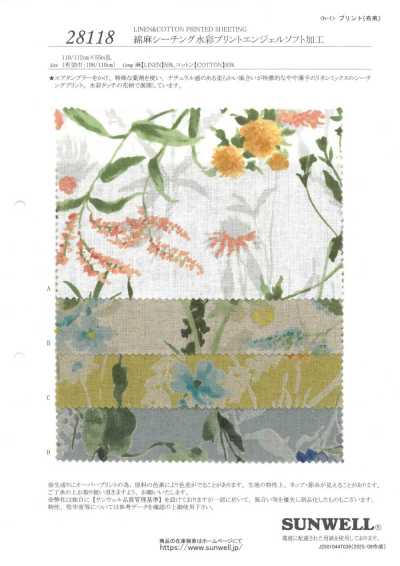
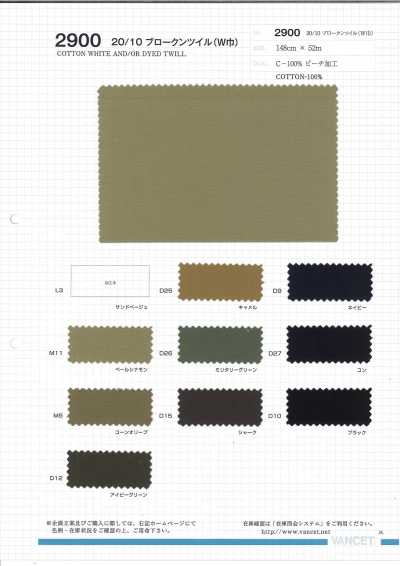
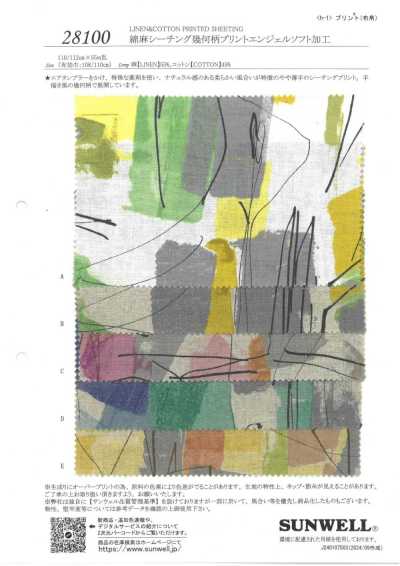
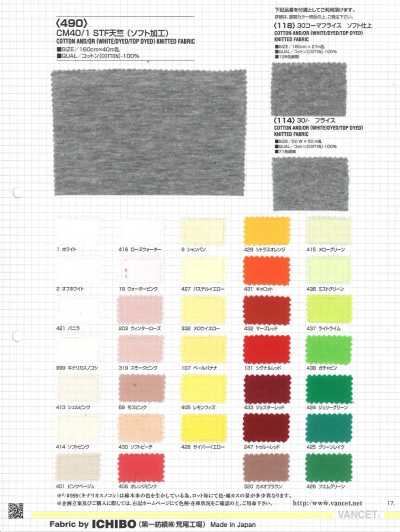
Softening Finish
Softening finish is a finishing process applied to textile to give it softness, smoothness, and suppleness, and to improve hand feel and drape.
Contents6 sections
Definition and Overview
Softening finishing is a finishing process applied after the production of woven fabrics and knits to reduce friction between fibers and soften stiffness. Rather than changing the material’s inherent properties, it is performed to adjust the feel when touched and ease of handling.
It is also called soft finish. Depending on the processing method, chemicals used, material, and processing conditions, the resulting texture differs, including plump softness, a smooth feel, and drape.
Characteristics
Textiles that have undergone softening finishing generally feel soft to the touch and smooth on the surface. For stiff textiles, it can reduce stiffness and make them easier to conform to the body when worn, while for lightweight textiles it can add supple drape.
The effect on appearance depends on the processing details, but it may smooth surface fuzz or create a natural drape. On the other hand, if the processing is too strong, the textile may feel less resilient and less firm.
The effects on water absorbency, static electricity, and friction vary depending on the material and the type of softener. It is important to confirm compatibility not only with softness, but also with the functions and quality required for the applications.
Main Applications
It is used for garments where feel against the skin and comfort are important, such as shirts, blouses, cut-and-sew tops, dresses, underwear, and nightwear. For natural fibers such as linen and cotton, it is also sometimes used to achieve a washed, soft appearance.
For lightweight fabrics for spring and summer, it is used to improve breathability and suppleness, while for brushed materials and knits for fall and winter, it is used to add fullness and a gentle touch. However, it is not a processing limited to specific seasons and is selected according to the material and product concept.
Selection and Handling Notes
When selecting a textile, check a sample of the texture after processing and judge whether the required firmness, drape, and sewability match the specifications. Even with the same composition and weave structure, the hand feel may change depending on processing conditions and lot, so confirmation with fabric close to mass production is necessary.
Softening finishing is not a process for preventing shrinkage. Dimensional changes after washing depend on the material, construction, and whether shrink-resistant finishing has been applied, so separately check the shrinkage rate test and care label. If necessary, consider boiling treatment or straightening before cutting.
Soft and slippery textiles may shift during cutting or cause seam stretching and puckering during sewing. Test the presser foot pressure, feed, needle and thread, and interfacing compatibility in advance, and adjust the sewing conditions.
- The softening effect may change with repeated washing.
- Strong friction or excessive drying may lead to changes in texture or fuzzing.
- Whether softener can be used during washing depends on the product care label and the material characteristics.
Differences from Similar Terms
Softening finishing is a finishing process mainly intended to make textile softer. Shrink-resistant finishing is a process for suppressing dimensional changes caused by washing and other factors, and the purpose is different. Both may be applied, but softening finishing alone does not necessarily prevent shrinkage.
Brushing is a process that raises the fibers on the textile surface to create fuzz and produce warmth and a soft appearance. Softening finishing does not necessarily create fuzz and mainly adjusts the slipperiness and feel of the fibers. The texture is related, but the processing method and surface change are different.
Frequently Asked Questions
Does softening finishing make textile less likely to shrink?
The main purpose of softening finishing is to make the texture softer and more refined, not to suppress shrinkage. Shrinkage after washing depends on the type of fiber, construction, dyeing and finishing conditions, and whether shrink-resistant finishing has been applied. Check the fabric specification shrinkage rate and perform a pre-test if necessary.
Is softening-finished textile difficult to sew?
Depending on the processing, textiles that are slippery and have less firmness may be more prone to shifting during cutting and seam stretching during sewing. Adjust the feed and presser foot pressure with trial sewing, and use stay tape or interfacing as needed to help stabilize sewing.