Wing Collar
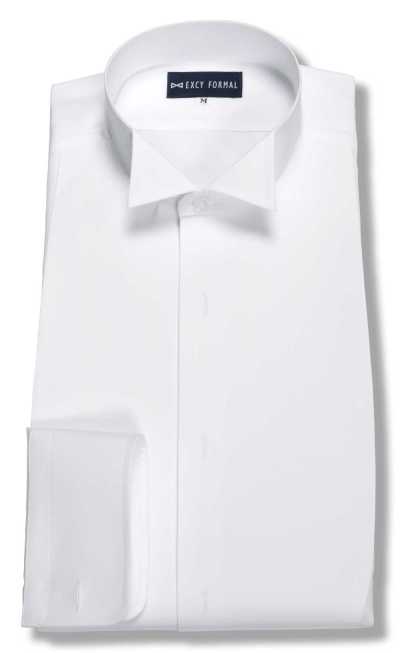
A wing collar is a collar style used on formal shirts worn with bow ties, featuring a raised collar stand and only the small front collar points folded outward.
Contents6 sections
Definition and Overview
A wing collar is a collar with a high standing collar band that follows the neck and front collar points that fold back like wings. It is mainly used for formal shirts, and its characteristic is that when a bow tie is tied, the collar points are visible on both sides of the tie.
Although the name includes “collar,” it does not simply refer to any white collar or stand-up collar in general. It refers to a specific formal collar style with small folded-back collar points.
Parts and Construction
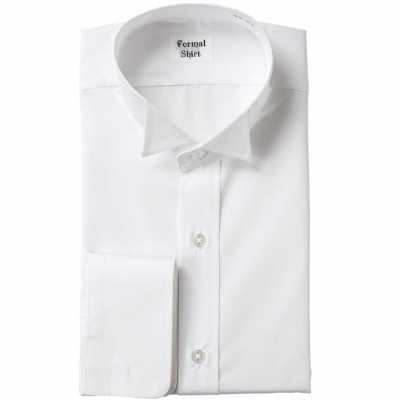
In general, it consists of a collar band that supports the neck area and collar points that fold back only at the front. The back stays upright, while the front collar points turn down or outward, creating a neat, elongated impression around the neck.
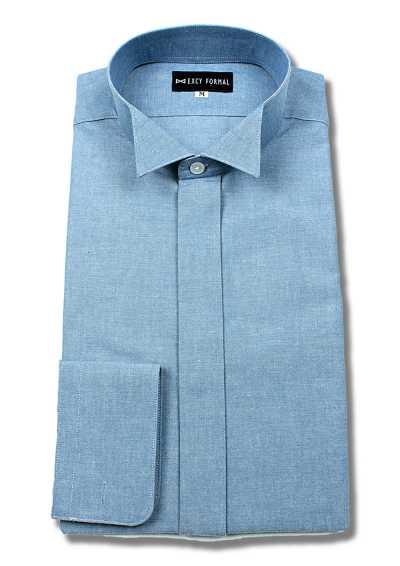
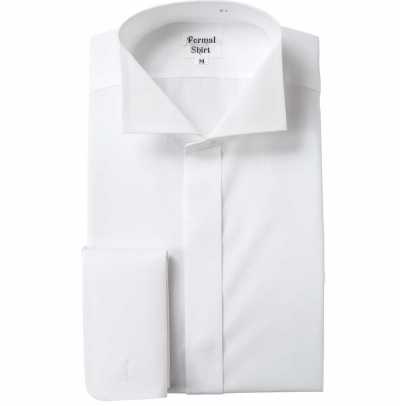
The neck area is fastened with the button at the top edge of the stand collar, and the bow tie is tied below it. The shirt placket may use buttons, or for formal specifications, stud buttons or a concealed fly-front construction that hides the buttons. These are specifications separate from the collar style.
- Collar band: the part that stands up along the neck area.
- Collar point: the part that folds back at the front and looks like a wing.
- Button at the top edge of the stand collar: the button used to close the neck area.
Materials and Finishing
For formal wear, white cotton fabrics are common, and a smooth, clean-looking surface and moderate firmness that helps the collar hold its shape are required. Materials with polyester blends may also be used for easier care.
Interfacing is used in the collar band and collar points to shape the standing and folded-back form. The stiffness of the interlining and the collar height vary by product, so it is important to check the size of the bow tie, the neck measurement, and how tight it feels when worn.
How It Is Worn and Used
The wing collar is typically used in white tie attire, paired with a white bow tie and a tailcoat. It may also be worn for ceremonies and weddings regardless of day or night, but the dress code indicated on the invitation or by the venue takes priority.
It may also be worn with a tuxedo, but for black tie there is also the idea of choosing a shirt with a turned-down collar. In daytime formal wear such as a morning coat, the handling of collar styles differs depending on the region, ceremony customs, and the organizer’s instructions, so it is necessary to stay consistent with the overall formalwear category.
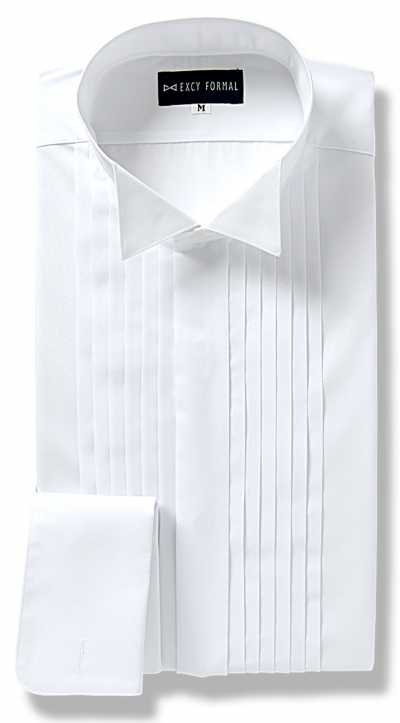
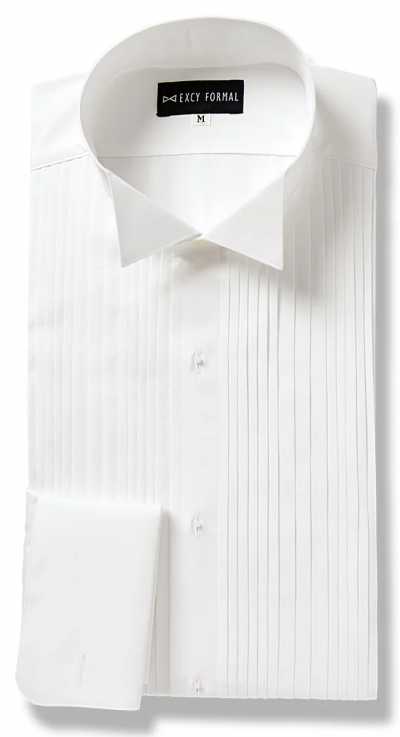
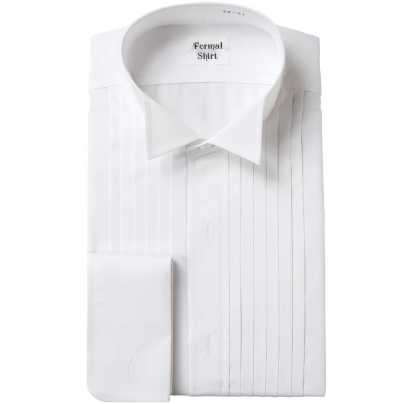
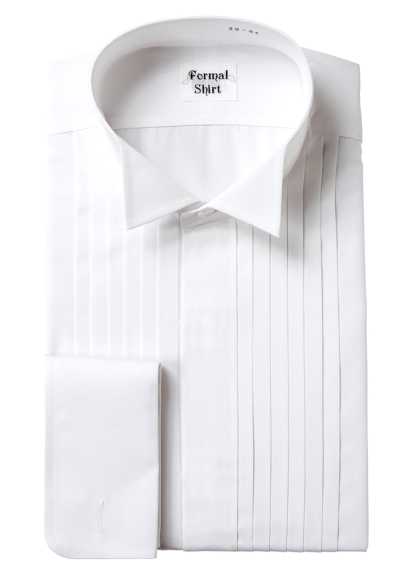
The bow tie is tucked beneath the collar points so that the collar points do not cover the tie from above. If using a pleated front, stud buttons, or cuff links, matching the shirt front and cuff specifications makes it easier to create a unified formal appearance.
Differences from Similar Terms
Wing collar and stand-up collar are often confused, but stand-up collar is a general term for a collar worn upright. A wing collar is a type of stand-up collar with front collar points that fold back. In contrast, a regular turned-down collar has the entire collar laid down, so its structure and appearance are different.
A pleated front is a front-shirt specification with pleats on the chest, and a concealed fly-front is a front-placket construction that hides the buttons. Both can be combined with a wing collar shirt, but they are not names for the collar itself.
Frequently Asked Questions
Does a wing collar always require stud buttons?
Not necessarily. Formal styles include front openings fastened with stud buttons, but there are also products with regular buttons or concealed fly-front construction. The collar style and front-placket specification are separate, so choose according to the formalwear being worn and the level of formality required.
Can anything other than a bow tie be worn with a wing collar?
What should I be careful about when caring for a wing-collar shirt?
Because the collar band and collar points are shaped with interlining, follow the washing instructions and avoid strong creases or excessive heat. When ironing, shape the collar band three-dimensionally and finish the folded lines of the collar points at matching positions on both sides to keep the appearance stable when worn.