Windsor Knot
The Windsor knot is a way of tying a tie by passing the wide blade around the neck multiple times, creating a nearly symmetrical triangular knot with width and thickness.
Contents6 sections
Definition and Overview
The Windsor knot is one of the standard ways to tie a tie. It tends to create a full knot and gives a strong presence at the collar. In general, it often refers to the full Windsor, but it is also sometimes used to include the semi-Windsor, which is a similar knot.
Shape and Knot Structure
The wide blade is passed alternately around the narrow blade and through the loop around the neck, then the wide blade is tucked through the front loop and tightened. The knot tends to become a wide inverted triangle, and it is characterized by having more thickness than a plain knot.
If you press the center of the knot before tightening to form a dimple, it will have a more three-dimensional appearance. However, the appearance of the dimple depends on the thickness of the tie fabric, interlining, weave structure, and tightening force.
- The knot width tends to be wider
- Because the tie is wrapped around the neck more times, the layers of fabric tend to become thicker
- It uses more of the wide blade, so a tie with extra length is easier to handle
Materials and Finish
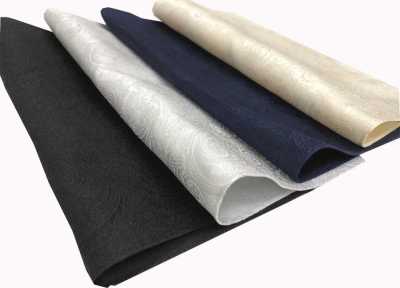
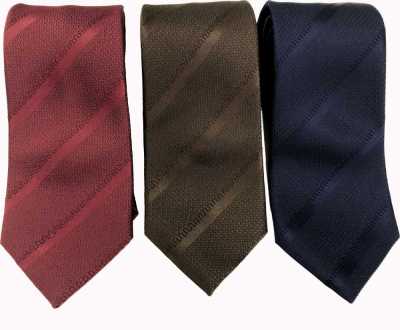
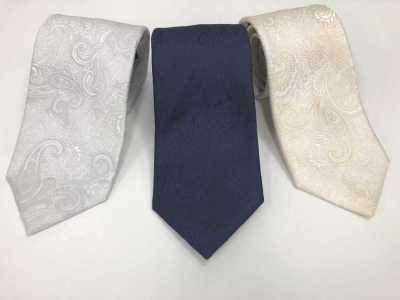
Ties that are thin to medium-weight and tie smoothly tend to be easier to shape into a neat knot. With lustrous materials such as silk, the knot surface stands out, and with woven patterns or Jacquard patterns, the way the pattern appears also affects the impression at the collar.
With thick ties, stiff textures, or ties with firm interlining, the knot may become excessively large. It is important to check the balance between knot thickness and collar spread before wearing.
Outfits and How to Wear It
The Windsor knot is a knot that pairs well with shirt collars that have a relatively wide spread. It is used for suits, ceremonies, and formal daytime occasions where you want the collar to look neat and authoritative.
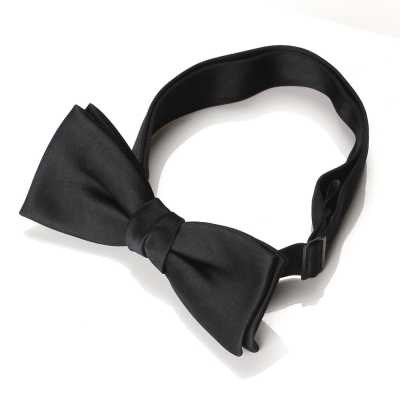
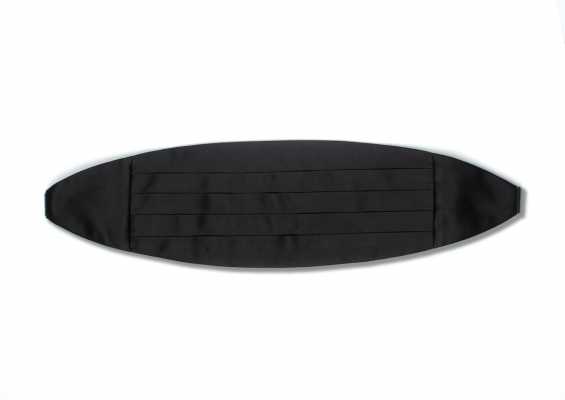
For evening formal wear such as tuxedos and tailcoats, a bow tie is generally used instead of a necktie. For formal occasions, including funerals, choose based not only on the knot style but also on the tie color and pattern, the shirt, and the venue or invitation instructions.
Differences from Similar Terms
The full Windsor is generally the wide, full knot that is assumed when referring to the Windsor knot. The semi-Windsor is a different knot that uses fewer turns and tends to produce a smaller, easier-to-handle knot. Treating the two as synonyms can make it easier to share specifications and wearing images accurately.
The plain knot uses fewer turns and tends to produce a long, narrow knot. Because the Windsor knot takes up more space at the neck than the plain knot, check the balance when using it with a tie that has a wide blade or a narrow collar spread.
Frequently Asked Questions
Are the Windsor knot and semi-Windsor the same?
Strictly speaking, they are different knots. The full Windsor uses more turns and tends to create a knot with more width and thickness, while the semi-Windsor uses fewer steps and finishes with a more restrained size. However, both are sometimes broadly referred to as Windsor-type knots.
What shirt collar is suitable for the Windsor knot?
Because the knot has width and thickness, it pairs well with collar styles that have a generous spread. With a narrow collar spread, the knot may not fit well and the collar points may be pushed upward. Check the thickness of the tie fabric and the size of the knot as well.
What should I do if the knot becomes too large?
Try switching to a thinner, more supple tie, adjusting the layering of the fabric before tightening the knot, or changing to a semi-Windsor or plain knot. Check whether the knot is excessively wide for the collar spread of the shirt and the width of the tie blade.